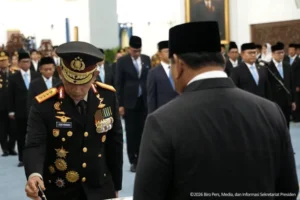
The landscape of Indonesian law enforcement is currently navigating a period of unprecedented turbulence following the revelation of a high-profile conspiracy case involving senior officials of the Indonesian National Police (Polri). In a press conference held on Monday, November 23, 2026, the Head of the Criminal Investigation Agency (Kabareskrim) of the National Police, Commissioner General Asep Safrudin, confirmed the legal status of several high-ranking officers involved in a scandal involving alleged treason (makar) and illegal wiretapping targeting President Prabowo Subianto.
The investigation has sent shockwaves through the national security apparatus, as the list of suspects includes former police chiefs and high-ranking generals, marking one of the most significant internal crises in the history of the modern Indonesian police force.
The Current Status of the Suspects
According to the official statement provided by Commissioner General Asep Safrudin, the legal treatment of the suspects varies depending on their specific roles in the alleged conspiracy and their current health or administrative status.
Brigadier General Tedjo Kusumo (TK) and Police Grand Commissioner (Kombes) Iman Imanuddin (IM) are currently being held in special placement (patsus) under the supervision of the Police Professional and Security Division (Divpropam). Special placement is an administrative measure often utilized by the police to secure personnel suspected of serious ethical or criminal violations before formal detention procedures are fully executed.
In contrast, three other key suspects—former National Police Chief General Listyo Sigit Prabowo (LSP), Inspector General Ahrie Sonta Nasution (ASN), and Inspector General Eko Hadi (EH)—have been officially detained by the Directorate of Cyber Crimes (Dittipidsiber) of the National Police. This detention follows their initial status as suspects in the illegal wiretapping case, which investigators believe served as the technological precursor to the broader act of treason.
A notable exception in the enforcement process is Inspector General Slamet Uliandi (SU). While officially designated as a suspect, Uliandi has been exempted from active detention due to severe health complications, specifically his ongoing recovery from a stroke. Authorities have indicated that while the legal process against him will continue, humanitarian considerations have been applied to his physical custody.
Context of the Alleged Treason and Wiretapping
The charges of treason (makar) in the Indonesian legal context, particularly under Articles 104 and 107 of the Criminal Code (KUHP), carry severe penalties. The allegations against these officers suggest a coordinated effort to undermine the authority of the sitting President, Prabowo Subianto.
The investigation, which has been handled by the Directorate of Cyber Crimes, suggests that the motive behind the alleged treason was facilitated by the unauthorized interception of private communications belonging to the President. Illegal wiretapping—a violation of both the Electronic Information and Transactions (ITE) Law and national security regulations—was allegedly used to gather sensitive intelligence that could then be leveraged to destabilize the executive administration.
The involvement of high-ranking police officers suggests a significant breach of internal institutional trust. In the Indonesian context, where the National Police serve as the primary agency for maintaining domestic security, the participation of its own leadership in an alleged plot against the Head of State poses a critical challenge to the legitimacy and stability of the government.
Chronology and Institutional Investigation
The investigation began in late 2026 as suspicious patterns were detected in cyber monitoring systems. By early November, the Dittipidsiber uncovered evidence linking the wiretapping activities to the named suspects. The escalation from a cybercrime investigation to a full-blown treason case represents a rapid shift in the gravity of the charges.
Throughout the inquiry, the National Police leadership has emphasized that the investigation is being conducted with strict adherence to professional standards. "We ensure that the investigation of this case is carried out professionally, transparently, and accountably, while upholding integrity and ethics," stated Asep Safrudin during his briefing.
The timeline of the investigation indicates that the police are moving to consolidate evidence before proceeding to the prosecution phase. The use of the Divpropam for the special placement of officers indicates an effort to maintain internal discipline while the criminal proceedings are simultaneously managed by the Criminal Investigation Agency (Bareskrim).
Implications for the Indonesian National Police
This scandal arrives at a sensitive time for the Indonesian government, which has been focusing on post-election stabilization and national development goals. The naming of a former National Police Chief as a suspect is an unprecedented event in the history of the post-Reformasi era.
Analysts suggest that this development will likely trigger a massive overhaul within the police hierarchy. The trust deficit created by the involvement of senior officers in an alleged conspiracy against the President will necessitate significant institutional reform. The Ministry of Law and Human Rights and the National Police Commission (Kompolnas) are expected to play a larger role in oversight in the coming months as the public demands accountability.
Furthermore, the legal repercussions for the accused, if found guilty, are substantial. Treason against the state is among the most serious charges in the Indonesian penal code, often carrying potential life sentences or long-term imprisonment. The defense teams for the suspects are expected to challenge the validity of the evidence, particularly concerning the cyber-forensic data linked to the wiretapping claims.
Transparency and Public Accountability
The Indonesian public remains attentive to how the government manages the case. By holding a press conference and disclosing the names of the suspects—even those of high rank—the current police leadership is attempting to project an image of institutional neutrality and a refusal to protect its own when crimes against the state are committed.
However, the path ahead is fraught with legal complexity. The intersection of "illegal wiretapping" and "treason" implies that the prosecution must prove not only that data was stolen or intercepted but also that this information was used with the specific intent of toppling the government. This requires a high burden of proof and robust forensic documentation.
The role of the Divpropam in handling the special placement of officers suggests an attempt to separate the administrative handling of police personnel from the criminal proceedings, which are being led by the Bareskrim. This separation is intended to ensure that the accused officers are subject to both internal codes of ethics and external criminal law, a dual-track approach intended to reinforce the gravity of the offense.
Broader Impact on National Stability
The case of Brigjen Tedjo Kusumo, Kombes Iman Imanuddin, and their co-accused highlights the persistent tension between institutional power and the rule of law. When individuals tasked with the protection of the state are alleged to have become the architects of its disruption, the resulting investigation serves as a litmus test for the resilience of the nation’s democratic institutions.
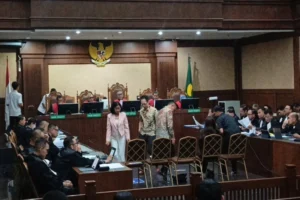
As the legal proceedings continue, the focus will likely shift to the courtroom. The judiciary will face the challenge of presiding over a case that involves the very people who once stood at the top of the law enforcement pyramid.
In conclusion, the investigation into the alleged treason and wiretapping scandal serves as a defining moment for the Indonesian National Police. The ongoing detention of former high-ranking officers underscores the seriousness of the allegations and the commitment of the current administration to neutralize internal threats to state stability. As the case moves forward, the primary concern for the Indonesian government will be to ensure that the rule of law prevails, thereby restoring public confidence in the integrity of the state’s security institutions. The nation now watches closely to see how the judiciary will weigh the evidence against the accused, and what impact this will have on the future structure and leadership of the police force.