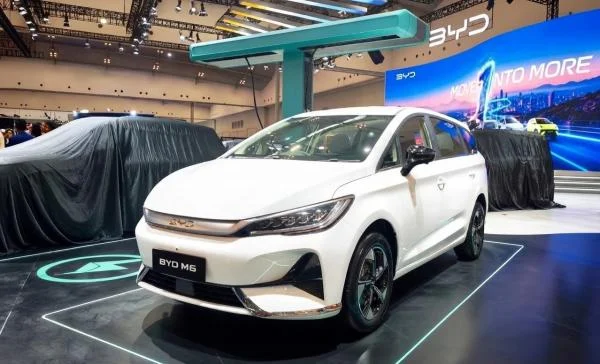
BYD is strategically positioning itself as the primary catalyst for Indonesia’s electric vehicle (EV) evolution by expanding beyond vehicle manufacturing to aggressively bolster the nation’s charging infrastructure. By introducing its proprietary Flash Charging technology, the Chinese automotive giant is directly confronting the most significant barrier to mass EV adoption: the prolonged wait times associated with traditional charging methods. This move signifies a shift from merely selling automobiles to creating an integrated, end-to-end ecosystem that addresses both the physical hardware of vehicles and the structural requirements of a sustainable energy grid.
The introduction of this high-speed charging capability is part of a broader, multi-year strategy by BYD to solidify its dominance in Southeast Asia’s largest economy. As Indonesia continues to position itself as a global hub for the EV battery supply chain, BYD’s investment in advanced charging solutions serves as a critical bridge between consumer convenience and grid stability.
The Technological Leap: Flash Charging and Blade Battery 2.0
At the heart of this innovation is the synergy between the next generation of battery architecture and ultra-high-voltage power delivery. First unveiled in March 2026 alongside the highly anticipated Blade Battery 2.0, BYD’s Flash Charging system utilizes a sophisticated 1,000-volt electrical architecture, frequently referred to within the industry as "Super e-Platform."
This technical configuration allows for a peak power transmission of up to 1,500 kilowatts (kW), or 1.5 megawatts. To put this in perspective, typical DC fast chargers currently found in many urban centers operate between 50 kW and 150 kW. By scaling this to 1,500 kW, BYD is effectively reducing the "refueling" time of an electric vehicle to a duration comparable to a traditional internal combustion engine vehicle stop.
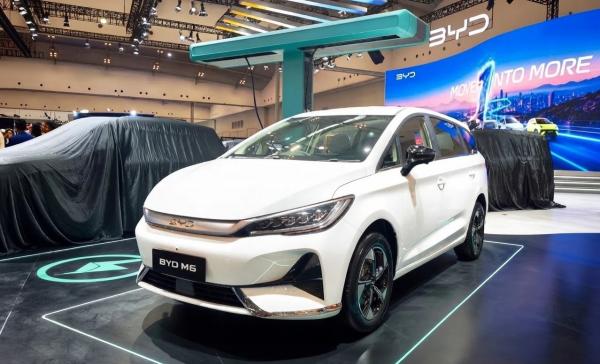
According to performance data released by the company, the technology operates with remarkable efficiency under standard room-temperature conditions. A vehicle equipped with this technology can see its battery levels rise from 10 percent to 70 percent in just five minutes. Even more impressive is the total charge cycle, with a 10 percent to 97 percent charge achieved in a mere nine minutes. This capability is expected to drastically alter consumer behavior, potentially eliminating "range anxiety" and reducing the dependency on overnight home charging for long-distance commuters.
Strategic Context: Beyond the Subang Manufacturing Hub
The deployment of Flash Charging in Indonesia is not an isolated event but a milestone in a long-term roadmap. During a presentation in Jakarta on October 14, 2026, BYD representatives emphasized that the company’s commitment extends far beyond the construction of its massive production facility in Subang, West Java.
"Flash Charging demonstrates our commitment to the holistic development of electric vehicle infrastructure in Indonesia," a company spokesperson stated during the event. "We are not just selling cars; we are building an integrated ecosystem. Our goal is to ensure that the infrastructure keeps pace with our vehicle output, ensuring that the transition to green mobility is seamless for the Indonesian public."
The Subang plant, which serves as BYD’s manufacturing bedrock in Southeast Asia, acts as the production engine, while the charging infrastructure serves as the circulatory system. By controlling both ends of the user experience—the battery technology inside the car and the chargers at the roadside—BYD mitigates the risks of incompatibility and optimizes the charging curve for its own vehicle lineup.
Addressing the Grid Capacity Challenge
One of the most persistent hurdles for the widespread adoption of ultra-fast charging is the strain it places on local power grids. A 1.5-megawatt draw is significant and could potentially destabilize smaller, older, or rural power distribution networks.

BYD’s approach involves smart grid integration and energy management software. The Flash Charging system is designed to communicate with the local grid, balancing load requirements and, in many planned installations, incorporating stationary energy storage systems (ESS). These storage units function as a buffer, allowing the grid to charge the station’s batteries at a steady, manageable rate, while the station delivers a massive burst of power to the vehicle when needed. This technical solution is vital for Indonesia, where the expansion of the national grid is currently being optimized to support industrialization and renewable energy integration.
A Chronology of BYD’s Indonesian Expansion
The path to this moment has been marked by rapid development and significant capital investment:
- Early 2024: BYD officially enters the Indonesian passenger vehicle market, signaling its intent to capture the burgeoning middle-class market.
- Mid-2024 to 2025: Rapid expansion of dealership networks across Jakarta, Surabaya, and Medan. The company focuses on brand awareness and establishing a service footprint.
- March 2026: Global introduction of the Blade Battery 2.0 and the 1,000-volt Super e-Platform. The announcement sets the stage for the rollout of high-speed charging capabilities.
- October 2026: Official unveiling of the Flash Charging rollout plan for Indonesia, connecting the new technology with the operational readiness of the Subang facility.
Broader Economic and Environmental Implications
The implications of this technology for Indonesia’s national climate targets are substantial. The Indonesian government has set ambitious goals to reach Net Zero Emissions by 2060, with the transportation sector being a primary focus for decarbonization.
By making EVs more convenient, BYD is helping to accelerate the "tipping point" where electric vehicles become the preferred choice for the average Indonesian consumer. Furthermore, the localization of this technology provides a technological transfer benefit. As the local workforce becomes trained in the maintenance and deployment of high-voltage systems, the domestic capability to manage a modern, green power grid increases.
From an economic standpoint, the infrastructure investment is expected to stimulate ancillary industries. Real estate developers, shopping malls, and gas station operators are already looking to partner with technology providers like BYD to integrate these charging hubs into their properties. This creates a secondary revenue stream for these businesses and enhances the value proposition of their locations.

Challenges and Future Outlook
Despite the technological promise, several challenges remain. The cost of installing 1.5-megawatt charging stations is significantly higher than that of standard chargers. Widespread adoption will require a collaborative effort between the private sector, state-owned electricity provider PLN, and the government to ensure that permitting processes are streamlined and that grid upgrades are prioritized.
Moreover, the standardization of charging ports and protocols remains a topic of international negotiation. As BYD rolls out its proprietary Flash Charging, it will need to ensure that its network remains accessible or interoperable with other EVs to encourage broader market adoption. If BYD can successfully manage these complexities, its Flash Charging technology could become the gold standard for high-speed EV transit in the region.
As of late 2026, the focus for BYD remains on pilot programs in high-traffic corridors between Jakarta and Bandung. The data gathered from these initial installations will likely inform the next phase of the rollout, which is expected to extend into major inter-city toll roads across Java.
The convergence of government support, aggressive private sector investment, and breakthrough charging speeds positions Indonesia as a burgeoning leader in the global EV race. For BYD, the strategy is clear: by solving the "time" problem, they are effectively unlocking the "mass adoption" potential of the Indonesian market. As the country moves toward a cleaner future, the integration of 1,000-volt architectures will likely be remembered as the moment the electric transition shifted from an experimental phase to a core pillar of national infrastructure.