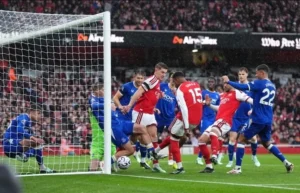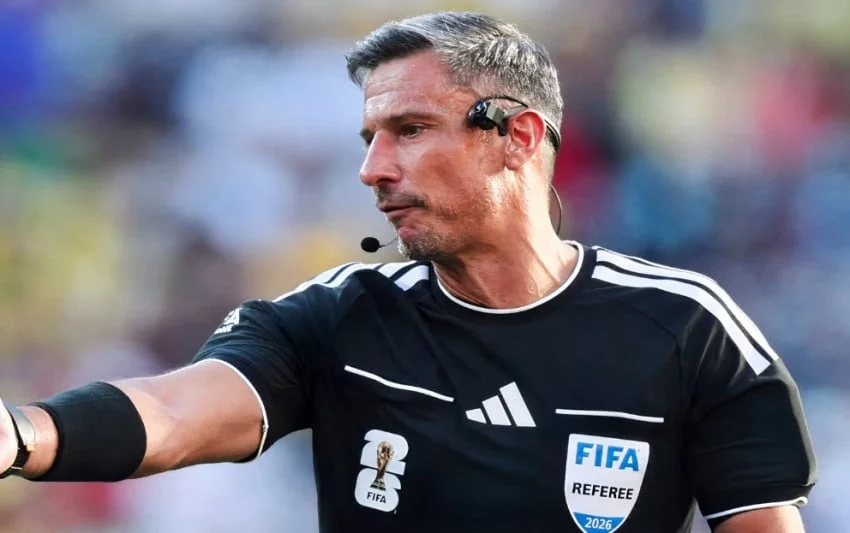
FIFA’s decision to appoint Slovenian referee Slavko Vincic to officiate the highly anticipated 2026 FIFA World Cup Final between Spain and Argentina has ignited a firestorm of discussion across the global football community. The announcement, made by the sport’s governing body, has been met with a spectrum of reactions, particularly on social media platforms, where many are questioning the rationale behind this pivotal assignment. The final, slated to be held at MetLife Stadium in New Jersey, USA, on Sunday, July 19, local time, will pit Europe’s reigning champions, Spain, against the formidable defending champions, Argentina. This highly charged encounter follows thrilling semi-final victories: Spain triumphed over France with a decisive 2-0 performance, while Argentina staged a dramatic comeback to overcome England 2-1.
The appointment of Vincic, a seasoned official at 46 years old, to oversee the most prestigious match in international football is a significant career milestone. He will be supported by a team of his compatriots, with Tomaz Klancnik and Andraz Kovacic serving as assistant referees. The fourth official for the final will be Adlham Mjhadmeh of Jordan, with Mohammad Alkalaf as the reserve assistant referee. FIFA released a video showcasing Vincic’s emotional reaction upon learning of his selection, highlighting the profound significance of this responsibility for a referee whose regular assignments include the top tier of Slovenian football.
The Road to the Final: A Tale of Two Nations
The 2026 FIFA World Cup has been a tournament of compelling narratives, and the journey of the finalists, Spain and Argentina, exemplifies this. Spain, under the astute leadership of their coach, has showcased a blend of youthful exuberance and seasoned tactical discipline. Their semi-final victory against France, a perennial powerhouse, was a testament to their defensive solidity and clinical finishing. The Spanish squad, a mix of established stars and emerging talents, has consistently demonstrated a cohesive playing style, characterized by possession-based football and intelligent movement off the ball. Their path to the final has seen them navigate a challenging bracket, overcoming strong opposition with a measured and strategic approach.
Argentina, on the other hand, has embodied the spirit of resilience and individual brilliance. As defending champions, they have carried the weight of expectation throughout the tournament. Their semi-final clash against England was a classic example of their fighting spirit. Trailing at one point, they rallied with characteristic tenacity, led by their talismanic captain, whose moments of individual magic have once again proven decisive. The Argentine team is renowned for its passionate style of play, a blend of skillful dribbling, aggressive pressing, and an unwavering commitment to the national colors. Their journey has been marked by dramatic comebacks and unforgettable individual performances, captivating fans worldwide.
Slavko Vincic: A Profile of the Final’s Whistle-Blower
Slavko Vincic’s ascent to the pinnacle of refereeing is a story of dedication and consistent performance on the European stage. Prior to his World Cup final appointment, Vincic has established himself as a respected figure in UEFA competitions, including the Champions League and Europa League. His officiating style is often described as firm yet fair, with a reputation for allowing the game to flow while maintaining strict control over player conduct. His experience in high-stakes club matches, where the pressure is immense, has undoubtedly prepared him for the unique demands of a World Cup final.
His background as a referee in the Slovenian PrvaLiga provides a solid foundation for his international career. Over the years, he has officiated in numerous critical matches, honing his decision-making abilities and his capacity to manage diverse playing styles and temperaments. The appointment to the World Cup final is a recognition of his consistent quality and his ability to perform under the most intense scrutiny. His emotional reaction, captured in the FIFA video, underscores the profound honor and responsibility associated with officiating the world’s biggest footballing spectacle.
Global Reactions and Underlying Concerns
The announcement of Vincic’s appointment has not been universally embraced. Social media has been abuzz with discussions, with a significant segment of the footballing public expressing reservations. While specific details of these concerns are varied, common themes emerge. Some observers have pointed to past decisions in high-profile matches that they believe were controversial. Others have raised questions about the perceived neutrality of the officiating team, particularly in relation to the participating nations.
The notion that Vincic’s appointment might "favor" Spain, as some commentators have suggested, is a sensitive point. While FIFA aims for impartiality in its appointments, the subjective nature of refereeing can sometimes lead to differing interpretations and, consequently, fan discontent. The intense passion surrounding a World Cup final often amplifies any perceived bias, leading to heightened scrutiny of every decision made on the field. It is important to note that such claims are often rooted in anecdotal evidence and the emotional investment of fans, rather than concrete, verifiable proof of systemic bias. FIFA’s referee selection committee typically considers a multitude of factors, including the referees’ experience, performance in previous matches, and their familiarity with the teams involved, all in an effort to ensure a fair and competent officiating team.
Supporting Data and Historical Context
The 2026 FIFA World Cup marks a significant expansion of the tournament, featuring 48 teams for the first time. This increased scale naturally amplifies the global attention and the stakes involved in every match, especially the final. The attendance figures for World Cup finals are consistently in the tens of thousands for live spectators, with billions more tuning in globally via television and digital platforms. For the 2026 final, MetLife Stadium in New Jersey, with a seating capacity of over 82,000, is expected to be filled to capacity, further intensifying the atmosphere.
Historically, World Cup finals have been officiated by referees from a diverse range of footballing confederations. This tradition aims to reflect the global nature of the sport. While European referees have frequently been selected for finals, reflecting Europe’s strong footballing tradition and the presence of top-tier leagues, appointments from other confederations have also been common. The selection of Vincic, a European referee, aligns with this historical precedent.
The performance metrics of referees are closely monitored by FIFA and other footballing bodies. These metrics often include the number of fouls called, cards issued, and the accuracy of major decisions. While individual statistics for Vincic are not readily available to the public in a comprehensive comparative format, his continued appointment to significant UEFA matches suggests a consistent level of performance that meets FIFA’s stringent standards.
Official Responses and FIFA’s Stance
While FIFA has not issued a specific statement addressing the online debate surrounding Vincic’s appointment, their selection process itself serves as a form of official response. FIFA’s refereeing department is known to employ a rigorous evaluation system, which includes regular performance reviews, fitness tests, and psychological assessments. The appointment of a referee to the World Cup final is the culmination of years of development and consistent high-level officiating.
In the past, FIFA has emphasized its commitment to transparency and fairness in refereeing. They have invested heavily in technology, such as the Video Assistant Referee (VAR) system, to aid officials in making correct decisions. The presence of VAR in the 2026 World Cup final will undoubtedly provide an additional layer of scrutiny and support for Vincic and his team, aiming to minimize controversial calls. The governing body’s general stance is that all appointed referees are deemed the most qualified for the task, regardless of nationality.
Broader Impact and Implications
The controversy surrounding Slavko Vincic’s appointment, while perhaps amplified by social media, highlights a persistent aspect of elite football: the intense scrutiny and often passionate, sometimes critical, reactions of fans. The debate serves as a reminder of the immense pressure placed upon referees. Their decisions, often made in fractions of a second at speeds exceeding 100 kilometers per hour, can have profound consequences on the outcome of matches, the careers of players, and the reputations of clubs and nations.
For Vincic, the coming weeks will be a test of his mental fortitude. He will need to block out the external noise and focus solely on executing his duties with precision and impartiality. The success of his performance will be judged not only by the accuracy of his decisions but also by his ability to manage the immense pressure of the occasion.
The selection of the officiating team for a World Cup final is a complex process that balances experience, performance, and a commitment to global representation. While debates and discussions are a natural part of the footballing landscape, the ultimate focus of fans and media will inevitably shift to the spectacle on the pitch. The 2026 FIFA World Cup Final between Spain and Argentina promises to be a captivating encounter, and the role of the referee, while crucial, is just one element in the grand tapestry of this monumental sporting event. The performance of Slavko Vincic and his team will undoubtedly be a significant talking point, but the ultimate narrative will be written by the players on the hallowed turf of MetLife Stadium.