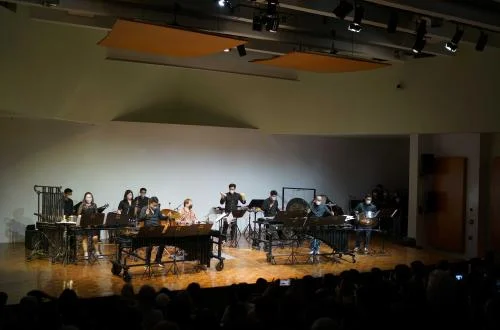
Indonesia’s rich and diverse musical landscape, deeply rooted in a vibrant percussion tradition, stands poised to become a beacon for percussion development not only in Asia but on a global scale. Despite this immense potential, the nation’s percussion heritage has yet to be fully explored and amplified. Recognizing this untapped capacity, the Yayasan Musik Amadeus Indonesia (YMAI), a cornerstone of music education and cultural promotion, has launched a significant initiative aimed at elevating Indonesian percussion music. This ambitious endeavor culminates in "Kenopsia," the foundation’s first-ever full percussion concert in its 30-year history, featuring the Amadeus Percussion Ensemble (Ampere) and acclaimed Austrian percussionist Adi Schober.
A Multifaceted Approach to Percussion Advancement
The "Kenopsia" concert, held at the prestigious GoetheHaus Jakarta, was not an isolated event but the apex of a broader strategic campaign by YMAI. Prior to the concert, the foundation successfully organized the Indonesia Percussion Composition Competition (IPECC) and the Indonesia Percussion Meeting (IPM). These complementary events were designed to foster innovation, encourage new compositions, and facilitate dialogue and knowledge exchange within the percussion community. The IPECC, in particular, served as a crucial platform for discovering and nurturing emerging compositional talent, with the concert proudly showcasing the world premiere of the winning pieces.
The program of "Kenopsia" was meticulously curated to offer a comprehensive exploration of percussion repertoire. It commenced with "Novena" by James Swearingen, artfully arranged by I Nyoman Trieswra Minartha, setting a sophisticated tone. This was followed by the groundbreaking premieres of the IPECC winners: "Dialektika, Dualitas, Kontradiksi" by Arya Pugala Kitti and Lucy Freia, a piece that likely delves into complex rhythmic and structural interplay; "Restrained" by Andre, hinting at a controlled yet powerful sonic experience; "March 16th" by Jeremia Saputra, potentially offering a more martial or processional character; and the titular "Kenopsia" by Regina Budiyanto Sutisno, the title of which (referring to the eerie, abandoned atmosphere of a place once bustling with people) suggests a poignant or evocative musical narrative.
The second half of the concert broadened the sonic palette, featuring the energetic "Blue Samba" by Murray Houllif, a staple in the percussion ensemble repertoire. The program then showcased the soloistic prowess of Adi Schober with his own composition, "Solo." A crowd-pleasing arrangement of "The Music of James Bond" by James Bocook, again expertly arranged by I Nyoman Trieswara Minartha, likely injected a dose of popular appeal. This was followed by the vibrant "Mambo Africano" by Alice Gomez and Marily Rife, promising a fusion of African rhythms with Latin flair. The concert concluded with a substantial work, "Suite for Solo Drumset and Percussion Ensemble" by David Mancini, with Adi Schober performing as the featured soloist, a testament to his virtuosity and the ensemble’s capability.
The Genesis and Vision of Yayasan Musik Amadeus Indonesia
The Yayasan Musik Amadeus Indonesia, established in 1992 by Grace Soedargo, has been a steadfast advocate for classical music education in Indonesia. Its founding institution, Sekolah Musik Amadeus (SMA), has since nurtured thousands of students, commencing from the tender age of two. This early introduction to music education underscores YMAI’s commitment to fostering a lifelong appreciation and engagement with music.
Currently, SMA boasts a robust student body of over 200 individuals actively engaged in learning a diverse range of instruments, including piano, strings, woodwinds, and notably, percussion. With a dedicated faculty of 25 instructors, SMA continues to propagate classical music through its comprehensive classroom instruction and by providing numerous opportunities for students to perform in various student orchestras and ensembles. A significant aspect of SMA’s international standing is its unique affiliation with the Johann Sebastian Bach Musikschule (JSBM) in Vienna, Austria, making it the sole music school in Southeast Asia to hold such a prestigious partnership. This connection undoubtedly enriches the curriculum and provides students with an internationally recognized standard of musical training.
Grace Soedargo articulated the foundational philosophy behind YMAI’s percussion initiatives: "By organizing IPECC, IPM, and the Kenopsia concert, Amadeus aims to make a breakthrough in percussion music in Indonesia." Her expressed hope is that these efforts will inspire Indonesian percussionists, instilling in them a renewed passion and a drive to develop their skills to meet global standards. This forward-looking vision highlights YMAI’s role not just as an educational institution but as a catalyst for artistic and professional growth within the Indonesian percussion community.
A Global Perspective: The Expertise of Adi Schober
The inclusion of Austrian percussionist Adi Schober in the "Kenopsia" concert brought an international dimension to the event, offering Indonesian musicians and audiences a direct connection to world-class talent. Schober’s biography reveals a deep and extensive background in percussion, commencing from a very young age. Born in 1967 in Holabrunn, Austria, he began his percussion studies at five, simultaneously exploring piano, organ, and trumpet. This early multi-instrumental exposure likely contributed to a well-rounded musical foundation.
His formal percussion education was pursued at the Hochschule für Musik und darstellende Kunst Wien under the tutelage of Prof. Horst Berger, followed by studies in drumset and percussion with Prof. Fritz Ozmec. Further specialization occurred at the Konservatorium der Stadt Wien, where he delved into jazz percussion under Prof. Walter Grassmann and percussion pedagogy with Prof. Kurt Prihoda. This comprehensive academic journey equipped him with a broad spectrum of technical skills and pedagogical insights.
Schober’s career has been multifaceted, encompassing teaching across various Austrian cities, founding the "Adi Schober Quintett," performing with orchestras and big bands, and serving as a music director for numerous Austrian festivals. Beyond his performance and teaching roles, Schober has also dedicated himself to the therapeutic applications of rhythm, collaborating since 2009 with Dr. Kurt Sindermann and Dr. Barbara Schaffer in developing rhythm therapy for individuals with mental health challenges. This innovative work underscores a holistic understanding of music’s impact. His personal recording studio serves as a hub for his improvisational work and also supports other international recording projects for labels like "Internationale Ignaz J Pleyel Gesellschaft," "Gramola," and "Apollon." Schober’s participation in "Kenopsia" was not merely as a performer but as an ambassador of global percussion excellence and pedagogical innovation.
The Amadeus Percussion Ensemble: A New Force
The Amadeus Percussion Ensemble (Ampere) represents a tangible outcome of YMAI’s strategic focus on percussion. Established in August 2017, its formation coincided with the silver jubilee celebrations of both the Yayasan Musik Amadeus Indonesia and the Sekolah Musik Amadeus. This coincided with the establishment of the percussion department at SMA in the same year, under the leadership of Ryan Saputro. The primary objective behind Ampere’s creation was to cultivate internationally competitive percussionists, signaling a commitment to raising the caliber of percussion performance in Indonesia. The ensemble’s performance at "Kenopsia" demonstrated their dedication and technical proficiency, showcasing their potential to become a leading force in the Indonesian percussion scene.
Historical Context and Broader Implications
The "Kenopsia" concert and its accompanying initiatives mark a pivotal moment for percussion in Indonesia. Historically, while Indonesia possesses a rich tapestry of traditional percussion instruments and styles—from the gamelan ensembles of Java and Bali to the various tribal drums found across the archipelago—the formal development and international integration of contemporary percussion music have been more nascent. YMAI’s comprehensive approach, encompassing composition, performance, education, and international collaboration, addresses this gap directly.
The Indonesia Percussion Composition Competition (IPECC) plays a vital role in expanding the contemporary percussion repertoire available to Indonesian musicians. By commissioning and premiering new works, YMAI is not only providing opportunities for composers but also ensuring that the evolving soundscape of Indonesian percussion is documented and celebrated. The Indonesia Percussion Meeting (IPM) fosters a crucial environment for networking, sharing best practices, and discussing the future direction of percussion education and performance in the country. Such forums are indispensable for building a cohesive and progressive national percussion community.
The implications of YMAI’s efforts extend beyond the immediate impact of the concert. By consistently investing in percussion education, performance, and composition, the foundation is laying the groundwork for a sustainable growth of the percussion genre in Indonesia. This can lead to increased international recognition for Indonesian percussionists and composers, fostering cultural exchange and collaboration. Furthermore, the emphasis on global standards, as highlighted by Grace Soedargo and embodied by Adi Schober’s involvement, ensures that Indonesian percussionists are well-equipped to compete and contribute on the international stage.
The success of "Kenopsia" and the accompanying events signals a turning point, transforming theoretical potential into concrete achievements. As Indonesia continues to assert its presence in the global cultural arena, initiatives like those undertaken by Yayasan Musik Amadeus Indonesia are instrumental in showcasing the nation’s artistic depth and fostering a vibrant, forward-looking musical future. The reverberations of "Kenopsia" are likely to inspire a new generation of percussionists and composers, solidifying Indonesia’s claim as a significant contributor to the global percussion narrative.