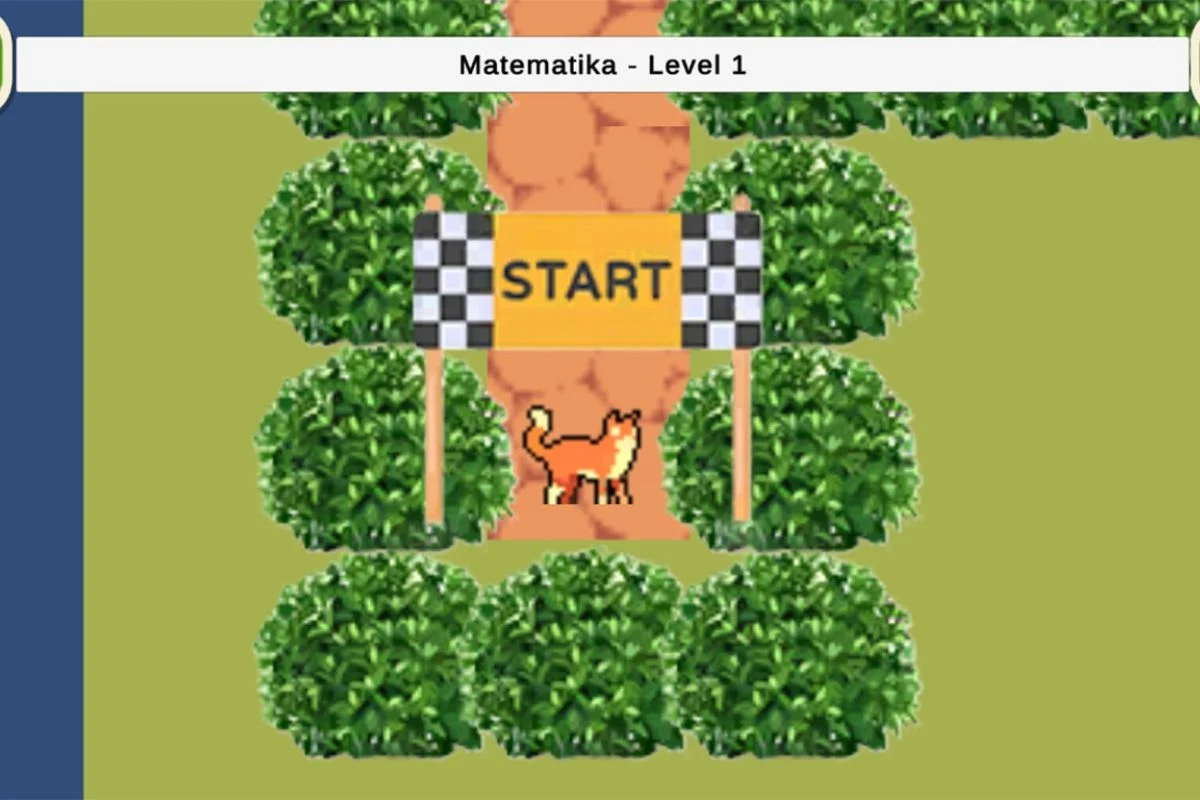
The landscape of early childhood education is undergoing a significant transformation, particularly in how foundational subjects like mathematics are introduced to young learners. For many children, mathematics has historically been perceived as a daunting and often tedious subject, characterized by abstract numbers, complex formulas, and seemingly endless calculation problems. This perception frequently leads to a rapid decline in their engagement and interest in learning. However, the rapid advancements in digital technology, particularly the widespread accessibility of smartphones, are ushering in a new era, offering innovative and engaging avenues for children to develop crucial numerical skills. Interactive game applications are emerging as powerful tools, converting abstract mathematical concepts into captivating digital adventures that foster both understanding and enthusiasm.
The traditional approach to mathematics education, often heavily reliant on textbooks and rote memorization, can inadvertently create barriers to learning for many children. The inherent visual and interactive nature of modern gaming applications provides a stark contrast, transforming the learning experience from a potentially dry academic pursuit into an enjoyable and stimulating pastime. By integrating mathematical challenges within visually appealing game environments and employing intuitive gameplay mechanics, these applications effectively dismantle the intimidation factor often associated with math. Children are no longer confined to staring at pages of exercises; instead, they are immersed in dynamic worlds where solving problems becomes an integral part of achieving in-game objectives. This subtle yet profound shift encourages children to actively participate, problem-solve, and build confidence in their mathematical abilities without the conscious feeling of "studying." This paradigm shift is critical for nurturing a lifelong appreciation for STEM fields.
The Rise of Gamified Learning: A Global Trend
The integration of gaming principles into educational contexts, often referred to as gamification, is not a new concept. However, its application in early math education has gained considerable momentum in recent years. Data from market research firms consistently highlight the growing adoption of educational apps, with a significant portion dedicated to STEM subjects. A report by Newzoo in 2023 indicated that the global games market is projected to continue its upward trajectory, with mobile gaming representing a substantial and growing segment. This growth is fueled, in part, by the increasing demand for engaging and accessible learning tools for children. Educational technology companies are investing heavily in developing applications that not only teach but also entertain, recognizing the profound impact of intrinsic motivation on learning outcomes.
The development of these applications is often informed by pedagogical research into how children learn best. Cognitive scientists and educators have long advocated for hands-on, interactive learning experiences that cater to different learning styles. Gamified math apps often leverage principles of behavioral psychology, incorporating elements like immediate feedback, reward systems (e.g., points, badges, virtual currency), and progressive challenges to keep children motivated. Furthermore, many apps are designed with adaptive learning algorithms, meaning they can adjust the difficulty level of problems based on the child’s performance, ensuring that they are consistently challenged but not overwhelmed. This personalized approach is a significant departure from the one-size-fits-all model of traditional classroom instruction.
Key Applications Revolutionizing Math Education
Several applications have emerged as leaders in this space, offering distinct approaches to making mathematics fun and accessible. These platforms often cater to a wide range of age groups and learning objectives, from basic arithmetic to more complex algebraic concepts.
1. King of Maths: Building Foundational Skills Through Adventure
"King of Maths" stands out as a popular choice for introducing children to fundamental mathematical concepts. The application frames mathematical learning within an engaging adventure narrative. It covers a spectrum of topics, including basic algebra, geometry, and division, all presented as challenges within a quest-like environment. Children are empowered to select their avatars and embark on journeys where they must solve numerical puzzles, such as finding missing numbers, to progress. This interactive approach not only hones their arithmetic skills but also cultivates logical reasoning and attention to detail. Designed for elementary school-aged children, "King of Maths" is readily available and often offered free of charge across various digital platforms, making it an accessible resource for many families. Its success lies in its ability to translate abstract mathematical operations into tangible goals within a fantasy setting.
2. Math Tango: Exploring Enchanted Worlds with Fibonacci
"Math Tango" offers a vibrant and imaginative learning experience, transporting children to a colorful, magical island. Guided by the character Uncle Fibonacci, young learners undertake missions that require them to solve mathematical problems to earn gems. These collected gems can then be used to unlock new characters and expand their in-game world. With dozens of interactive math lessons, the application cleverly intertwines the process of learning arithmetic with the joy of building and customizing a fantasy realm. This method of learning through play and creative expression can significantly enhance a child’s engagement and retention of mathematical principles. The application’s design emphasizes visual appeal and narrative, making abstract concepts more relatable and enjoyable.
3. Math Puzzle Games: Sharpening Logical and Analytical Prowess
"Math Puzzle Games" are specifically engineered to cultivate a child’s logical and analytical thinking abilities. This category of applications presents children with a series of challenging numerical riddles and puzzles. The learning process is structured around the interactive nature of puzzles, ensuring that the experience remains dynamic and avoids the monotony often associated with traditional drills. Parents can leverage these games as a regular learning activity, fostering concentration and improving their child’s calculation skills. The puzzle format encourages children to approach problems from multiple angles, promoting critical thinking and problem-solving strategies. This approach aligns with the growing understanding that mathematical proficiency extends beyond mere computation to encompass reasoning and strategic thinking.
4. Math Duel: Fostering Speed and Mental Agility
For children who thrive on competition and challenges, "Math Duel" presents an exciting proposition. This game is designed to sharpen mental arithmetic speed by requiring players to combine number cards and mathematical operations to form correct equations. The competitive aspect of the game is a powerful motivator, encouraging children to improve their quick calculation abilities without experiencing boredom. The game often allows for multiplayer modes, enabling children to compete against friends or family, further enhancing the engagement factor. This gamified competition taps into a child’s natural desire to succeed and outdo others, translating into a more rapid and efficient grasp of mathematical fluency.
5. Prodigy Math Game: An Immersive RPG Adventure
"Prodigy Math Game" has established itself as one of the most popular and comprehensive math applications available. It adopts a Role-Playing Game (RPG) format, weaving curriculum content for grades 1 through 8 into an expansive fantasy adventure. A key feature of "Prodigy" is its adaptive learning system, which dynamically adjusts the difficulty of mathematical challenges to match the child’s current skill level. As children progress through the game and earn rewards, parents can monitor their learning journey through detailed progress reports. This feature provides valuable insights into a child’s strengths and areas that may require additional attention, enabling a more targeted approach to support their educational development. The integration of a rich narrative and interactive gameplay makes learning feel less like a chore and more like an exciting quest.
6. Monster Math: Engaging Missions and Skill Development
"Monster Math" boasts an impressive library of over 67 mathematical skills, covering a broad range from fundamental operations to decimal numbers. Tailored for children aged 6 to 10, the game immerses young learners in exciting missions, such as defeating monsters and rescuing friends, all while practicing math. The application also provides weekly progress reports, a valuable tool for parents to track and understand their child’s mathematical development. The game’s design focuses on making learning an active and rewarding experience, linking mathematical problem-solving directly to tangible in-game achievements. This immediate reinforcement loop is highly effective in solidifying learning.
7. Todo Math: Inclusive and Multisensory Learning
"Todo Math" is recognized for its inclusive and child-friendly design, catering to children aged 3 to 8. The application is thoughtfully developed to meet diverse learning needs, incorporating features such as dyslexia-friendly fonts and a left-handed mode. Its multisensory approach, which synergistically combines visual, auditory, and tactile elements, makes the introduction of mathematical concepts exceptionally engaging and accessible. This holistic approach ensures that children with different learning preferences can benefit equally from the application. By engaging multiple senses, "Todo Math" creates a richer and more memorable learning experience, making abstract concepts more concrete and understandable.
The Role of Parental Guidance and Future Implications
While these technological innovations offer unprecedented opportunities for enhancing mathematical learning, the crucial role of parental involvement cannot be overstated. Experts emphasize that these applications should be viewed as supplementary tools, not replacements for active parental engagement. Parents are encouraged to play alongside their children, discuss the concepts they encounter, and help manage screen time effectively. This collaborative approach ensures that children not only benefit from the engaging content but also develop a healthy relationship with technology and a balanced approach to learning.
The implications of this shift towards gamified learning are far-reaching. As children develop stronger numerical foundations and a more positive attitude towards mathematics from an early age, they are more likely to excel in STEM fields throughout their academic careers. This can lead to a more skilled workforce in critical sectors, fostering innovation and economic growth. Furthermore, by making learning more accessible and engaging, these applications can help bridge educational disparities and ensure that all children have the opportunity to develop essential life skills. The continued evolution of educational technology, coupled with a deeper understanding of child psychology and pedagogy, promises even more sophisticated and effective learning tools in the future. The journey of transforming mathematics from a dreaded subject into an exciting adventure is well underway, with digital games leading the charge.