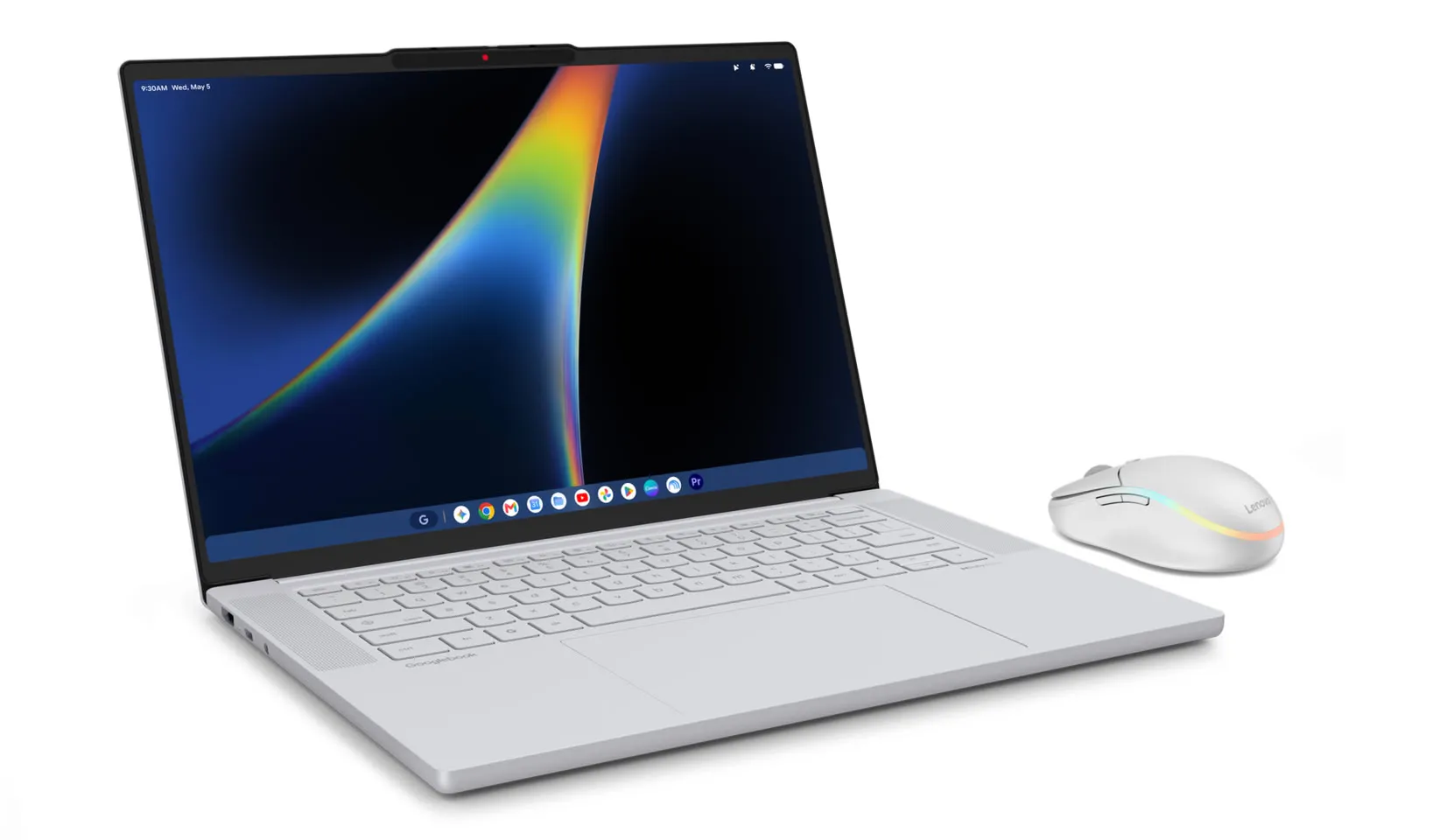
Lenovo has officially taken the wraps off its newest enterprise-grade and consumer laptop, the Googlebook 15, marking a significant milestone as one of the very first devices to run the newly developed Googlebook Operating System. Unveiled during a major global hardware showcase, the Googlebook 15 is engineered to merge the seamless, cloud-connected ecosystem experience pioneered by Google with high-performance physical hardware crafted by Lenovo. Designed to capture the attention of modern professionals, digital creators, and students alike, this device blends heavy-duty AI processing capabilities with an ultra-lightweight footprint, redefining what users should expect from a 15-inch productivity machine.
The arrival of the Googlebook 15 is not an isolated product drop, but rather part of a synchronized industry push toward next-generation computing architectures. Alongside concurrent announcements from hardware competitors like ASUS—which recently introduced its own Googlebook 14 variant—the computing landscape is experiencing a paradigm shift. For years, the market has drawn a sharp line between traditional Windows laptops and lighter, web-centric Chromebooks. The introduction of Googlebook OS bridges this historical divide, offering a sophisticated, AI-first environment that caters to users demanding deep application compatibility paired with lightning-fast cloud integration. Lenovo’s hardware engineering team has stepped up to this challenge, housing cutting-edge silicon inside a chassis that defies the conventional weight penalties typically associated with large-screen laptops.
At the heart of the Lenovo Googlebook 15 is Intel’s advanced Core Ultra 5 325 processor, built on the highly anticipated Panther Lake architecture. This processor represents a monumental leap forward in power efficiency and on-board neural processing capabilities. With dedicated hardware accelerators built specifically for artificial intelligence workloads—commonly referred to as a Neural Processing Unit (NPU)—the laptop is primed to handle advanced AI experiences natively. Whether users are running real-time speech transcription, automated document summarization, generative AI image creation, or context-aware system optimization, the Panther Lake processor ensures these tasks execute smoothly without draining the battery or choking background applications.
Complementing this powerhouse of a processor is a stunning visual interface. The Googlebook 15 is built around a magnificent 15.3-inch OLED panel featuring a sharp 2.8K resolution and full touchscreen capabilities. OLED technology brings infinite contrast ratios, pitch-black dark levels, and vibrant, cinema-grade color accuracy to the device, making it exceptionally well-suited for both high-productivity office tasks and immersive multimedia consumption. Despite housing a display of this substantial diagonal dimension, Lenovo’s engineering team achieved a breakthrough in weight distribution and material science. The Googlebook 15 weighs a remarkably light 1.29 kilograms, officially earning the title of the lightest 15-inch laptop within Lenovo’s current portfolio. This ultra-portable design ensures that mobile professionals do not have to sacrifice screen real estate in exchange for backpack-friendly portability.
Underneath the sleek exterior, Lenovo has equipped the Googlebook 15 with robust configuration options to prevent performance bottlenecks. Users can choose between 16GB and 32GB of high-speed LPDDR5X RAM, ensuring fluid multitasking capabilities even when dozens of browser tabs, communication applications, and resource-heavy creative suites are running concurrently. Storage configurations cater to varying needs, offering reliable solid-state drive capacities of either 256GB or 512GB. To keep this hardware running throughout a demanding workday, Lenovo has integrated a robust 70Wh battery. When paired with the power-efficient Panther Lake architecture, the battery is engineered to deliver all-day endurance, minimizing the need to hunt for wall outlets during mobile work sessions.

Modern security and privacy expectations have also been given top priority in the design of the Googlebook 15. The laptop features a sharp 5-megapixel webcam equipped with an integrated physical privacy shutter, allowing users to mechanically block the lens when it is not in use. Biometric authentication is handled comprehensively through both a fast, reliable fingerprint sensor and advanced facial recognition (face unlock), giving users rapid, password-free entry into their operating system while maintaining strict enterprise-grade security protocols. Furthermore, the device incorporates the distinctive Glowbar—an illuminated visual indicator that serves as a signature design and functional aesthetic element for devices running the Googlebook OS, providing subtle cues regarding system status and AI interaction.
Audio quality matches the high visual standard set by the OLED display. The Googlebook 15 features a quad-speaker array—a total of four speakers—engineered to deliver rich, room-filling sound. Complete with Dolby Atmos certification, the audio system provides spatial depth and clarity whether the user is participating in crystal-clear conference calls, streaming high-definition movies, or listening to music.
Connectivity options on the Googlebook 15 are remarkably comprehensive, defying the industry trend toward over-minimalistic port selection. For wireless communications, the laptop supports the bleeding-edge Wi-Fi 7 standard alongside Bluetooth 6.0, ensuring lightning-fast local network speeds, minimal latency, and rock-solid peripheral pairing. On the physical chassis, users will find two versatile Thunderbolt 4 ports capable of high-speed data transfer, power delivery, and multi-monitor output. Additionally, Lenovo has included a full-sized USB 3.2 port, an HDMI 2.0 output for traditional display connections, and a standard 3.5mm headphone and microphone jack. This generous array of ports eliminates the immediate necessity of carrying dongles and adapters—a common frustration for contemporary laptop owners.
Market availability and pricing details have been officially confirmed by Lenovo executives. The Googlebook 15 is scheduled to make its official retail debut in October, launching with a starting price tag of $1,099 (approximately Rp18 million). This competitive pricing strategy positions the laptop firmly in the upper-mid-range premium segment, directly targeting professionals and students looking for high-end build quality and cutting-edge software features without crossing into exorbitant luxury territory. However, regional rollout plans remain fluid; as of the initial announcement, Lenovo has not yet confirmed a specific timeline or pricing structure for the device’s eventual arrival in the Indonesian market, leaving local consumers waiting for subsequent regional announcements from Lenovo’s domestic subsidiaries.
Industry analysts tracking the launch of the Googlebook 15 point to several profound market implications. By embracing Googlebook OS on premium hardware powered by Intel Panther Lake, Lenovo is signaling a strategic diversification of its product lineup. For years, the premium laptop market has been largely bifurcated between macOS ecosystems and Windows-based powerhouses. The entry of Googlebook OS into the high-end tier creates a viable third pillar, offering a streamlined, cloud-optimized operating system that capitalizes on Google’s dominant suite of web services and productivity tools.
Furthermore, the integration of advanced AI capabilities at the hardware level—courtesy of Intel’s latest silicon—highlights a broader industry trajectory where artificial intelligence is no longer viewed as a software novelty, but as a core operational utility. As enterprise environments increasingly demand secure, AI-accelerated workflows that can execute locally to protect sensitive data, devices like the Lenovo Googlebook 15 are positioned to lead the charge. If consumer and enterprise adoption mirrors the enthusiastic reception at its initial unveiling, the Googlebook 15 could fundamentally alter the competitive dynamics of the 15-inch laptop market, setting a new benchmark for how manufacturers balance expansive screen real estate, featherlight portability, and next-generation intelligence.