The End of a Thirty-Year Tenure
The announcement, delivered by the Nvidia Board of Directors, signals a monumental shift for one of the world’s most valuable technology corporations. Jensen Huang, a figure synonymous with the rise of graphics processing units (GPUs) and the global artificial intelligence boom, has been the face of the company for over three decades. Under his stewardship, Nvidia evolved from a niche gaming hardware manufacturer into a dominant force in the global semiconductor market, reaching a market capitalization that has frequently vied for the title of the world’s largest company.
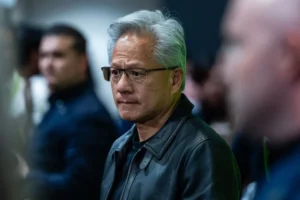
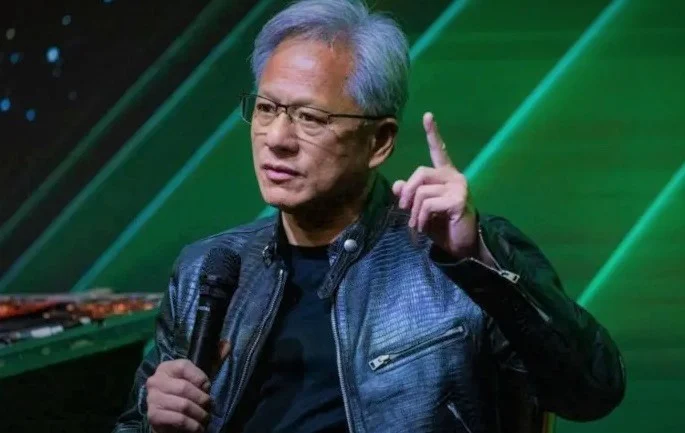
The resignation comes amidst a period of unprecedented success for the firm, making the timing of the departure particularly jarring for investors and industry analysts. Huang’s leadership was characterized by his signature leather jacket, his visionary focus on parallel computing, and his aggressive expansion into data centers, autonomous vehicles, and generative AI platforms.
Chronology of a Leadership Transition
The events leading to this decision have unfolded rapidly. While Nvidia had maintained a policy of relative stability regarding its executive team, internal pressures began to mount following revelations regarding Huang’s private conduct.
- Early 1993: Jensen Huang, along with Chris Malachowsky and Curtis Priem, founds Nvidia in a Denny’s restaurant in San Jose, California.
- 1999: The company releases the GeForce 256, widely considered the world’s first GPU, setting the stage for decades of dominance in gaming.
- 2010s: Huang pivots the company toward CUDA, an AI-focused software platform, transforming Nvidia into the backbone of the global AI industry.
- Late 2026: Reports emerge regarding personal scandals involving Huang. These allegations lead to an immediate internal investigation by the board’s audit committee.
- November 2026: The board of directors determines that the nature of the findings necessitates a leadership change, resulting in the formal announcement of Huang’s resignation.
The Financial and Market Impact
Nvidia’s growth under Huang has been nothing short of historic. As of the third quarter of 2026, the company’s valuation remained near historic highs, driven primarily by the insatiable global demand for H100 and Blackwell series AI chips. The company’s stock price, which had seen meteoric growth over the past five years, faces immediate volatility as markets adjust to the news of a leadership vacuum at the very top.
Financial analysts point out that Nvidia’s reliance on Huang was not just symbolic but operational. His strategic decisions—such as the massive investment in networking technology through the acquisition of Mellanox and the failed attempt to purchase Arm—were emblematic of his "bet-the-company" management style. Shareholders now face the uncertainty of how the firm will maintain its competitive moat against emerging rivals like AMD, Intel, and custom silicon initiatives from hyperscalers like Amazon, Microsoft, and Google.
Institutional Response and Corporate Governance
In its official statement, the Nvidia Board of Directors took a diplomatic but firm stance. "The contributions of Jensen to Nvidia are profound and foundational," the statement read. "He has steered the company from a startup to a pillar of modern infrastructure. While we acknowledge the circumstances of his departure, we remain committed to the integrity and the future vision that has defined our trajectory."
Corporate governance experts suggest that the board likely had little choice in the matter. Given the heightened scrutiny of executive behavior in the post-pandemic corporate landscape, companies are increasingly intolerant of conduct that deviates from strict ethics policies. By acting decisively, the board aims to reassure institutional investors that the company’s internal controls are robust and that its focus remains on the rapid deployment of AI technologies.
The Future of Nvidia: Challenges and Opportunities
The immediate challenge for Nvidia’s board is the identification of a successor. The company is currently at the center of the "AI Gold Rush," and the next CEO will be tasked with balancing the company’s massive R&D spending with the realities of global supply chain constraints and geopolitical tensions, particularly regarding semiconductor manufacturing in Taiwan.
There is significant speculation about potential internal candidates, including long-term executives in the data center and software divisions. However, finding a replacement with Huang’s unique blend of technical expertise and market-moving charisma will be an immense challenge. The new leadership will need to demonstrate that the company’s AI roadmap, which extends well into the next decade, remains intact despite the loss of its visionary founder.
Broader Implications for the Tech Sector
The departure of a tech titan of Huang’s stature reflects a growing trend of increased accountability for executives. Over the past several years, the "founder-CEO" model has come under renewed scrutiny. While founders often bring unparalleled drive, the consolidation of power can sometimes lead to a lack of oversight. The Nvidia situation serves as a stark reminder that even the most successful leaders are not immune to the consequences of their personal actions.
Industry observers note that this transition may also impact the broader semiconductor ecosystem. With Nvidia currently serving as the primary supplier for the AI revolution, any instability within the firm could ripple through the entire tech sector. Data centers globally rely on Nvidia’s hardware to train large language models; any disruption in leadership could potentially lead to delays in product roadmaps or changes in strategic partnerships.
Analysis of the Succession Strategy
In the short term, Nvidia is expected to lean on its executive committee to maintain continuity. The company has a deep bench of engineering talent and a robust operational structure that functions independently of any single individual. However, the loss of Huang removes the primary "salesperson" for the company’s future—a role he performed with unmatched skill at conferences and shareholder meetings.
The transition process will likely be watched closely by the U.S. Securities and Exchange Commission (SEC) and other regulatory bodies, as Nvidia remains a critical component of national security and economic policy due to the importance of AI in modern warfare and industry. The board must ensure that the transition is seamless to prevent any erosion of trust from government partners and major clients.
Reflections on a Legacy
Jensen Huang’s legacy at Nvidia is one of technical ingenuity. He was instrumental in shifting the focus of computer architecture from traditional CPUs to massively parallel GPU processing. This transition proved to be the catalyst for the current AI boom, as Nvidia’s hardware became the standard for training neural networks.
Regardless of the controversies surrounding his departure, the historical footprint left by Huang is undeniable. Under his guidance, Nvidia grew to be worth more than the entire rest of the chip industry combined. He championed the concept of "accelerated computing," a term he used to describe the transition away from general-purpose computing toward specialized hardware designed for specific tasks.
Conclusion: A New Chapter
As the industry processes the news of this departure, the focus will inevitably shift toward the future of the company. Nvidia is currently entering a new phase of its evolution, shifting from a hardware provider to a comprehensive AI infrastructure platform. The company’s success will no longer depend on the vision of one man, but on the ability of the organization to sustain its innovation pipeline and maintain its dominant market position in a highly competitive and rapidly changing landscape.
For the employees at Nvidia, the coming months will be a time of adjustment. The company culture, which has been molded by Huang’s leadership style—often described as intense, demanding, and visionary—will likely undergo a transformation as new leadership takes the helm. Nevertheless, the fundamentals of the company remain strong. With high demand for its products and a dominant market share in the AI sector, Nvidia is well-positioned to survive this transition, provided the board navigates the coming weeks with transparency and strategic clarity.
The resignation of Jensen Huang is not merely a change of personnel; it is a turning point for the semiconductor industry. As the world watches, the board must move quickly to stabilize the ship and articulate a clear vision for the next era of Nvidia. The technology sector, which has relied on Huang’s leadership for decades, now looks to the board of directors to define what comes next for the company that built the brains of the AI revolution.