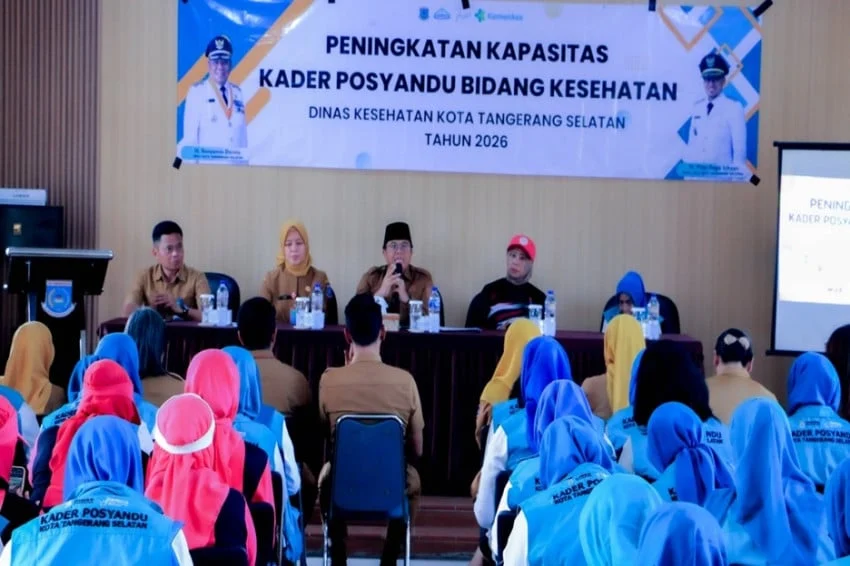
The Tangerang Selatan City Government (Pemkot Tangsel) has underscored its unwavering commitment to bolstering public health services by embarking on a comprehensive capacity-building initiative for its Posyandu cadres. This strategic investment in community-level healthcare personnel aims to significantly elevate the quality and reach of primary health services across the city. The program, officially titled the "2026 Posyandu Cadre Capacity Enhancement Program," saw the participation of 1,389 dedicated cadres drawn from 172 Posyandus (Integrated Service Posts) situated within the Pamulang District. Organized by the Tangsel City Health Office, the pivotal training commenced on Monday, July 20, 2026, marking a significant step in the city’s ongoing efforts to create a more resilient and responsive health ecosystem.
Strengthening the Backbone of Community Health
The initiative is a direct response to the evolving demands of public health and the critical role Posyandus play as the bedrock of Indonesia’s primary healthcare system. These community-based health posts, predominantly staffed by volunteers, serve as the initial point of contact for many citizens, providing essential services ranging from maternal and child health monitoring to nutrition counseling and immunization. By enhancing the knowledge and skills of these frontline health workers, the Tangsel City Government seeks to ensure that residents receive more competent and comprehensive health support directly within their neighborhoods.
Allin Hendalin Mahdaniar, the Head of the Tangsel City Health Office, articulated the core objective of the program on Wednesday, July 22, 2026. "Through this activity, we aim to increase the capacity of Posyandu cadres so they become more trained and skilled in delivering community-based health services," Mahdaniar stated. "With improved capabilities, cadres are expected to provide more optimal services to the communities in their respective areas." This statement highlights the city’s strategic vision: empowering local volunteers to act as more effective conduits for health information and services, thereby decentralizing and democratizing access to care. The emphasis on "optimal services" implies a holistic approach, encompassing not just basic checks but also proactive health promotion and early detection of potential health issues.
The Enduring Role of Posyandu in Indonesia’s Healthcare Landscape
Posyandu, an acronym for Pos Pelayanan Terpadu (Integrated Service Post), represents a unique and highly effective model of community-led healthcare delivery in Indonesia. Established in the mid-1980s, these posts have become ubiquitous across the archipelago, providing accessible primary health services, particularly for mothers and children. Their functions typically include growth monitoring, immunization, family planning, maternal health services, nutrition education, and disease prevention. Staffed primarily by community volunteers, often women, Posyandus leverage local social networks and trust to reach vulnerable populations who might otherwise struggle to access formal health facilities.
The importance of Posyandus has only grown in recent years, especially with the national focus on improving key health indicators such as reducing maternal and infant mortality rates, combating stunting, and controlling communicable and non-communicable diseases. According to data from the Ministry of Health, Indonesia boasts hundreds of thousands of Posyandus nationwide, supported by millions of dedicated cadres. These volunteers are often the first line of defense against public health crises and play an indispensable role in routine health surveillance and promotion. However, the effectiveness of Posyandus is directly proportional to the capacity and continuous training of their cadres. This necessitates ongoing investment in human resources, a principle that the Tangsel City Government has clearly embraced with its latest initiative. The commitment to these community health workers is not merely about providing training; it is about recognizing their pivotal role as vital extensions of the formal healthcare system, bridging the gap between clinical services and community needs.
A Targeted Intervention in Pamulang
The selection of Pamulang District as the initial focus for this extensive capacity-building program is significant. Pamulang, a densely populated area within Tangerang Selatan, presents a microcosm of urban health challenges, where diverse demographics necessitate robust and adaptable community health strategies. The participation of 1,389 cadres from 172 Posyandus within this single district alone underscores the scale of the commitment and the profound reach of Posyandu services at the grassroots level.
The training modules for the 2026 program are meticulously designed to cover a broad spectrum of critical health topics and practical skills. While specific curriculum details were not fully elaborated, such programs typically encompass:
- Basic Health Knowledge: Refresher on common diseases, hygiene, sanitation, and healthy lifestyle practices.
- Maternal and Child Health: Enhanced skills in prenatal and postnatal care support, infant and young child feeding practices, and early detection of developmental delays.
- Nutrition and Stunting Prevention: In-depth understanding of balanced nutrition, identification of malnutrition, and effective counseling strategies to prevent stunting, a critical national health agenda item that the Tangsel City Government is actively tackling, as evidenced by previous initiatives to strengthen maternal and child health services to prevent stunting.
- Immunization Awareness: Updated information on vaccine schedules, cold chain management, and addressing vaccine hesitancy.
- Data Collection and Reporting: Training on accurate record-keeping, utilizing digital tools for health data management, and reporting to higher-level health facilities.
- Counseling and Communication Skills: Techniques for effective health education, empathetic communication with community members, and motivational interviewing.
- Early Detection and Referral Systems: Equipping cadres to identify early signs of illness, manage minor ailments, and understand appropriate referral pathways for more complex cases.
- Integrated Life-Cycle Services: A holistic approach to health care that addresses needs across all stages of life, from infancy to old age, aligning with national health transformation goals.
This comprehensive approach ensures that cadres are not only equipped with theoretical knowledge but also practical skills that are immediately applicable in their daily interactions with community members. The training modules are likely delivered through a combination of interactive workshops, practical demonstrations, and peer learning sessions, fostering an environment of continuous improvement and shared best practices among the cadres.
Strategic Alignment with National Health Mandates
The capacity-building initiative is not merely a localized effort but is deeply intertwined with broader national health policy frameworks. Ika, the Expert Staff to the Mayor of Tangerang Selatan for Community and Human Resources Affairs, formally opened the training session and elaborated on this crucial alignment. She highlighted that the strengthening of Posyandu cadre capacity is an integral component of supporting the implementation of Permendagri Nomor 13 Tahun 2024 tentang Pos Pelayanan Terpadu (Posyandu), which translates to the Ministry of Home Affairs Regulation Number 13 of 2024 concerning Integrated Service Posts (Posyandu). This regulation signifies a concerted national effort to standardize, strengthen, and optimize the operational framework of Posyandus across Indonesia, ensuring uniformity in service delivery and governance.
Furthermore, Ika emphasized that this initiative plays a vital role in accelerating the Transformasi Pelayanan Kesehatan Primer (Primary Health Service Transformation). This national transformation agenda, spearheaded by the Ministry of Health, aims to reorient Indonesia’s healthcare system towards a more preventive, promotive, and integrated model, with primary healthcare as its cornerstone. A key tenet of this transformation is the emphasis on integrated services based on the life cycle, meaning healthcare interventions are tailored to individuals at every stage of their lives—from pregnancy and infancy through childhood, adolescence, adulthood, and old age. By empowering Posyandu cadres, Tangerang Selatan is actively contributing to this national vision, ensuring that community-level services are robust enough to support this integrated, life-cycle approach. This strategic alignment ensures that local efforts resonate with and amplify national objectives, creating a synergistic impact on public health outcomes.
Expert Voices on Capacity Building
The leadership of the Tangerang Selatan City Government and the Health Office consistently emphasize the strategic importance of investing in human capital at the grassroots level. Allin Hendalin Mahdaniar reiterated that the goal is not just to transfer knowledge but to cultivate a cadre of highly competent and confident health facilitators. "Our cadres are often the first and most trusted point of contact for families seeking health advice or services," she explained. "By enhancing their skills in areas like early detection, nutrition counseling, and even basic administrative tasks, we are effectively multiplying the reach and effectiveness of our entire health system."
Ika, from the Mayor’s Office, provided further insight into the broader policy implications. "The Permendagri No. 13/2024 provides a clear legal and operational framework for Posyandus. Our capacity-building program ensures that our cadres are not only aware of these regulations but are also fully equipped to implement them effectively," she noted. "This ensures consistency, accountability, and ultimately, better quality services for our citizens. Moreover, by fostering integrated services across the life cycle, we are moving away from episodic care towards a truly holistic and preventive model, where health interventions are proactive rather than reactive." This perspective highlights the legislative backbone supporting the program and its direct link to improved governance and service quality.
The Cadre Perspective: Empowering Frontline Health Workers
The success of any community-based program hinges significantly on the motivation and empowerment of its frontline workers. Sentiments echoed by many participating cadres during the initial days of the program expressed profound appreciation for the investment in their development. One cadre, speaking anonymously due to the program’s early stage, shared, "This training is invaluable. We often face complex health questions from our community members, and sometimes we feel we lack the most up-to-date information. Learning new techniques for counseling, understanding the latest immunization schedules, and even just networking with other cadres strengthens our confidence and our ability to serve." This feedback underscores the tangible impact of such initiatives on the individual cadres, enhancing their self-efficacy and commitment to their voluntary roles. Empowered cadres are more likely to be proactive, engaged, and effective in their communities, translating directly into improved health literacy and outcomes among the populace.
The training also serves as a platform for cadres to share their experiences and challenges, fostering a sense of community and mutual support among these vital volunteers. This peer-to-peer learning environment can be as crucial as the formal curriculum, allowing cadres to collectively brainstorm solutions to common problems faced in their respective Posyandus.
Broader Implications for Public Health and Development
The Tangsel City Government’s commitment to strengthening Posyandu cadres carries significant implications, both locally and nationally. At the local level, a more skilled cadre workforce in Pamulang is expected to lead to:
- Improved Health Outcomes: Better-equipped cadres can more effectively monitor child growth, identify early signs of stunting or other nutritional deficiencies, ensure higher immunization coverage, and promote healthier maternal practices, leading to a healthier population.
- Enhanced Community Engagement: As cadres become more confident and competent, their credibility within the community grows, fostering greater trust and participation in health programs.
- Reduced Burden on Higher-Level Facilities: Effective primary prevention and early detection at the Posyandu level can reduce the need for more complex and costly interventions at puskesmas (community health centers) or hospitals.
- Data-Driven Decision Making: Improved data collection and reporting skills will provide the Tangsel City Health Office with more accurate and timely information, enabling more targeted and effective public health interventions.
On a national scale, Tangerang Selatan’s comprehensive approach could serve as a model for other municipalities across Indonesia. Demonstrating the effectiveness of a robust, well-funded, and strategically aligned Posyandu cadre training program can inspire similar initiatives, contributing to the overall success of Indonesia’s national health transformation agenda and its ambitious goals, including the reduction of stunting to below 14% by 2024 and achieving Universal Health Coverage. Furthermore, healthier communities contribute directly to broader socio-economic development. A healthier population is a more productive workforce, leading to economic growth and reduced healthcare expenditures in the long term. This initiative is an investment in human capital that yields returns far beyond the immediate health sector.
Sustaining Progress: The Path Forward
While the "2026 Posyandu Cadre Capacity Enhancement Program" represents a substantial step forward, the Tangsel City Government recognizes that capacity building is an ongoing process, not a one-off event. Sustaining the progress achieved will require continuous commitment and strategic planning. Key considerations for the path forward include:
- Regular Refresher Training: Implementing periodic refresher courses to keep cadres updated on new health guidelines, emerging health threats, and innovative service delivery methods.
- Supervision and Mentorship: Establishing a robust system of supervision and mentorship from puskesmas staff to provide ongoing support, troubleshoot challenges, and ensure quality control.
- Resource Allocation: Ensuring adequate allocation of resources, including health education materials, basic medical supplies for Posyandus, and logistical support for cadre activities.
- Cadre Recognition and Incentives: Exploring ways to formally recognize and provide appropriate incentives for the voluntary efforts of cadres, which can significantly boost morale and retention.
- Technology Integration: Further integrating digital tools for health data management, communication, and e-learning to enhance efficiency and reach.
- Program Expansion: Gradually expanding the intensive capacity-building model to other districts within Tangerang Selatan, ensuring equitable access to enhanced community health services across the city.
The challenges inherent in managing a vast network of volunteer-based health posts, such as cadre turnover, varying levels of literacy, and resource constraints, are acknowledged. However, the proactive and comprehensive nature of Tangsel’s program demonstrates a clear strategy to mitigate these challenges through continuous investment and adaptation.
Conclusion: A Model for Integrated Community Health
The Tangerang Selatan City Government’s "2026 Posyandu Cadre Capacity Enhancement Program" stands as a testament to its forward-thinking approach to public health. By empowering its Posyandu cadres, the city is not just improving health services; it is strengthening the very fabric of community health, fostering a more resilient, knowledgeable, and proactive populace. This strategic investment aligns seamlessly with national health mandates, leveraging local action to achieve national aspirations of a healthier, more productive Indonesia. As the program progresses and its benefits ripple through the communities of Pamulang and beyond, Tangerang Selatan is poised to set a benchmark for integrated, community-based primary healthcare in urban settings, demonstrating how targeted capacity building can lead to transformative public health outcomes.