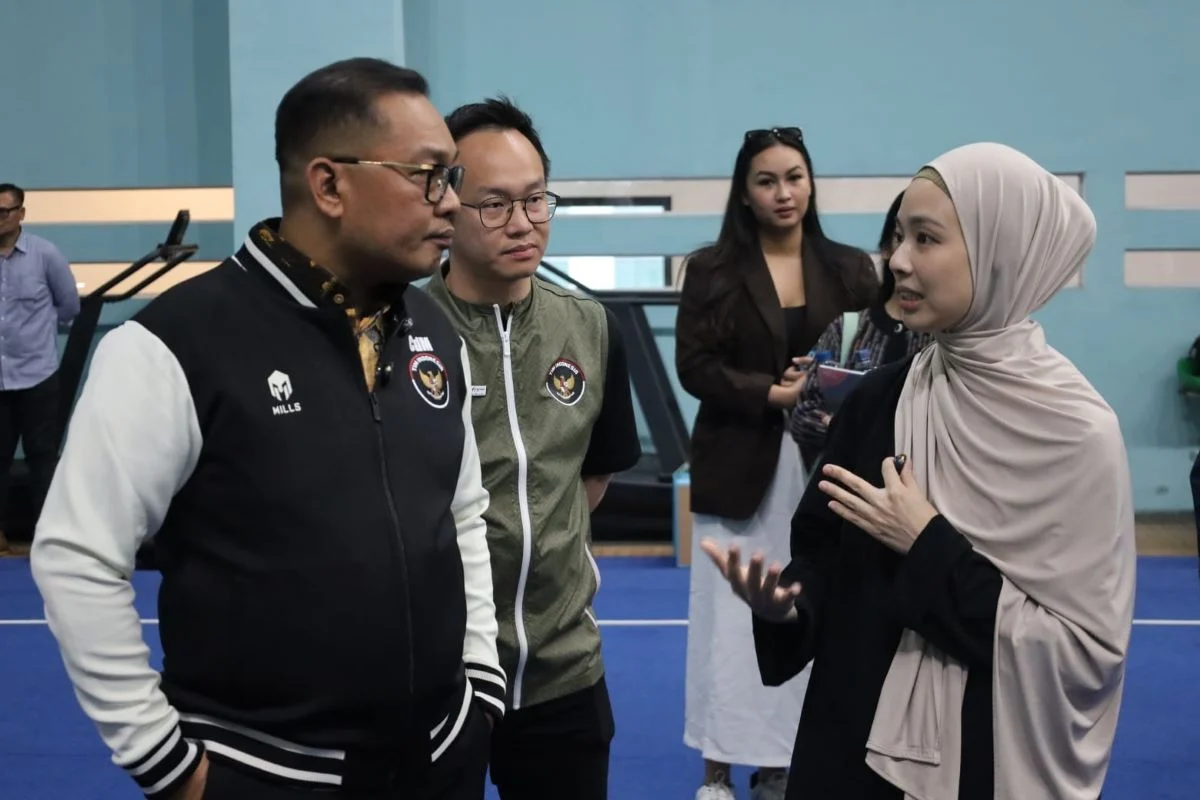
The mental fortitude of athletes is as critical to their success as their technical skills and physical conditioning, especially when navigating the high-pressure environment of competitive sports. This vital message was recently conveyed by Indonesia’s "Wushu Queen," Lindswell Kwok, to the Indonesian contingent’s Chef de Mission (CdM), Todotua Pasaribu, during a series of visits to various sports training centers in anticipation of the 2026 Asian Games.
Lindswell Kwok, a decorated athlete with firsthand experience in major multi-sport events, emphasized that maintaining athletes’ psychological well-being is a cornerstone for optimal performance on the competitive stage. Her own career highlights include a silver medal at the 2014 Incheon Asian Games and a gold medal at the 2018 Asian Games. Currently, she serves as a coach at the national wushu training center, preparing athletes for the upcoming 2026 edition of the continental games.
The Significance of Athlete-Centric Feedback
For CdM Todotua Pasaribu, the input gathered from current and former athletes is an indispensable component in the development of a comprehensive support system for the Indonesian contingent. Consequently, his visits to different sports disciplines are not solely for observing training progress but are also designed to foster open dialogue, allowing for a deeper understanding of athletes’ needs based on their direct experiences.
"We want to hear directly from those who have been in the field," stated Todotua Pasaribu. "Athletes and former athletes are the ones who best understand the demands of participating in multi-sport events. These kinds of insights are what equip us to ensure that the services we provide to the contingent truly address the athletes’ needs when they compete in the Asian Games."
This feedback loop is a priority for Todotua in his role as CdM. He underscored that the CdM’s responsibility extends beyond merely facilitating the contingent’s departure; it encompasses ensuring that all athlete needs are met, thereby allowing them to focus their undivided attention on their respective competitions.
"We want our athletes to step onto the competition floor with only the game on their minds," he elaborated. "Each sport presents unique challenges. That’s why we visit, we discuss, we listen to their experiences, and then we prepare the most suitable solutions. The more we hear from athletes, former athletes, coaches, and officials, the better the service we can prepare for the Indonesian contingent."

Asian Games 2026: A Strategic Pre-Event Landscape
The 2026 Asian Games are slated to be held in Nagoya, Japan, marking the second time the city will host the prestigious event, with the first being in 1958. This iteration is expected to draw over 10,000 athletes from 45 National Olympic Committees, competing across a wide spectrum of sports. The Games represent a significant benchmark for athletic development and national pride, offering athletes a platform to showcase their prowess on an international stage. For Indonesia, the Asian Games have historically been a crucial barometer of its sporting achievements and a key stepping stone towards Olympic aspirations. The nation has consistently aimed to improve its medal count and overall standing in the continental rankings with each edition.
The Indonesian contingent’s preparation for the 2026 Games is a multi-faceted operation involving various stakeholders, including the Indonesian National Olympic Committee (NOC Indonesia), national sports federations, and the Ministry of Youth and Sports. The role of the Chef de Mission is pivotal, acting as the primary liaison between the athletes and the organizing committee, and overseeing all logistical, administrative, and welfare aspects of the contingent’s participation.
The Psychological Dimension of Elite Performance
Lindswell Kwok’s emphasis on mental preparedness resonates deeply within the context of elite sports. Modern sports science increasingly recognizes the profound impact of psychological factors on athletic performance. Studies have consistently shown that athletes who possess strong mental resilience, effective coping mechanisms for stress, and the ability to maintain focus under pressure are more likely to achieve their potential. This includes managing pre-competition anxiety, dealing with setbacks, maintaining motivation during grueling training regimens, and performing consistently in high-stakes situations.
For athletes participating in events like the Asian Games, the psychological challenges are amplified by the intense media scrutiny, the pressure of representing their nation, and the sheer magnitude of the competition. The ability to perform at one’s peak requires not only physical readiness but also a robust mental framework. This involves developing skills such as visualization, positive self-talk, mindfulness, and strategic planning for managing competitive environments.
NOC Indonesia’s Proactive Approach
The initiative taken by CdM Todotua Pasaribu to engage directly with athletes and coaches reflects a modern and athlete-centered approach to contingent management. This strategy aims to move beyond traditional top-down management and foster a collaborative environment where the practical needs and lived experiences of athletes are at the forefront of planning.

Historically, challenges faced by national contingents at major games have often included logistical hiccups, communication breakdowns, and a lack of understanding of specific athlete requirements. By actively seeking feedback, NOC Indonesia is striving to preemptively address these potential issues. This proactive engagement ensures that the support infrastructure—ranging from accommodation and nutrition to sports science services and psychological support—is tailored to the diverse needs of athletes across different disciplines.
The inclusion of former athletes like Lindswell Kwok in the consultative process is particularly valuable. Their insights are informed by the direct experience of competing at the highest level, understanding the nuances of athlete psychology, the pressures of the Games village, and the specific demands of their sport. This institutional memory and practical knowledge are invaluable for shaping effective support strategies.
Wushu’s Growing Prominence and Athlete Development
Wushu, as a sport, has seen significant growth in popularity and competitive success for Indonesia in recent years. Lindswell Kwok’s own achievements have undoubtedly inspired a new generation of wushu athletes. The sport requires a unique blend of strength, flexibility, agility, and precision, demanding rigorous physical and mental training. As Indonesia continues to build its sporting legacy, investing in sports like wushu, which have demonstrated potential for international success, is a strategic imperative.
The feedback from the wushu camp, therefore, is not just about one sport but serves as a microcosm of the broader challenges and opportunities facing Indonesian athletes across all disciplines. The lessons learned from Lindswell’s experience and the discussions with the wushu team can inform policies and support mechanisms for athletes in sports ranging from aquatic disciplines and athletics to team sports and combat sports.
Looking Ahead: The Road to Nagoya
As the 2026 Asian Games draw closer, the focus for Indonesia will be on consolidating its preparations and ensuring that its athletes are not only physically prepared but also mentally resilient and well-supported. The insights provided by Lindswell Kwok and the ongoing dialogues facilitated by CdM Todotua Pasaribu are crucial steps in this direction. The success of the Indonesian contingent in Nagoya will be a testament not only to the athletes’ dedication and talent but also to the effectiveness of the support system that underpins their journey.
The commitment to fostering a supportive and responsive environment for athletes is paramount. By prioritizing their well-being and addressing their specific needs, Indonesia aims to create the optimal conditions for its athletes to perform at their best and bring honor to the nation on the continental stage. The strategic emphasis on mental preparation, as championed by Lindswell Kwok, signals a mature and comprehensive approach to sports development, recognizing that true athletic excellence is a holistic achievement. The journey to the 2026 Asian Games is not just about medals; it’s about cultivating a culture of excellence that empowers every athlete to reach their full potential.