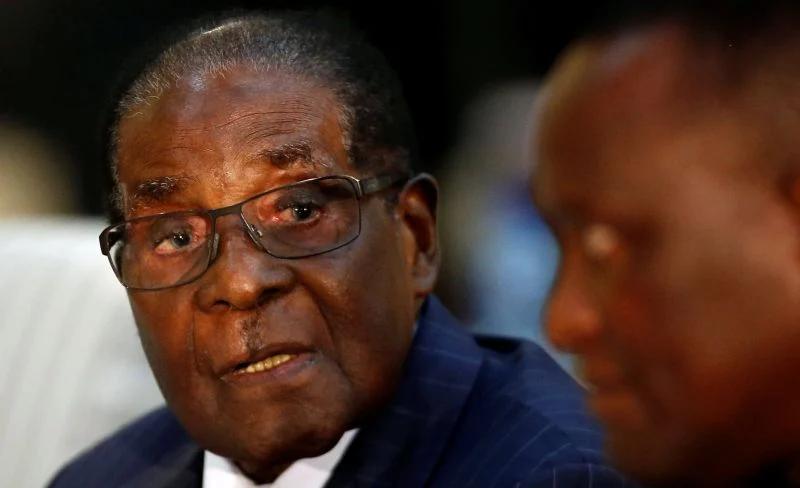
Robert Gabriel Mugabe officially relinquished his position as President of Zimbabwe on Wednesday, November 22, 2017, concluding an almost four-decade tenure that defined the nation’s post-independence trajectory. The departure of the 93-year-old leader, who was once Africa’s oldest head of state, came after a period of intense political pressure, including a de facto military coup, which ultimately led to his resignation.
The announcement of Mugabe’s resignation was met with widespread jubilation across Zimbabwe, as citizens poured into the streets to celebrate the end of his long and often controversial reign. The atmosphere in major cities, particularly the capital Harare, was electric, with spontaneous gatherings erupting in song, dance, and fervent expressions of relief and optimism. Members of the Zimbabwean Parliament also reportedly joined in the celebrations, signaling a collective embrace of a new political chapter following 37 years under Mugabe’s leadership.
Mugabe first came to power in 1980, following Zimbabwe’s declaration of independence from white minority rule. His initial years were marked by a promise of reconciliation and development, but his leadership evolved into a pattern of authoritarianism, characterized by accusations of political repression, electoral manipulation, and economic mismanagement that severely impacted the lives of millions.
The Rise of a Revolutionary Leader
Born Robert Gabriel Mugabe on February 21, 1924, in Kutama, then part of northeastern Salisbury (now Harare), in what was then the British colony of Southern Rhodesia, his early life was shaped by the rigid racial segregation and political disenfranchisement of the era. He pursued higher education with remarkable determination, eventually accumulating seven university degrees, a testament to his intellectual prowess. This academic foundation would later serve him well in his political and legal arguments.
Mugabe’s path to leadership was forged in the crucible of the liberation struggle. As a schoolteacher, he became increasingly involved in nationalist politics, advocating for the rights of the Black African majority. His early activism led to his arrest in 1964 for "subversive speech," resulting in a 10-year imprisonment. During his incarceration, he continued his studies, earning law degrees through correspondence courses.
Upon his release in 1974, Mugabe emerged as a formidable figure in the Rhodesian independence movement. He played a pivotal role in galvanizing popular support for armed struggle against the white minority government, inspiring a generation of Zimbabweans to fight for self-determination. He traversed borders, notably to neighboring Mozambique, to orchestrate a protracted guerrilla war that ultimately forced the colonial regime to the negotiating table.
From Prime Minister to President: A Shifting Power Dynamic
The culmination of this struggle was Zimbabwe’s independence in 1980, with Mugabe assuming the role of the nation’s first Prime Minister. His initial focus was on national unity and rebuilding a country fractured by decades of conflict. However, over time, his administration consolidated power, leading to concerns about democratic freedoms.
In 1987, Mugabe transitioned from Prime Minister to Executive President, a move that further centralized authority within the presidency. This shift marked a turning point, with critics increasingly pointing to a growing intolerance for dissent and a decline in the rule of law.
His first marriage was to Sally Hayfron, a Ghanaian national, in April 1961. Their union produced a son, Nhamo, who tragically died in childhood. Sally Mugabe passed away in 1992 due to kidney disease, a loss that deeply affected the President. He remarried in 1996 to Grace Marufu, who had been his former secretary, and the couple had three children. Grace Mugabe’s increasing public profile in later years of his presidency also became a significant aspect of the political landscape.
The Erosion of Economic Stability and Political Freedoms
Mugabe’s presidency, while initially hailed for bringing independence and expanding access to education and healthcare, became increasingly defined by economic decline and political repression.
Key Criticisms and Events:
- Gukurahundi Massacres (1980s): In the early years of his premiership, government forces, allegedly under Mugabe’s orders, carried out brutal crackdowns against perceived political opponents in the Matabeleland region. The Gukurahundi campaign resulted in the deaths of an estimated 20,000 civilians, a dark chapter that continues to haunt Zimbabwe’s history.
- Land Reform Program (Early 2000s): While ostensibly aimed at redistributing land from white commercial farmers to Black Zimbabweans, the fast-track land reform program was widely criticized for its chaotic implementation, lack of support for new farmers, and the resultant destruction of the agricultural sector, a cornerstone of Zimbabwe’s economy. This led to widespread food shortages and economic collapse.
- Electoral Irregularities: Numerous elections held under Mugabe’s rule were marred by allegations of intimidation, violence, and ballot rigging, leading to international condemnation and sanctions from Western countries. The 2008 presidential election, in particular, saw widespread violence against opposition supporters, prompting the withdrawal of the opposition candidate from the run-off election.
- Economic Collapse: Hyperinflation reached astronomical levels in the late 2000s, rendering the Zimbabwean dollar virtually worthless. While a dollarization policy in 2009 provided some stability, the underlying economic challenges persisted, leading to high unemployment and widespread poverty.
The Events Leading to His Downfall
The immediate catalyst for Mugabe’s resignation was a power struggle within the ruling ZANU-PF party and a subsequent military intervention. In November 2017, following the dismissal of Vice President Emmerson Mnangagwa, who was widely seen as Mugabe’s successor, the Zimbabwean military took control of the capital. This move was framed not as a coup, but as an operation to apprehend "criminals" around the President who were responsible for economic crimes.
The military placed Mugabe and his wife under house arrest, effectively seizing control of the government. Facing impeachment proceedings in Parliament and immense public pressure, Mugabe ultimately chose to resign rather than be removed from office. His resignation letter, read out by the speaker of Parliament, stated that his decision was voluntary and aimed at allowing a peaceful transition of power and to avoid further confrontation.
Reactions and Implications
The international community reacted with a mixture of relief and cautious optimism. Many nations welcomed the end of Mugabe’s long rule, expressing hope for a new era of democratic reform and economic recovery in Zimbabwe. African leaders, while acknowledging Mugabe’s significant role in the liberation of the continent, also recognized the need for change.
The resignation of Robert Mugabe marked the end of an era, not just for Zimbabwe but for Africa. His legacy is complex and deeply contested. He is remembered by some as a revolutionary hero who liberated his country from colonial rule and championed education. However, he will also be remembered for the authoritarianism, economic mismanagement, and human rights abuses that characterized the latter part of his rule, leaving a profound and lasting impact on the lives of millions of Zimbabweans.
The transition of power to Emmerson Mnangagwa presented Zimbabwe with an opportunity to chart a new course. However, the challenges facing the nation were immense, including rebuilding a shattered economy, fostering reconciliation, and establishing robust democratic institutions. The world watched closely to see if Zimbabwe could truly turn the page on its Mugabe-era past and build a more prosperous and just future. The events of November 2017 were a pivotal moment, but the true measure of their impact would be determined by the actions taken in the years that followed.