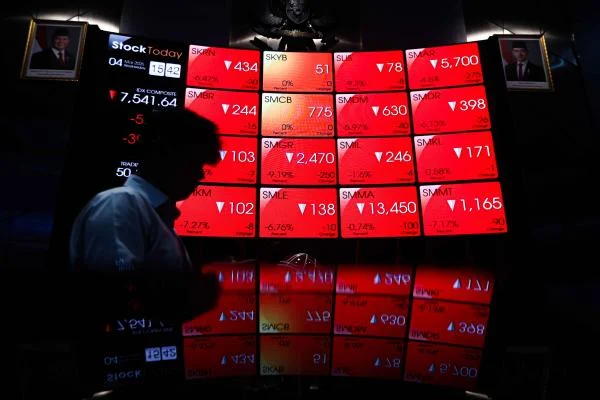
The Jakarta Composite Index (Indeks Harga Saham Gabungan, or IHSG) experienced a mild contraction during the final trading session on Wednesday, September 9, 2026, slipping into the red zone after failing to sustain earlier intraday momentum. The benchmark index closed down by 8.25 points, or 0.12 percent, to settle at the 6,678 level. Despite opening in positive territory earlier in the morning—where over 300 stocks initially surged—profit-taking and a mixed performance across major sectoral indices ultimately weighed down the local bourse by the closing bell.
Market activity remained robust throughout the mid-week trading session. Total transaction value reached Rp15.9 trillion, underpinned by an active exchange of 32.3 billion shares across various boards. Market breadth reflected a tight tug-of-war between buyers and sellers: 325 stocks managed to secure gains, 337 stocks faced downward pressure, and 301 stocks remained stagnant. This delicate balance illustrated the cautious sentiment prevailing among retail and institutional investors as they navigated global economic cues and domestic corporate developments.
Chronology and Intraday Movement: From Early Optimism to Late-Session Pressure
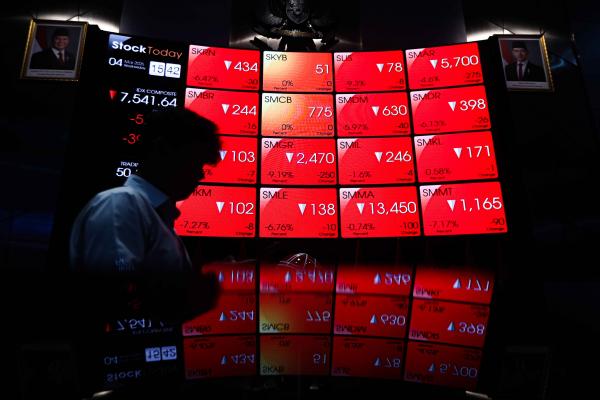
The trading day began on an optimistic note. Riding on positive sentiments from the previous session—where the IHSG had closed higher at 6,686—the market opened in the green on Wednesday morning, with 318 stocks immediately advancing as buyers stepped in early. Analysts noted that the initial enthusiasm was driven by bargain-hunting in select blue-chip and mid-cap equities following recent volatility.
However, as the trading day progressed into the afternoon sessions, selling pressure began to mount, particularly in heavy-weighted sectors. Investors opted to lock in short-term profits, triggering a gradual erosion of the index’s early gains. By the final closing bell, the upward momentum had completely faded, pushing the IHSG below the psychological 6,680 threshold down to 6,678.
This reversal mirrored similar mid-week jitters observed in regional Asian markets, where investors weighed currency fluctuations, commodity price adjustments, and shifting expectations regarding macroeconomic monetary policies. The inability of the index to hold its ground above the 6,680 resistance level highlights a period of consolidation, where market participants are actively seeking clearer catalysts before committing to a sustained directional trend.

Performance of Major Indices and Sectoral Divergence
The weakness in the broader market was further emphasized by the performance of major sub-indices. The LQ45 index, which tracks the 45 most liquid and highly capitalized stocks on the Indonesia Stock Exchange (IDX), dropped 0.20 percent to close at 664. Similarly, the blue-chip heavy IDX30 index declined by 0.58 percent to 369, while the MNC36 index suffered a more pronounced loss of 0.69 percent, ending at 288. Conversely, the Jakarta Islamic Index (JII) demonstrated relative resilience, eking out a marginal gain of 0.01 percent to finish at 405.
Sectoral performance displayed a clear divergence between defensive, cyclical, and commodity-linked industries. The majority of sectoral indices finished in negative territory, heavily pressured by losses in non-cyclical consumer goods, cyclical consumer goods, financials, properties, technology, and healthcare. The financial sector, often a primary barometer for the index, saw selective profit-taking that dragged down the broader market average.
On the other hand, several sectors managed to swim against the current, providing a cushion that prevented a deeper slide. Energy, infrastructure, basic materials, transportation, and industrial sectors recorded positive gains. The resilience in the energy and basic materials sectors was largely supported by steady commodity demand and localized buying interest, reflecting ongoing investor preference for hard-asset and resource-based equities amid global inflationary hedges.

Top Gainers and Top Losers: High Volatility in Second and Third-Tier Stocks
As is typical during sessions of market consolidation, second and third-tier stocks exhibited high volatility, registering double-digit percentage swings among both top gainers and top losers.
Leading the top gainers chart was PT Dua Putra Utama Makmur Tbk (DPUM), which skyrocketed by 34.62 percent to close at Rp140 per share. It was followed by the exchange-traded fund Reksa Dana Indeks Batavia IDX30 ETF, which surged 25 percent to reach Rp595. Rounding out the top three gainers was logistics provider PT Satria Antaran Prima Tbk (SAPX), which appreciated by 24.43 percent to finish at Rp326 per share, buoyed by optimistic sentiment surrounding e-commerce logistics demand.
Conversely, the top losers board was populated by equities that suffered steep corrections due to profit-taking and localized selling pressure. PT Hetzer Medical Indonesia Tbk (MEDS) led the decliners, tumbling 10.68 percent to Rp92 per share. PT Agro Bahari Nusantara Tbk (UDNG) followed closely behind, dropping 9.88 percent to Rp730, while lifestyle and hospitality firm PT Lima Dua Lima Tbk (LUCY) fell 9.62 percent to close at Rp432 per share.

Broader Market Implications and Expert Analysis
Financial analysts examining Wednesday’s market action suggest that the IHSG is currently undergoing a healthy consolidation phase. The fluctuating movement between positive and negative sessions over consecutive days indicates that the market lacks a dominant domestic or international catalyst to break out of its current trading range.
From a technical perspective, holding support levels near the 6,650–6,670 range remains critical for maintaining medium-term bullish structures. Market strategists point out that while foreign capital flows and corporate earnings reports continue to provide fundamental backing, external factors such as global interest rate trajectories, currency stability against the US dollar, and commodity price fluctuations will dictate the near-term direction of the Indonesian capital market.
Investors are advised to maintain a balanced portfolio strategy, focusing on fundamentally sound companies with strong cash flows, robust balance sheets, and exposure to resilient sectors such as energy, infrastructure, and basic materials. As the market looks ahead to the remainder of the trading week, market participants will closely monitor incoming macroeconomic data releases and corporate disclosures for fresh directional cues.