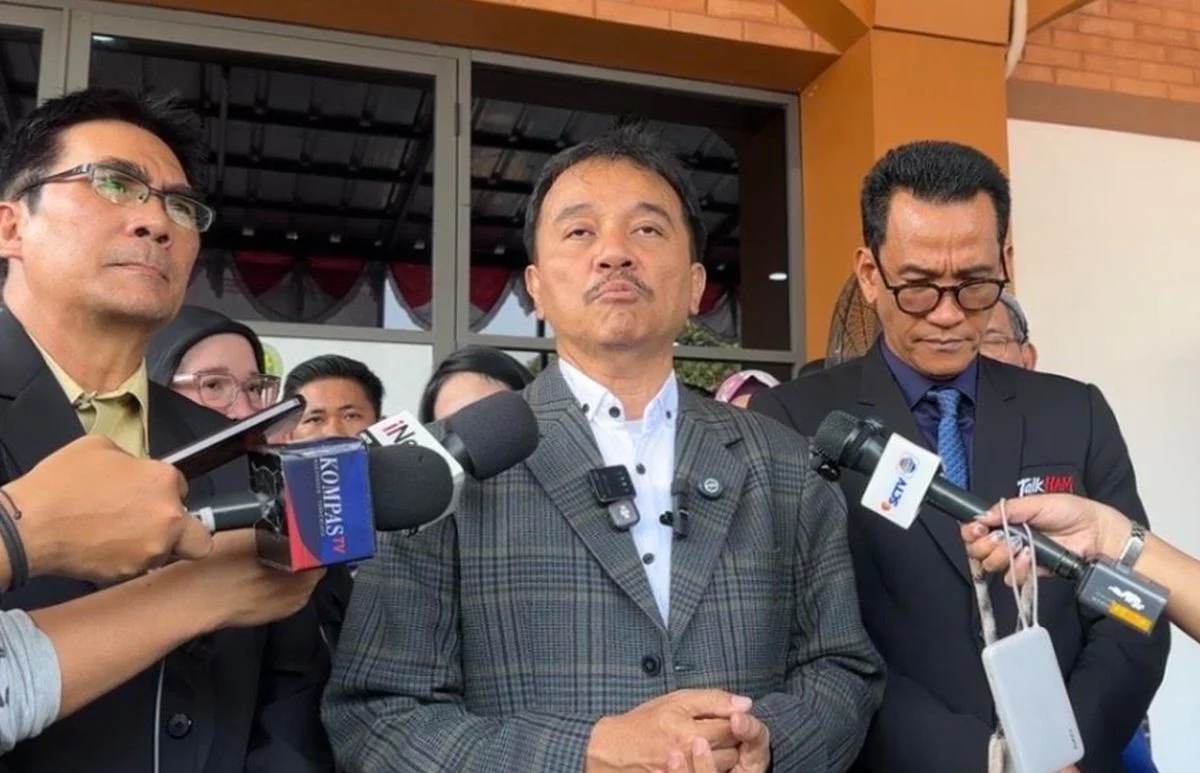
Polda Metro Jaya has formally requested that the South Jakarta District Court reject the fifth iteration of the pretrial motion filed by Roy Suryo, a prominent digital forensic expert and former minister. The legal proceedings, which reached a critical juncture on Wednesday, September 9, 2026, center on Roy Suryo’s demand for Rp206 million in restitution following his previous arrest, search, and detention related to a controversial case involving the alleged academic credentials of former President Joko Widodo.
The Legal Basis of the Current Dispute
During the court session, the legal representatives for the Polda Metro Jaya (Jakarta Metropolitan Police) argued that the motion is procedurally flawed and premature. The police counsel emphasized that the current application for financial compensation cannot be processed under the existing legal framework provided by the Indonesian Criminal Procedure Code (KUHAP).
Specifically, the police cited Article 173 of the KUHAP, which outlines the mechanisms for claiming compensation in cases involving wrongful arrest or detention. The defense argued that because the primary criminal case against the petitioner—Roy Suryo—is still undergoing judicial scrutiny and has yet to reach a final, binding verdict, the window for seeking damages through a pretrial motion has not yet opened.
"The petition is premature," the police representative stated before the presiding judge. "Because the core criminal matter remains under examination and there is no final judgment, the mechanism stipulated in Article 173, paragraph 4, of the KUHAP cannot be applied in full." Consequently, the authorities have moved for the court to declare the entire motion inadmissible, asserting that the financial claim of Rp206 million lacks both a solid legal foundation and sufficient evidentiary support.
Background and Chronology of the Case
The legal saga involving Roy Suryo is characterized by a series of high-profile pretrial motions, often referred to as "jilid" (volumes or iterations). The origin of this conflict dates back to his involvement in the discourse surrounding the academic credentials of former President Joko Widodo.
Roy Suryo became a target of law enforcement investigations following his public commentary and social media activity regarding the authenticity of the former president’s university diploma. His subsequent arrest and the methods employed by law enforcement—including the seizure of personal digital devices—triggered a flurry of legal counter-actions.
- Initial Detention: The police investigation was launched following reports that Roy Suryo had disseminated information considered inflammatory or defamatory.
- First Pretrial Motion: Roy Suryo successfully challenged the initial detention, with a court ruling that certain aspects of his arrest and search were not in accordance with strict procedural law.
- Subsequent Legal Maneuvers: Leveraging the ruling from the first motion, the petitioner has sought further legal validation to demand financial restitution, citing personal and professional losses incurred during the period of his detainment.
- Current Status: As of September 2026, this fifth motion seeks to quantify those damages, a move that the state apparatus continues to vigorously contest as an attempt to bypass the normal progression of the criminal justice system.
Understanding Article 173 of the KUHAP
The focal point of the current dispute is the interpretation of Article 173 of the KUHAP. This article is designed to provide recourse for individuals who have been subjected to illegal search, seizure, or detention. However, the law distinguishes between "rehabilitation" and "compensation."
Legal experts often point out that the Indonesian justice system requires a clear determination of "wrongful prosecution" before compensation can be awarded. If a suspect is acquitted or if the charges are dropped, the state is obligated to provide rehabilitation. However, if the trial is ongoing, the court is often reluctant to award damages, as doing so might be perceived as pre-judging the merits of the criminal case itself.
In the case of Roy Suryo, the police argue that because the legal proceedings are still ongoing, granting the request for Rp206 million would create a dangerous precedent where suspects could seek "advance payment" for damages before the state has even had the opportunity to prove the criminal allegations.
Analysis of the Financial Claim
The amount of Rp206 million, while specific, has been characterized by the police as lacking "sufficient evidentiary support." In civil and administrative litigation, claimants are required to provide an itemized breakdown of losses, which can include lost income, legal fees, and personal damages.
By questioning the basis of this sum, the Polda Metro Jaya is signaling a strategy of attrition. By challenging the validity of the evidence submitted to justify the Rp206 million, the police aim to demonstrate that the claim is not merely procedurally premature but also substantively inflated or unsubstantiated.
Broader Implications for Indonesian Judicial Practice
The persistent nature of Roy Suryo’s pretrial motions reflects a broader trend in the Indonesian legal landscape, where high-profile figures increasingly utilize pretrial motions not only as a defense mechanism but also as a tool for public discourse and political leverage.
For the judiciary, this presents a challenge in maintaining the integrity of the court’s docket. If courts allow endless iterations of pretrial motions, it could lead to "judicial clogging," where the focus shifts from the central criminal allegations to peripheral procedural disputes.
Furthermore, this case serves as a litmus test for how the state handles claims of misconduct by law enforcement. While the police are currently pushing for a dismissal, the judge’s final decision will be closely watched by legal observers to see if the court leans toward a strict, literal interpretation of the KUHAP or if it will allow for more flexible interpretations that accommodate the rights of the accused to seek damages earlier in the process.
Reactions and Future Outlook
While Roy Suryo’s legal team has maintained that the motion is a necessary step to hold law enforcement accountable for procedural overreach, the public response has been polarized. Supporters of the former minister view these actions as a necessary check on police power. Conversely, critics argue that the series of motions are an attempt to delay the core criminal proceedings, which pertain to the dissemination of information about the nation’s former leader.
The South Jakarta District Court is expected to deliver its ruling on the motion in the coming weeks. The court’s decision will determine whether the claim for Rp206 million proceeds to an evidentiary hearing or is dismissed entirely, effectively forcing the petitioner to wait for the conclusion of the primary criminal trial before pursuing further financial claims.
As of the latest reports, no representative from the petitioner’s side has issued a formal rebuttal to the police’s request for dismissal, though previous filings suggest they will continue to insist that the previous court ruling regarding the illegality of the initial detention provides sufficient ground for their current demand for compensation.
The case remains a pivotal example of the complexities inherent in the Indonesian justice system, where the intersection of digital-age public speech, high-level political figures, and procedural criminal law continues to test the boundaries of legal practice and institutional accountability. All eyes remain on the South Jakarta District Court, as the outcome of this fifth motion will likely dictate the tone of the legal battle in the months to follow.