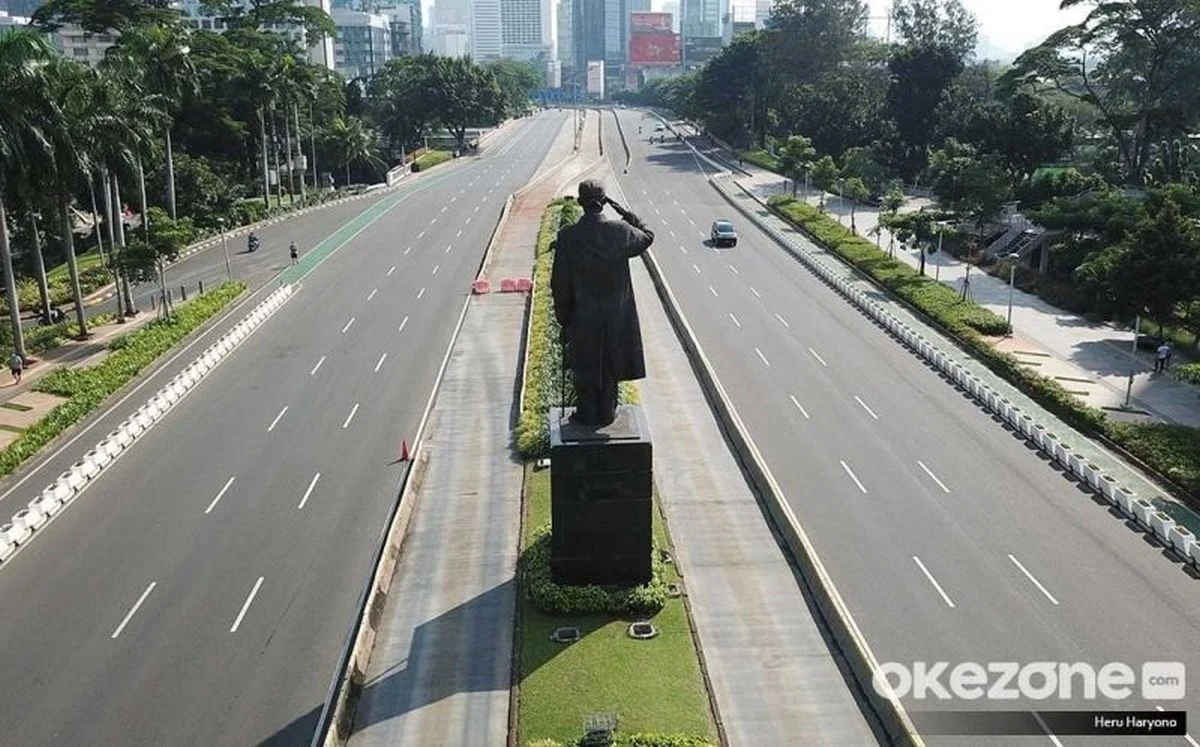
Indonesia’s Meteorology, Climatology, and Geophysics Agency (BMKG) has issued its comprehensive weather forecast for Saturday, July 25, 2026, indicating predominantly clear to partly cloudy conditions across the sprawling Jabodetabek region and much of West Java. The forecast highlights a consistent pattern of bright skies throughout the day, with temperatures expected to reach a maximum of 34 degrees Celsius in several areas, signaling the continued grip of the dry season. This prediction underscores the need for residents and various sectors to remain vigilant and adapt to the prevailing meteorological conditions.
The detailed outlook from BMKG specifies that the morning hours will commence with widespread clear to partly cloudy skies, a trend expected to persist into the afternoon and evening. This consistent atmospheric stability suggests minimal likelihood of significant rainfall events across the densely populated urban centers and agricultural heartlands of West Java. Such conditions are typical for this time of year, as Indonesia generally experiences its dry season, characterized by reduced precipitation and increased solar radiation.
Temperature variations within the region are notable, reflecting the diverse topography. Specifically, the cities and regencies of Bogor, known for their higher elevation and cooler climate, are projected to experience temperatures ranging from a comfortable 18 to 32 degrees Celsius. In contrast, other parts of West Java, particularly the low-lying and coastal areas, are anticipated to see higher mercury readings, with temperatures fluctuating between 24 and 34 degrees Celsius. The maximum temperature of 34 degrees Celsius, while not unprecedented for the dry season, warrants attention for its potential impact on public health and daily activities.
Humidity levels are forecast to be broad, ranging from 28 to 90 percent. This wide range accounts for differences between dry inland areas and more humid coastal zones, as well as diurnal variations. Lower humidity, especially when combined with high temperatures, can exacerbate feelings of heat and contribute to dry conditions. Surface winds are expected to blow from the northeast to the south, with speeds between 5 and 30 kilometers per hour. These moderate wind speeds are unlikely to cause significant disruption but will play a role in local air circulation and the dispersion of any atmospheric pollutants.
Understanding the Meteorological Context: Indonesia’s Dry Season
The weather patterns observed on July 25, 2026, are consistent with Indonesia’s annual climate cycle, particularly the dry season which typically spans from April to October. During this period, the Australian winter monsoon system prevails, drawing dry air masses from the Australian continent across the Indonesian archipelago. This atmospheric circulation pattern largely suppresses the formation of rain-bearing clouds, leading to prolonged periods of clear skies and higher temperatures, especially over Java and Nusa Tenggara.
While the term "dry season" implies a general lack of rain, localized microclimates and geographical features can still influence daily weather. For instance, mountainous regions like parts of Bogor may experience orographic rainfall or localized convective activity, even during the dry season, though this is not the dominant forecast for this particular day. The influence of large-scale climate phenomena such as the El Niño-Southern Oscillation (ENSO) in the Pacific Ocean and the Indian Ocean Dipole (IOD) can also modulate the intensity and duration of the dry season. A strong El Niño, for example, typically leads to a drier and hotter dry season in Indonesia, while a La Niña event can bring more rainfall. BMKG continuously monitors these global drivers to provide more accurate long-range forecasts and early warnings.
The period leading up to July 25, 2026, would likely have seen a gradual transition from the wet season to increasingly drier conditions, characterized by diminishing rainfall amounts and a rise in average daily temperatures. This progression is crucial for various sectors, from agriculture planning to water resource management, as it dictates the availability of natural resources and the potential for environmental hazards such as droughts and forest fires.
The Indispensable Role of BMKG
The Badan Meteorologi, Klimatologi, dan Geofisika (BMKG) serves as the frontline national agency responsible for monitoring, analyzing, and disseminating critical information related to weather, climate, and geophysics in Indonesia. Its mandate is vital for public safety, economic planning, and disaster risk reduction in a nation highly susceptible to natural phenomena. BMKG’s operations rely on an extensive network of advanced monitoring stations, including automated weather observation systems (AWOS), weather radars, satellite imagery receivers, and upper-air sounding stations strategically placed across the archipelago.
For daily forecasts like the one for July 25, 2026, BMKG meteorologists analyze vast amounts of data from these sources, integrating numerical weather prediction models, synoptic charts, and their expert knowledge of regional climate patterns. The agency’s commitment to accuracy and timeliness is paramount, as its forecasts directly influence decisions made by individuals, businesses, and government bodies. Beyond daily weather, BMKG also provides crucial climate data for long-term planning, monitors seismic activity for earthquake and tsunami warnings, and issues advisories on air quality and sea conditions. Their public communication channels, including websites, social media, and mobile applications, ensure that vital information reaches the broadest possible audience, empowering communities to prepare and respond effectively to environmental changes.
Regional Impact: A Closer Look at Jabodetabek and West Java
The forecast of clear to partly cloudy skies with high temperatures will have distinct implications across the diverse urban and rural landscapes of Jabodetabek and West Java.
Jakarta: As the bustling capital and a megacity, Jakarta is particularly susceptible to the "urban heat island" effect, where concrete, asphalt, and limited green spaces absorb and re-emit heat, making the city significantly warmer than surrounding rural areas. With temperatures potentially reaching 34 degrees Celsius, combined with varying humidity, residents can expect a hot day. This translates to increased energy consumption for air conditioning, potential discomfort for commuters, and a heightened risk of heat stress, particularly for outdoor workers and vulnerable populations. Air quality might also be a concern, as dry, still air can trap pollutants, leading to higher concentrations of particulate matter.
Bogor: Often dubbed the "Rain City" due to its typically higher rainfall, Bogor’s forecast of 18-32 degrees Celsius reflects its unique geography. Situated at the foothills of Mount Salak and Mount Gede, its higher altitude contributes to cooler average temperatures. While experiencing the dry season, Bogor’s slightly milder conditions make it a relative respite from the heat compared to the lowlands. However, even these temperatures can pose challenges for local agriculture, which relies heavily on consistent rainfall. Farmers will need to manage irrigation systems carefully to maintain crop health.
Depok, Tangerang, and Bekasi: These satellite cities surrounding Jakarta share many characteristics with the capital, experiencing high population densities and rapid urbanization. Their weather patterns will largely mirror Jakarta’s, with clear to partly cloudy conditions and temperatures likely approaching the upper end of the 24-34 degrees Celsius range. Commuters traveling between these cities and Jakarta will face similar conditions of heat and potential discomfort. The growing industrial sectors in Tangerang and Bekasi might see increased energy demands for cooling production facilities.

Other West Java Regions: Beyond the immediate Jabodetabek area, West Java encompasses a vast and varied landscape, from coastal plains along the northern coast to mountainous regions in the south. Areas like Cirebon, Indramayu, and Karawang, which are primarily low-lying and agricultural, are likely to experience the higher end of the temperature spectrum (up to 34 degrees Celsius). This could intensify concerns for water availability for rice paddies and other crops. In contrast, regions like Bandung, situated in a plateau, might experience slightly cooler conditions than the northern plains but still within the 24-34 degrees Celsius range, making for generally pleasant but warm daytime weather. The prevailing clear skies are beneficial for outdoor tourism in areas like Pangandaran on the southern coast but necessitate precautions against sun exposure.
Broader Implications and Impact Analysis
The sustained clear and warm weather forecast for July 25, 2026, carries several broader implications across various sectors:
Public Health: High temperatures, especially when combined with elevated humidity, increase the risk of heat-related illnesses such as dehydration, heat exhaustion, and heatstroke. Vulnerable groups, including the elderly, young children, and individuals with chronic health conditions, are particularly at risk. Outdoor workers, such as construction workers, street vendors, and farmers, face prolonged exposure and require adequate hydration and rest breaks. The dry conditions can also lead to increased airborne dust, potentially exacerbating respiratory issues for those with asthma or allergies.
Water Resources: As July marks the peak of the dry season, a consistent forecast of clear skies and high temperatures signals continued stress on water resources. Reservoirs, rivers, and groundwater levels could see further declines if the dry spell persists. This has critical implications for municipal water supplies, industrial use, and agriculture. Local governments and water management authorities would need to monitor water levels closely and potentially implement conservation measures or rationing if conditions worsen in the subsequent weeks.
Agriculture: The agricultural sector, a cornerstone of West Java’s economy, is highly sensitive to weather conditions. While clear skies allow for optimal photosynthesis, the lack of rainfall and high temperatures increase the need for irrigation. Farmers cultivating rice, vegetables, and other crops in rain-fed areas might face challenges, potentially leading to reduced yields or crop failure if supplementary irrigation is unavailable. Livestock farmers also need to ensure adequate water and shade for their animals to prevent heat stress.
Energy Consumption: With temperatures soaring, the demand for electricity, primarily for cooling purposes (air conditioning and fans), is expected to surge. This increased load on the national power grid could lead to localized outages if demand outstrips supply, particularly during peak hours. Utility providers will likely be on high alert to ensure grid stability.
Transportation and Infrastructure: While clear weather generally favors smooth transportation, intense heat can affect infrastructure over prolonged periods. Roads and asphalt surfaces can suffer from thermal expansion and contraction, potentially leading to cracks or degradation. For air travel, higher temperatures can affect aircraft performance, requiring adjustments to takeoff weights and flight planning, though these are typically minor for civil aviation.
Fire Risk: One of the most significant concerns during the dry season, especially with high temperatures and low humidity, is the elevated risk of brushfires and forest fires. Dry vegetation becomes highly flammable, and even small sparks can quickly escalate into large-scale blazes. This risk is particularly pertinent in rural areas and near national parks or protected forests in West Java. Authorities and local communities must remain vigilant and proactive in fire prevention and rapid response efforts.
Official Advisories and Public Preparedness
In light of the forecast, BMKG reiterates its critical advisory, urging the public to continuously monitor updated weather information. This is particularly important for individuals planning outdoor activities, travel, or those working in exposed environments. BMKG’s updates are readily available through their official website, social media channels, and dedicated mobile applications, providing real-time data and short-term forecasts that can help individuals make informed decisions.
Beyond simply monitoring, specific precautions are highly recommended:
- Hydration: Drink plenty of water throughout the day, even if not feeling thirsty, to prevent dehydration. Avoid excessive consumption of sugary drinks, alcohol, or caffeine, which can contribute to fluid loss.
- Sun Protection: When outdoors, wear wide-brimmed hats, sunglasses, and light-colored, loose-fitting clothing to protect against harmful UV radiation. Apply broad-spectrum sunscreen with a high SPF.
- Limit Outdoor Exposure: Avoid strenuous outdoor activities during the hottest parts of the day, typically between 10 AM and 4 PM. Seek shade whenever possible.
- Check on Vulnerable Individuals: Ensure that elderly relatives, young children, and individuals with health conditions are staying cool and hydrated.
- Fire Safety: Exercise extreme caution with open flames, cigarettes, and any activities that could generate sparks in dry areas. Dispose of waste responsibly and report any signs of smoke or fire immediately to local authorities.
- Water Conservation: While the forecast does not explicitly mention drought, prolonged dry conditions necessitate mindful water usage in households and industries to preserve dwindling resources.
Local governments in Jabodetabek and West Java will likely complement BMKG’s advisories with their own public health campaigns and resource management strategies, emphasizing water conservation, heat safety, and fire prevention. Collaborative efforts between various agencies, including disaster management bodies (BPBD), health departments, and agricultural offices, are essential to mitigate the potential adverse impacts of the dry season.
A Glimpse into the Future: Adapting to Climate Trends
The weather patterns observed on July 25, 2026, are not isolated events but form part of broader climate trends affecting Indonesia. The nation, being an archipelago located in the tropical zone, is highly vulnerable to the impacts of climate change, including rising average temperatures, changes in rainfall patterns (more extreme wet and dry seasons), and increased frequency of extreme weather events. While one day’s forecast does not define long-term climate, it underscores the importance of continued investment in climate science, robust early warning systems, and adaptive strategies across all sectors.
As Indonesia progresses through the 21st century, understanding and responding to these evolving climatic conditions will be paramount for sustainable development, food security, and public well-being. The consistent monitoring and timely communication from agencies like BMKG will remain a crucial pillar in building a more resilient nation capable of navigating the challenges posed by a changing climate.
In conclusion, Saturday, July 25, 2026, is set to be a day dominated by clear to partly cloudy skies and warm temperatures across Jabodetabek and West Java. While offering favorable conditions for many outdoor activities, the forecast also serves as a reminder of the dry season’s realities, urging residents and stakeholders to remain informed, prepared, and proactive in adapting to the prevailing meteorological landscape.