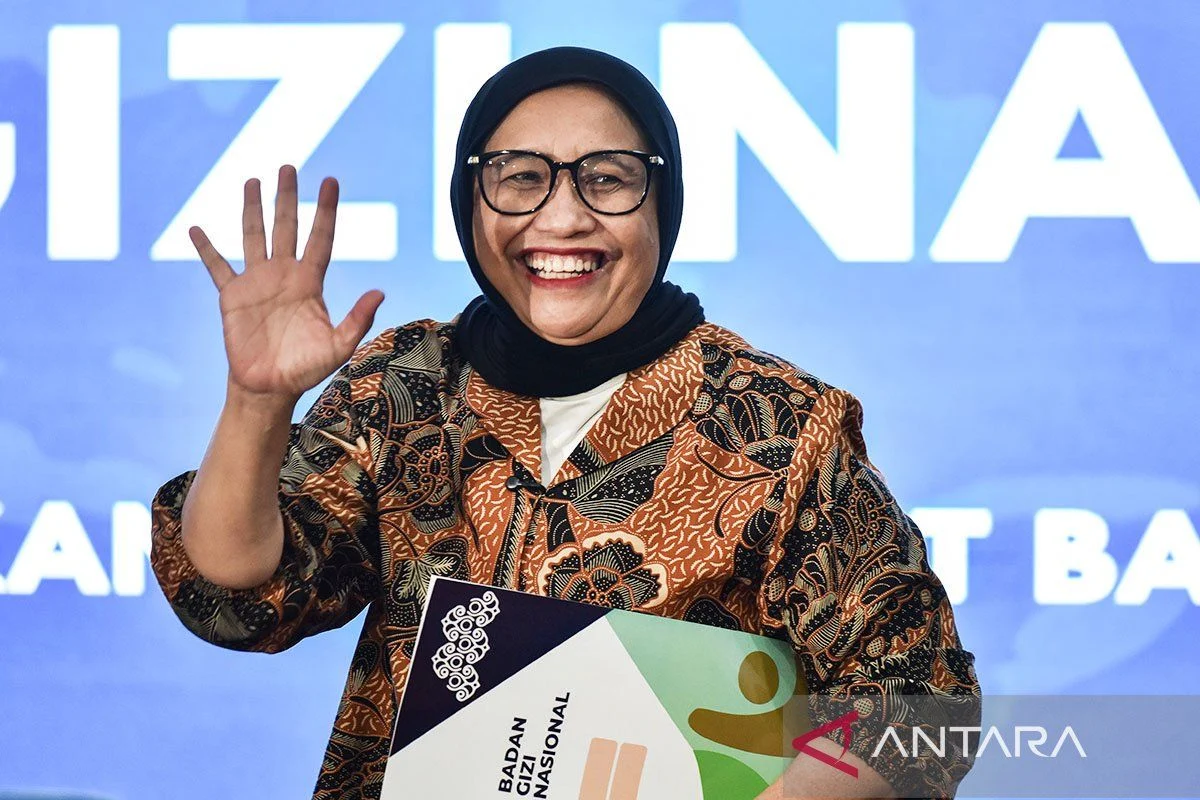
Jakarta, Indonesia – Nanik Sudaryati Deyang has officially stepped down from her role as the Head of the National Nutrition Agency (BGN), a pivotal institution under the new administration, citing pressing health reasons. Her resignation, confirmed by Presidential Special Assistant for Communication and Policy, Dirgayuza Setiawan, was tendered to President Prabowo Subianto, who reportedly accepted the decision with understanding and concern for her well-being. The departure of Ms. Deyang, a figure instrumental in the initial rollout and strategic planning of the ambitious Free Nutritious Meals Program (Program Makan Bergizi Gratis – MBG), marks a significant, albeit health-driven, transition for one of the government’s key social welfare initiatives.
Background of the National Nutrition Agency and its Mandate
The National Nutrition Agency (BGN) is a critical component of Indonesia’s national strategy to address pervasive issues of malnutrition, particularly stunting and wasting among children, and to improve public health outcomes across the archipelago. Established with a broad mandate, BGN is tasked with formulating, coordinating, and implementing national nutrition policies and programs. Its responsibilities extend from ensuring food security at the household level to promoting healthy dietary practices, monitoring nutritional status, and facilitating interventions targeting vulnerable populations such as pregnant women, lactating mothers, infants, and young children. The agency plays a central role in translating the government’s commitment to human capital development into tangible improvements in the health and productivity of its citizens.
Indonesia, despite significant economic progress, continues to grapple with a substantial burden of malnutrition. According to the Ministry of Health’s 2023 data, the national stunting prevalence rate remains a critical concern, though it has seen a gradual decline from previous years. The government has set an ambitious target to reduce stunting to 14% by 2024, a goal that requires robust, coordinated efforts from multiple sectors, with BGN at the forefront of the nutritional aspects. Malnutrition not only impairs physical and cognitive development in children but also has long-term economic consequences, reducing productivity and increasing healthcare costs. Therefore, the BGN’s mission is not merely a health initiative but a fundamental pillar of national development.
The Free Nutritious Meals Program (MBG): A Flagship Initiative
Central to the BGN’s mandate, and a cornerstone of President Prabowo Subianto’s electoral platform, is the Free Nutritious Meals Program (MBG). This program is designed to provide daily nutritious meals to millions of school children, pregnant women, and other vulnerable groups across Indonesia. The MBG program aims to directly combat malnutrition, improve school attendance and learning outcomes, and provide essential nutritional support during critical developmental stages. Its ambitious scale and universal reach underscore the government’s commitment to ensuring that every Indonesian, particularly the youth, has access to adequate nutrition for optimal growth and development.
The program’s implementation involves a complex logistical framework, including the establishment of thousands of service points and community kitchens, procurement of nutritious ingredients, and distribution networks reaching remote areas. The BGN, under Ms. Deyang’s brief leadership, was tasked with the monumental responsibility of overseeing the initial planning, standardization, and quality control of this vast undertaking. The success of the MBG program is not only vital for public health but also carries significant political weight, representing a tangible delivery on a key presidential promise. Its effective execution is seen as a barometer of the new administration’s ability to translate policy into impactful public services.
Nanik Sudaryati Deyang’s Brief but Impactful Tenure
Nanik Sudaryati Deyang’s tenure as Head of the BGN was relatively brief, spanning approximately one and a half months. Despite the short duration, she embarked on an intensive agenda of internal reforms and comprehensive evaluations aimed at strengthening the agency’s capacity and ensuring the integrity of the MBG program. During her leadership, Ms. Deyang initiated a rigorous review of nearly 28,000 Satuan Pelayanan Pemenuhan Gizi (SPPG), or Nutrition Fulfillment Service Units, which are essentially the operational hubs for the MBG program.
Her strategic interventions included categorizing thousands of community kitchens based on quality standards, halting the expansion of kitchens in certain regions where operational readiness was questionable, and identifying hundreds of SPPGs that were deemed problematic or non-compliant. These actions demonstrated a strong commitment to efficiency, accountability, and the delivery of high-quality services. Her focus on internal streamlining and quality assurance was crucial for laying a robust foundation for a program of MBG’s magnitude, which demands meticulous oversight to prevent waste, corruption, and ensure nutritional efficacy. Her proactive approach underscored her dedication to the program’s success and her vision for a transparent and effective BGN.
The Resignation: A Personal Health Battle
The decision by Nanik Sudaryati Deyang to step down from her high-profile position was driven by a deeply personal and serious health challenge. As confirmed by Presidential Special Assistant Dirgayuza Setiawan, Ms. Deyang informed President Prabowo that she needed to undergo intensive heart treatment. This critical health issue necessitated her full attention and compelled her to seek specialized medical care abroad.
In her personal statement, Ms. Deyang expressed profound apologies to President Prabowo for having to leave her post prematurely, emphasizing that her health condition required her to prioritize recovery and treatment. She explained that the decision to seek medical treatment overseas was made after careful consideration of her health needs, including the pursuit of additional medical opinions (second opinions) to ensure the most optimal care. "Today, Ibu Nanik Deyang bid farewell to President Prabowo to undergo heart treatment and simultaneously resigned as Head of the National Nutrition Agency," stated Yuza, confirming the details from Jakarta on Wednesday.
Ms. Deyang reiterated that her resignation was solely due to health considerations and not influenced by any other issues or political pressures. She articulated her need to devote undivided attention to her recovery process, underscoring that optimal health management was paramount. President Prabowo, upon understanding the gravity of her situation, reportedly expressed sympathy and agreed to accept her resignation. This compassionate response from the President highlights a supportive working relationship and an understanding of the personal sacrifices often demanded by public service.
Presidential Response and Continued Involvement in Oversight
Despite accepting her resignation, President Prabowo Subianto conveyed his continued trust in Ms. Deyang’s capabilities and commitment to the BGN’s mission. In a significant gesture, the President requested that Ms. Deyang remain involved in the oversight of the agency, even as she focuses on her health recovery. This request suggests a desire to leverage her experience and insights, particularly regarding the crucial initial phase of the MBG program and the internal reforms she initiated.
Ms. Deyang herself confirmed this arrangement, stating, "I conveyed to the President with a thousand apologies that it seems I must step down as Head of BGN, for my health, and because the President was concerned and sympathetic towards me, he approved, but he asked me to continue overseeing BGN." This indicates a potential future role for her, possibly within a newly formed BGN Supervisory Board or an advisory capacity. Such an arrangement would allow the agency to benefit from her expertise and ensure continuity in the strategic direction she helped establish, while accommodating her need for medical treatment. It also underscores the importance the President places on her contributions and the critical nature of the BGN’s mandate.
Implications for the MBG Program and National Nutrition Strategy
The sudden resignation of Nanik Sudaryati Deyang, while entirely health-related, inevitably raises questions about the immediate future and continuity of the Free Nutritious Meals Program and the broader national nutrition strategy. As the architect of the initial phase of the MBG program, her departure necessitates a swift and seamless transition to ensure that the momentum built during her tenure is maintained.
The MBG program is not just a policy initiative; it represents a monumental logistical challenge and a significant investment in human capital. Any disruption in leadership could potentially impact its rollout schedule, quality control measures, or overall effectiveness. However, the President’s request for Ms. Deyang to remain involved in an oversight capacity suggests a proactive approach to mitigate potential challenges and ensure that her foundational work continues to guide the program. The institutional frameworks and evaluation mechanisms she put in place are expected to provide a stable basis for her successor.
The BGN’s role extends beyond the MBG program to comprehensive national nutrition policy. A change in leadership will require the new head to quickly grasp the nuances of Indonesia’s diverse nutritional challenges, coordinate effectively with other ministries (such as Health, Education, and Agriculture), and maintain focus on the ambitious stunting reduction targets. The continuity of robust data collection, evidence-based policy formulation, and targeted interventions will be crucial for sustained progress.
The Search for a Successor and Future Outlook
The immediate task for the government will be to identify and appoint a capable successor to lead the National Nutrition Agency. This individual will need to possess not only strong administrative and leadership skills but also a deep understanding of public health, nutrition science, and the complexities of large-scale social programs. The new head will be responsible for continuing the implementation of the MBG program, refining its operational aspects, and driving the national agenda to combat malnutrition.
Reports have already begun to circulate regarding potential candidates. For instance, the Gerindra Party, President Prabowo’s party, has reportedly highlighted Sudaryono, currently serving as Deputy Minister of Agriculture (Wamentan), as a highly capable individual with a strong performance record suitable for the BGN leadership role. Sudaryono’s experience in a related sector like agriculture could offer valuable insights into food supply chains, agricultural policy, and their intersection with nutrition. His background as a former Deputy Minister of Agriculture could provide a valuable perspective on the supply-side logistics and agricultural policies that underpin food security and nutritious food availability. The selection of a new leader will undoubtedly be a carefully considered decision, given the strategic importance of the BGN and its programs.
The continued commitment of Nanik Sudaryati Deyang to contribute to BGN’s oversight, even from a distance, offers a degree of reassurance regarding the program’s future. Her potential involvement in a supervisory board could provide invaluable institutional memory and strategic guidance during the transition period and beyond. This approach underscores the collaborative spirit and long-term vision necessary to tackle Indonesia’s complex nutritional challenges effectively. The nation watches as the BGN navigates this leadership transition, confident in the government’s unwavering commitment to improving the health and well-being of its population through robust nutritional programs.
Copyright © ANTARA 2026