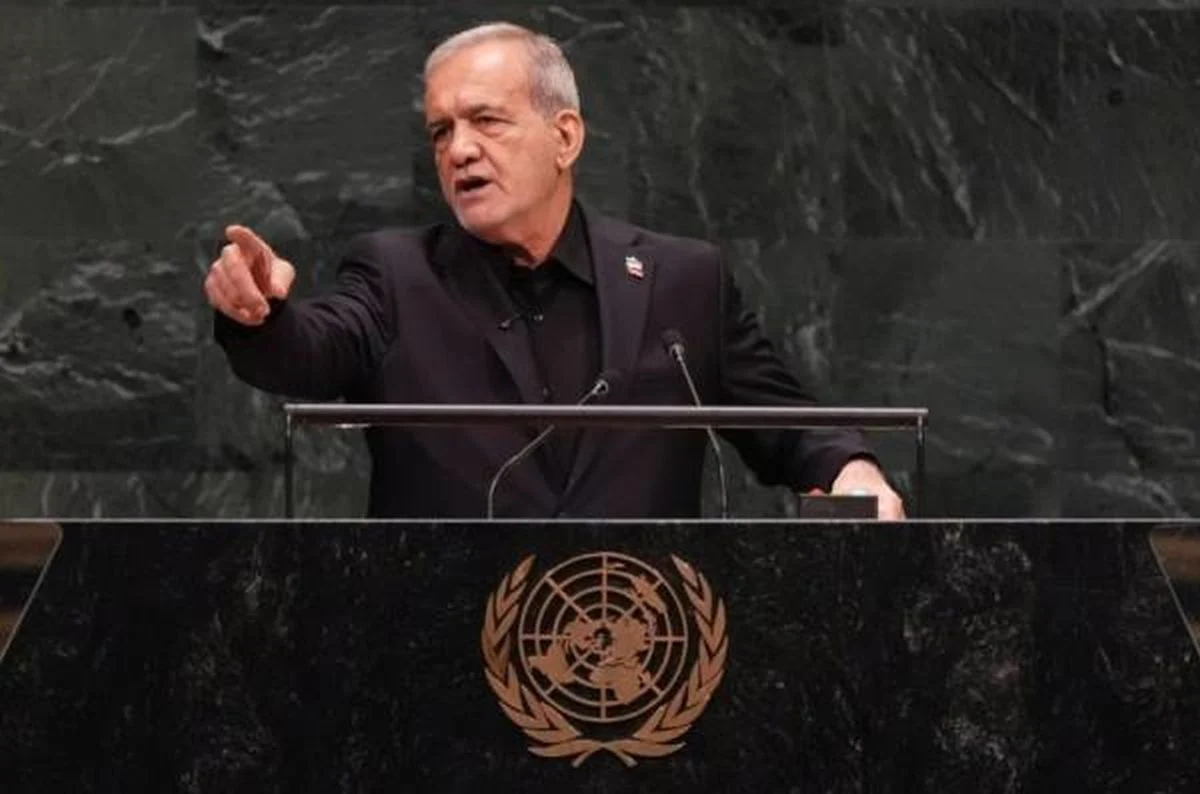
The strategic waters of the Strait of Hormuz have once again become the epicenter of global geopolitical tension, as Iranian President Masoud Pezeshkian emphasized that the current impasse can be resolved through diplomatic engagement rather than military escalation. In a recent interview with Al Jazeera, President Pezeshkian articulated Tehran’s position regarding the restricted flow of maritime traffic, directly linking the volatility in the region to the policy stance adopted by the United States. While the rhetoric remains firm, the Iranian leadership has signaled a willingness to negotiate, provided that the perceived obstacles to Iran’s own economic and maritime access are removed.
The Geopolitical Significance of the Strait of Hormuz
The Strait of Hormuz is arguably the world’s most critical maritime chokepoint. Located between Oman and Iran, the strait connects the Persian Gulf with the Gulf of Oman and the Arabian Sea. It serves as the primary conduit for a significant portion of the world’s oil supply. According to the U.S. Energy Information Administration (EIA), approximately 20 to 30 percent of total global petroleum consumption passes through this narrow passage daily.
For Iran, the strait is not merely a geographic feature but a vital component of its national security and economic strategy. Any disruption in this area sends shockwaves through global energy markets, often causing immediate spikes in crude oil prices. President Pezeshkian’s recent remarks underscore the high stakes involved, as the administration in Tehran seeks to leverage its control over the strait as a counterweight to what it describes as Western-led economic containment.
The Roots of the Current Standoff
The core of the dispute, as described by President Pezeshkian, revolves around the accusations of blockade and restricted access. Tehran maintains that the United States has effectively established a cordon that prevents Iranian vessels and trade from navigating freely, characterizing this as an aggressive act that necessitates a defensive response.
"America is the one obstructing our path," Pezeshkian stated during his interview. This perspective reflects a long-standing grievance in Tehran, where officials argue that unilateral sanctions and naval maneuvers by the U.S. and its allies are designed to cripple the Iranian economy. By closing—or threatening to close—the Strait of Hormuz, Iran aims to demonstrate its capacity to disrupt the global supply chain, thereby pressuring the international community to re-evaluate its approach to Iran’s maritime rights.
From the U.S. perspective, the presence of the U.S. Fifth Fleet and international maritime coalitions is intended to ensure "freedom of navigation" and protect global commerce from state-sponsored interference. This fundamental disagreement—between Iran’s claim of sovereignty and the international community’s insistence on unhindered transit—remains the primary driver of the current crisis.
Chronology of Escalating Maritime Tensions
The history of tension in the Strait of Hormuz is extensive, but the recent months have seen a marked increase in incidents.
- Early 2026: Diplomatic channels between Tehran and Washington began to narrow following disputes over regional proxy conflicts and nuclear non-proliferation talks.
- Mid-2026: Increased naval maneuvers by both Iranian forces and Western coalitions led to several "near-miss" incidents, heightening the risk of an unintended kinetic engagement.
- September 2026: The situation reached a critical point when trade traffic through the strait slowed significantly due to increased security inspections and threats of closure, prompting President Pezeshkian to address the international community directly regarding the necessity of a diplomatic resolution.
Diplomatic Pathways vs. Military Posturing
Despite the bellicose rhetoric often associated with the region, President Pezeshkian’s recent emphasis on negotiation suggests that Iran may be seeking an "off-ramp" to the current crisis. The President clarified that the closure of the strait is a "natural response" to being blocked, rather than an act of unprovoked aggression. By framing the action as a reaction, Tehran is attempting to legitimize its stance under international law, arguing that its actions are defensive in nature.

The "condition" mentioned by the Iranian leadership is clear: the removal of the obstacles currently hindering Iran’s trade routes. If the U.S. and its allies were to scale back the restrictive measures that Iran labels as a blockade, Tehran has implied that it would return to a status quo that allows for the safe passage of global energy tankers.
However, the diplomatic path is fraught with difficulties. Trust between the two nations is at an all-time low, and domestic political pressures in both Washington and Tehran often preclude the type of compromise necessary to solve such a complex issue.
Economic Implications for the Global Market
The volatility in the Strait of Hormuz is felt most acutely in the global energy markets. Any uncertainty regarding the flow of oil creates a "fear premium" on the price of a barrel of crude. In the event of a sustained closure, the global economy would face severe inflationary pressures.
Beyond oil, the strait is a transit point for liquefied natural gas (LNG), particularly from Qatar. A prolonged disruption would force alternative, more expensive shipping routes, further straining the already fragile global logistics networks. Analysts suggest that the international community is currently prioritizing back-channel diplomacy to ensure that the rhetoric does not translate into a permanent closure of the waterway.
International Reaction and Future Outlook
While Western capitals have largely remained critical of Iran’s actions, there is a recognized urgency to engage in dialogue. The European Union, heavily reliant on energy imports passing through the region, has repeatedly called for de-escalation and the establishment of a maritime safety framework that includes all regional stakeholders.
The United Nations has also expressed concern, with the Secretary-General calling for restraint from all parties involved. However, until there is a formal structure for direct negotiation between the U.S. and Iran regarding maritime security, the region remains susceptible to sudden outbreaks of conflict.
President Pezeshkian’s statement serves as a reminder that while the military capability to close the strait exists, the Iranian leadership is aware of the massive economic and political cost such an action would entail. The preference for diplomacy, as stated by the President, suggests that Tehran is currently calculating that its interests are better served by keeping the strait open, provided it can secure concessions that alleviate its current economic isolation.
As the international community watches these developments, the focus will remain on whether these verbal commitments to "negotiation" can be translated into substantive talks. The potential for a wider regional conflict remains high, but for now, the message from the Iranian leadership is one of cautious, conditional openness to a non-military solution.
Ultimately, the resolution of the crisis in the Strait of Hormuz will require more than just rhetoric. It will necessitate a comprehensive agreement that addresses the security concerns of the regional powers while ensuring the unhindered flow of energy that the global economy depends upon. Whether the diplomatic doors are truly open, or if this is merely a temporary pause in a long-standing strategic struggle, remains to be seen in the coming weeks of intense international diplomacy.