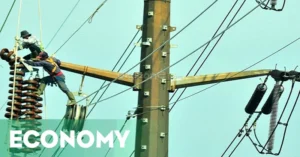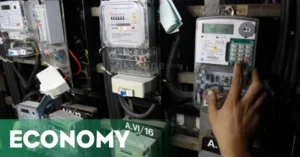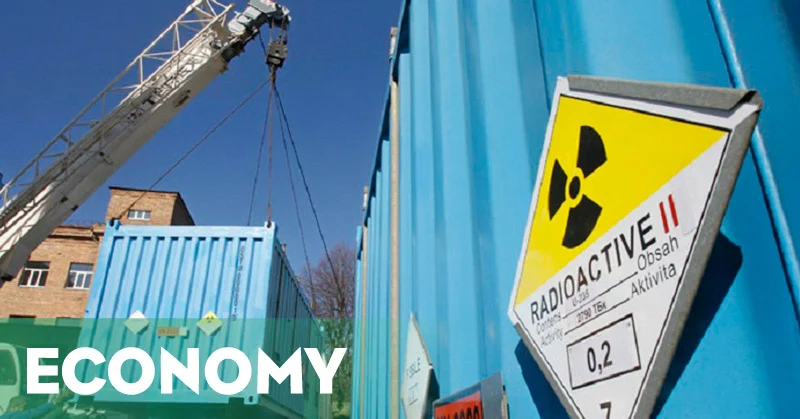
The debate surrounding Indonesia’s energy future intensified in November 2015 as the government aggressively pursued its ambitious 35,000-megawatt (MW) electrification megaproject. While the administration of President Joko Widodo aimed to bridge the archipelago’s energy deficit and extend power grid access to remote regions, its persistent exclusion of nuclear power drew sharp criticism from energy experts. Industry analysts argued that dismissing nuclear technology outright demonstrated a profound reluctance to embrace advanced engineering solutions necessary for long-term national energy security, labeling the government’s cautious stance as overly timid and shortsighted.
The controversy highlighted a fundamental tension in Indonesia’s national energy planning: balancing immediate capacity additions through conventional fossil fuels and renewable sources against the integration of high-yield, complex technologies like nuclear energy. As energy demand soared alongside rapid industrialization and population growth, experts warned that excluding nuclear power could leave the nation vulnerable to future supply constraints, price volatility, and heavy reliance on depleting fossil reserves.
Context and Background of the 35,000 MW Megaproject
Announced in early 2015, the 35,000 MW electrification program was designed as a cornerstone of Indonesia’s infrastructure development strategy. Decades of underinvestment in power generation had left millions of citizens—particularly across eastern Indonesia—without reliable access to electricity. The electrification ratio hovered below optimal levels, stunting economic productivity and regional development.
To achieve the 35,000 MW target within a compressed timeline, the state-owned electricity enterprise, Perusahaan Listrik Negara (PLN), alongside independent power producers (IPPs), focused heavily on coal-fired power plants, natural gas, and hydroelectric projects. Coal remained the backbone of Indonesia’s baseload power due to domestic abundance and low initial capital costs, despite growing global pressure to transition toward cleaner energy portfolios.
Amidst this massive mobilization of resources, the potential deployment of nuclear power—often discussed via the long-proposed Nuclear Power Plant (PLTN) initiatives in regions like Muria, Central Java—was effectively sidelined. Government officials repeatedly emphasized that nuclear energy would only be considered as a "last resort," citing public safety concerns, radioactive waste management challenges, high capital expenditures, and the availability of alternative domestic energy sources.
Expert Critiques and the "Mental Tempe" Analogy
The government’s dismissal of nuclear energy provoked strong reactions from academic and technical circles. Speaking in Jakarta on Friday, November 6, 2015, Iwa Garniwa, an energy observer and engineering expert from the University of Indonesia, voiced deep disappointment over the administration’s strategy. He argued that rejecting nuclear technology was tantamount to turning away from vital global technological advancements.
"I feel saddened to hear that; we exhibit resistance to technology," Garniwa stated. He emphasized that countries worldwide were successfully leveraging nuclear power to secure stable, high-capacity baseload energy, while Indonesia actively distanced itself from the sector.
Furthermore, Garniwa criticized the government’s framing of nuclear power as a "last resort," questioning the logic behind such a policy. He asked rhetorically whether policymakers intended to wait until natural water and solar resources were entirely depleted before turning to nuclear energy, warning that such a delayed approach would spell disaster for national development.
Addressing concerns regarding technical readiness and human resource constraints—often cited by policymakers as primary justifications for avoiding nuclear projects—Garniwa suggested a phased, scalable approach. He noted that Indonesia could begin by constructing smaller experimental or modular reactors, paired with rigorous maintenance and safety protocols, rather than dismissing the technology entirely.

To emphasize the timidity of the administration’s approach, Garniwa delivered a pointed critique: "Build a small one first, but maintain it properly. We act like tempe—technology that is already widely utilized abroad is what we distance ourselves from. That is tempe, I must say." The colloquial metaphor, comparing the government’s resolve to a soft soybean cake, underscored a perceived lack of backbone and courage in adopting advanced industrial technologies.
Technological and Economic Implications of Nuclear Sidelining
The debate over nuclear power in Indonesia involves complex trade-offs spanning economics, engineering, and environmental science. Proponents of nuclear energy argue that it offers unmatched advantages in terms of baseload stability, high energy density, and zero operational carbon emissions. Unlike solar and wind power, which are intermittent and require substantial battery storage or backup generation, nuclear reactors can operate continuously for months at high capacity factors.
However, the economic hurdles are substantial. Nuclear power plants require massive upfront capital investments, long construction lead times—often spanning a decade or more—and highly specialized regulatory frameworks. For a developing nation facing immediate electrification deficits, the high initial capital cost and long gestation periods of nuclear plants have traditionally made coal and gas appear more pragmatic for short-term capacity building.
Conversely, long-term energy planning models suggest that relying exclusively on coal and natural gas exposes Indonesia to severe macroeconomic risks. Fluctuating global commodity prices, carbon pricing mechanisms, and the eventual depletion of domestic fossil reserves necessitate a diversified energy mix. By excluding nuclear energy from the strategic roadmap, the government risked locking the nation into a high-carbon trajectory that could prove difficult and expensive to reverse in the future.
Broader Policy Debates and Regional Comparisons
During the 2015 policy discussions, Indonesia’s stance stood in contrast to several other Asian nations that were actively expanding or initiating civilian nuclear programs. Countries such as China, India, South Korea, and Russia were aggressively building new reactors to meet soaring industrial demand while reducing urban air pollution and carbon intensity. Meanwhile, neighboring Southeast Asian nations like Vietnam were exploring nuclear options before facing temporary policy pauses following international market shifts.
In Indonesia, public perception remained a significant hurdle. Memories of the 2011 Fukushima Daiichi nuclear disaster in Japan loomed large over public discourse, fueling apprehension regarding seismic activity, tsunami risks, and radioactive waste disposal in an archipelagic nation prone to earthquakes and volcanic eruptions. Proponents of nuclear energy argued that modern reactor designs, such as Generation III+ and Generation IV systems, incorporated passive safety features capable of mitigating catastrophic failure risks, but building public trust required extensive education and transparent regulatory oversight.
Subsequent Developments and Long-Term Outlook
While the immediate policy environment in late 2015 firmly relegated nuclear energy to the background of the 35,000 MW megaproject, the underlying debate over Indonesia’s energy transition persisted into the following decade. As global climate commitments tightened and net-zero emissions targets gained prominence, subsequent national energy master plans (RUPTL) periodically revisited the feasibility of nuclear power.
Discussions gradually shifted from whether Indonesia should adopt nuclear energy to when and how small modular reactors (SMRs) or commercial-scale plants might be integrated into the national grid to support deep decarbonization by mid-century. Nevertheless, the frustrations voiced by experts like Iwa Garniwa in 2015 reflected a recurring anxiety within Indonesia’s technical community: that bureaucratic caution and political hesitation might cause the nation to lag behind global technological frontiers in critical infrastructure sectors.
Ultimately, the controversy surrounding the rejection of nuclear power in the 35,000 MW megaproject served as a critical litmus test for Indonesia’s industrial ambition. It forced policymakers, engineers, and economists to grapple with the difficult balance between immediate pragmatism and future-proofing the nation’s energy architecture against the demands of a rapidly evolving global economy.