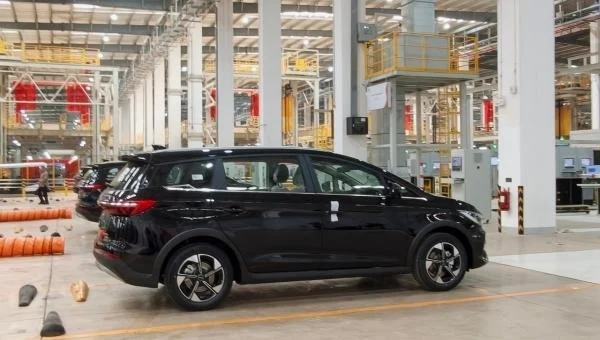
The prospect of Chinese automotive manufacturers entering the United States market has long been a subject of intense geopolitical and economic debate, but a potential pathway forward is beginning to emerge. While the current regulatory landscape remains heavily fortified against vehicles and automotive technologies originating from China, recent discourse suggests that Washington may be willing to soften its stance—provided that these companies commit to significant direct investment in the American economy, specifically through the construction of local production facilities and the creation of domestic jobs.
This shift in rhetoric, particularly from influential political figures like Donald Trump, introduces a nuanced variable into a market that has effectively remained closed to Chinese-branded vehicles for years. As the United States balances the necessity of domestic industrial growth with the complexities of global supply chains, the debate surrounding Chinese automakers has moved from a total ban to a discussion about the conditions under which such an entry could be mutually beneficial.
The Current Regulatory Blockade
For years, Chinese automotive companies have faced an uphill battle in attempting to penetrate the U.S. market. This exclusion is not merely a product of market competition but is rooted in national security concerns and protectionist economic policies. The U.S. government has systematically implemented measures to curb the influence of foreign technology in the automotive sector, citing potential risks associated with "connected vehicles."
These vehicles, which are increasingly reliant on advanced software, sensors, and internet connectivity, are viewed by U.S. regulators as potential conduits for data collection and surveillance. Consequently, the Department of Commerce has proposed and enacted rules that severely limit the use of hardware and software components originating from China and Russia in vehicles operating on American roads. These regulations are designed to protect the integrity of the U.S. automotive infrastructure from potential cyber threats and foreign intelligence gathering.
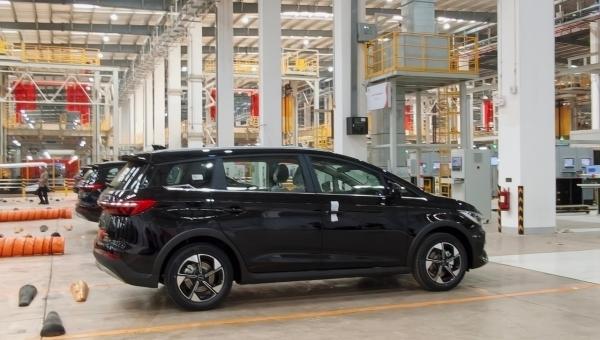
Beyond the technological barriers, the economic deterrents are equally formidable. Heavy tariffs on imported vehicles from China have been a centerpiece of U.S. trade policy, designed to shield domestic manufacturers like Ford, General Motors, and Stellantis from low-cost competition. In July, the situation tightened further when a Senate committee advanced a legislative package intended to bolster these restrictions, signaling a bipartisan commitment to maintaining the current status quo.
The Conditional Opening: A Strategy for Investment
Despite the prevailing climate of containment, the suggestion that Chinese companies could find a way into the U.S. market through "onshoring" reflects a pragmatic approach to industrial policy. Proponents of this view argue that if a Chinese company is willing to build factories on American soil, they are no longer merely "importers" but become "domestic employers."
This approach mirrors the historical trajectory of Japanese and German automakers. In the 1970s and 1980s, companies like Toyota, Honda, and Volkswagen faced significant hostility in the United States as they began to erode the market share of the "Big Three." However, as these companies shifted their operations to build manufacturing plants in states like Kentucky, Ohio, and Tennessee, the political friction dissipated. Today, these companies are recognized as major contributors to the U.S. labor force and the broader American economy.
The logic being applied to Chinese firms today is effectively a repeat of this historical precedent. By mandating local production, the U.S. government could ensure that the economic benefits of vehicle sales—namely jobs, supply chain integration, and tax revenue—remain within U.S. borders. This would also mitigate some of the "connected vehicle" security concerns, as manufacturing facilities, software management, and data centers would be subject to U.S. jurisdiction and oversight.
Chronology of Tensions and Trade Barriers
The relationship between the U.S. automotive market and Chinese manufacturers has evolved through several distinct phases:

- 2018: The U.S. government initiates a series of trade actions, imposing a 25% tariff on a wide range of Chinese goods, including automobiles, under the auspices of Section 301 of the Trade Act of 1974.
- 2021-2022: As the global transition to Electric Vehicles (EVs) accelerates, Chinese firms like BYD and NIO gain global prominence. The U.S. response focuses on the Inflation Reduction Act (IRA), which ties tax credits for consumers to domestic assembly requirements, effectively excluding most imported Chinese EVs.
- 2023: The U.S. government expresses growing alarm regarding the "connected car" ecosystem. Investigations are launched into how Chinese software might be used to track U.S. infrastructure and citizen behavior.
- July 2024: A Senate committee approves legislation that would further restrict the integration of Chinese automotive technology in U.S. vehicles, signaling that the legislative branch remains deeply skeptical of Chinese market entry.
- Late 2024: Political rhetoric begins to distinguish between "Chinese-made imports" and "Chinese-invested domestic production," opening a theoretical window for investment-led market entry.
Economic Implications and Data Analysis
The global automotive market is currently undergoing its most significant transformation in a century. China, through its massive investment in battery technology and supply chain dominance, has emerged as the world’s largest producer of EVs. According to industry reports, China’s share of global battery production capacity exceeds 75%, a figure that makes it difficult for any global automaker to completely decouple from Chinese components.
For the United States, the dilemma is clear: attempting to exclude China entirely risks higher costs and slower adoption of green technologies, while allowing unrestricted access could threaten the stability of the domestic automotive workforce.
If Chinese companies were to establish manufacturing operations in the U.S., the economic impact could be substantial. A single major automotive assembly plant can generate between 3,000 and 5,000 direct jobs, with an additional 10,000 to 15,000 jobs created in the surrounding supplier network. However, the political cost remains high. Labor unions, particularly the United Auto Workers (UAW), have historically been wary of foreign-owned, non-unionized facilities. Any entry by a Chinese automaker would likely be contingent on their ability to navigate complex labor relations and comply with stringent U.S. environmental and safety standards.
Official Responses and Stakeholder Perspectives
While there is no formal policy yet that welcomes Chinese investment, the dialogue within political circles suggests a shift. Supporters of the "investment-first" model argue that it is the only way to modernize the U.S. fleet while maintaining geopolitical leverage. By forcing Chinese firms to use American labor and adhere to U.S. data regulations, the government could theoretically turn a security risk into an industrial asset.
Conversely, critics within the national security establishment argue that the risk of backdoors in software remains too high to trust Chinese-owned companies, regardless of where they assemble their vehicles. They contend that the software, which is often developed centrally in China, could be updated or manipulated remotely, rendering local manufacturing a moot point in terms of security.

Industry analysts observe that Chinese companies are already taking note of these requirements. Some have begun exploring partnerships with existing U.S. firms or considering assembly plants in Mexico—a move that would leverage the United States-Mexico-Canada Agreement (USMCA) to gain access to the U.S. market, though the U.S. government has already signaled its intent to close this "backdoor" by tightening rules of origin for EVs.
Looking Ahead: The Future of the Trans-Pacific Automotive Market
The next decade will likely be defined by a delicate dance between trade protectionism and the reality of global economic integration. If Chinese automakers are to succeed in entering the U.S. market, they must move beyond the role of manufacturers and become "corporate citizens" within the American landscape.
This evolution requires a level of transparency and compliance that few foreign firms have been forced to navigate. It would involve not just physical assembly, but also the potential for "ring-fencing" their U.S. operations to ensure that software development, data storage, and cybersecurity protocols are fully transparent and compliant with U.S. federal standards.
Ultimately, the decision rests with policymakers in Washington. The tension between the desire for affordable, high-tech EVs and the imperative of national security will continue to dictate the terms of trade. For now, the door remains cracked open, waiting to see if any Chinese manufacturer has the appetite—and the capital—to meet the rigorous, and perhaps evolving, demands of the American market. The path forward is narrow, but for the global automotive industry, it represents the most significant shift in market dynamics seen in decades. As the U.S. political landscape continues to evolve, the ability to balance domestic job creation with international investment will be the ultimate test of the country’s economic strategy.