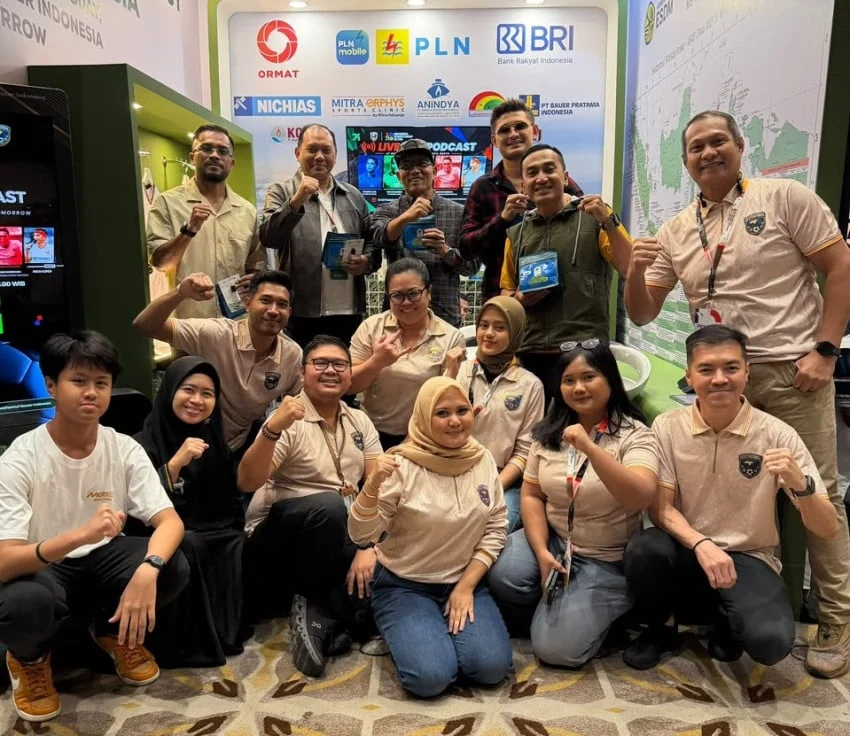
The Indonesia Sports Summit (ISS) 2026, held from September 11 to 13 at the Jakarta Convention Center (JCC), served as a high-profile platform for industry leaders, policymakers, and sports enthusiasts to converge on the future of the nation’s athletic ecosystem. Amidst the discussions regarding infrastructure development, athlete welfare, and sports technology, a unique participant emerged: Geothermal Soccer Indonesia (GSI). By integrating the technical complexities of geothermal energy with the universal appeal of soccer, GSI presented a novel approach to public engagement, aiming to demystify renewable energy through the lens of community-based sports.
A Confluence of Energy and Athletics
The summit, inaugurated by Minister of Youth and Sports Erick Thohir, underscored the role of sports in fostering national progress. Minister Thohir’s opening remarks emphasized that the future of Indonesian sports relies on cross-sector collaboration, digital transformation, and sustainable management. It was within this climate of innovation that GSI established its presence, utilizing a multifaceted booth that featured educational exhibits, interactive mini-podcasts, and games designed to engage attendees of all ages.
The strategic decision to participate in a sports-centric summit rather than a traditional energy conference reflects a shift in how industry stakeholders are approaching public outreach. By collaborating with former members of the Indonesian National Team, GSI successfully leveraged the cultural capital of football to spark conversations about the country’s energy transition. The organization posits that the technical jargon often associated with geothermal exploration can create a barrier to public acceptance, whereas the shared language of sports can bridge that divide.
The Strategic Rationale: Why Soccer?
The choice of soccer as a primary medium for communication is rooted in its status as the most popular sport in Indonesia. With a fan base that transcends socio-economic and geographic boundaries, soccer provides a neutral ground where complex issues—such as the role of baseload renewable energy in a sustainable future—can be introduced in a relatable manner.
Carson Hakama, Chairman of Geothermal Soccer Indonesia, noted during the event that the initiative was designed to remove the "technical shroud" from energy discourse. "GSI aims to move geothermal education out of strictly technical forums and bring it closer to the heartbeat of the community," Hakama stated. "Through soccer, we can communicate the virtues of clean energy, environmental stewardship, physical health, and discipline—values that are inherent to both renewable energy development and the spirit of competitive sports."
This approach acknowledges a fundamental challenge in Indonesia’s energy sector: social acceptance. Large-scale geothermal projects, while vital for meeting the nation’s climate goals, often require significant land use and community integration. By fostering a grassroots connection, GSI seeks to transform public perception from one of skepticism or indifference to one of informed participation.
Contextualizing the Visi Panas Bumi 30.1
The participation of GSI in ISS 2026 is inextricably linked to the government’s ambitious "Visi Panas Bumi 30.1." This policy framework outlines Indonesia’s aspiration to become the world’s leading producer of geothermal energy by the year 2030. As an archipelago situated along the Pacific Ring of Fire, Indonesia holds an estimated 24 gigawatts (GW) of geothermal potential, representing roughly 40% of the global total. Despite this immense resource, current installed capacity remains a fraction of the potential, hampered by exploration risks, high upfront capital costs, and complex regulatory landscapes.
The Visi Panas Bumi 30.1 is not merely an engineering target; it is a socio-economic imperative. To reach these goals, the government recognizes that the acceleration of geothermal development must be accompanied by a broader narrative of "Green Growth." This is where the GSI initiative finds its strategic utility. By building social license, the organization contributes to the long-term stability of energy projects, ensuring that local communities view these facilities as assets to their development rather than external impositions.
Chronology of Public Engagement and Outreach
The path to the ISS 2026 began long before the doors of the JCC opened. Over the past twenty-four months, GSI has been testing its model of community integration.
- Early 2024: Conceptualization of GSI as a bridge between the energy sector and youth development.
- Late 2024: Pilot programs launched in rural regions near active geothermal fields, utilizing soccer clinics to initiate dialogue with local leaders and youth.
- Mid-2025: Collaboration established with professional coaching staff and former national team players to professionalize the "Energy-Soccer" communication model.
- September 2026: Official debut at the Indonesia Sports Summit, marking the transition from regional pilot programs to a national-level public awareness campaign.
The summit served as a validation point for this model, proving that sports-themed pavilions could generate as much traffic and engagement as commercial or technological showcases.
Data-Driven Analysis: The Geothermal Landscape
To understand the scale of the challenge GSI is helping to address, one must look at the data. According to the Ministry of Energy and Mineral Resources (ESDM), Indonesia’s current geothermal output is approximately 2.5 GW. The 2030 target requires a massive mobilization of investment—estimated in the tens of billions of dollars—and a significant increase in the pace of drilling and power plant construction.
A critical hurdle in this trajectory is the "community gap." Historical data on infrastructure projects in Indonesia shows that public resistance often stems from a lack of clear information regarding the benefits of projects. GSI’s focus on translating energy concepts into everyday life—emphasizing the reliability of geothermal as a "baseload" power source that ensures consistent electricity for schools, hospitals, and sports facilities—is a direct response to this data.
Moreover, the emphasis on the "Energy Transition" is timely. With Indonesia committed to the Just Energy Transition Partnership (JETP), which aims to mobilize international funding for decarbonization, the social component of these projects has become a prerequisite for securing financial support from global investors.
Implications and Future Outlook
The implications of GSI’s work extend beyond the energy sector. By embedding sustainability into the fabric of the sports industry, the organization is setting a precedent for how non-energy entities can contribute to the national decarbonization agenda.
Industry analysts suggest that if the GSI model proves successful in increasing public support for geothermal development, it could be replicated across other sectors, such as solar energy or sustainable waste management. The key will be the scalability of the model. While soccer is a powerful tool, the sustainability of the GSI initiative itself will depend on its ability to maintain high-quality programming and genuine community engagement, rather than mere promotional activity.
Looking forward, the success of GSI will be measured by its ability to translate the enthusiasm seen at the Jakarta Convention Center into tangible, long-term support for geothermal projects in the field. The organization’s leadership has indicated that future plans include regional tournaments that coincide with the development phases of new geothermal plants, ensuring that the "energy-soccer" conversation remains active throughout the construction and operation lifecycles of these facilities.
Conclusion
The participation of Geothermal Soccer Indonesia in the Indonesia Sports Summit 2026 serves as a compelling case study in cross-sectoral communication. By recognizing that the transition to a sustainable future is as much about human psychology and community trust as it is about turbines and pipelines, GSI has carved out a unique space in the national discourse.
As Indonesia moves toward its 2030 goals, the collaboration between technical experts and cultural influencers will likely become more critical. The ISS 2026 has provided the stage, but the success of the initiative will ultimately rest on the consistent application of these communication strategies. In a country where soccer is more than just a game, using the sport as a vehicle for national energy development is a bold, yet potentially transformative, step toward securing a cleaner, more sustainable future.
As the summit concluded, the message from the GSI booth remained clear: whether on the pitch or in the power plant, the goal is the same—a stronger, more resilient Indonesia for future generations. The integration of these two seemingly disparate worlds—the field of play and the field of energy—may well be the catalyst needed to power the nation’s ambitions in the coming decade.