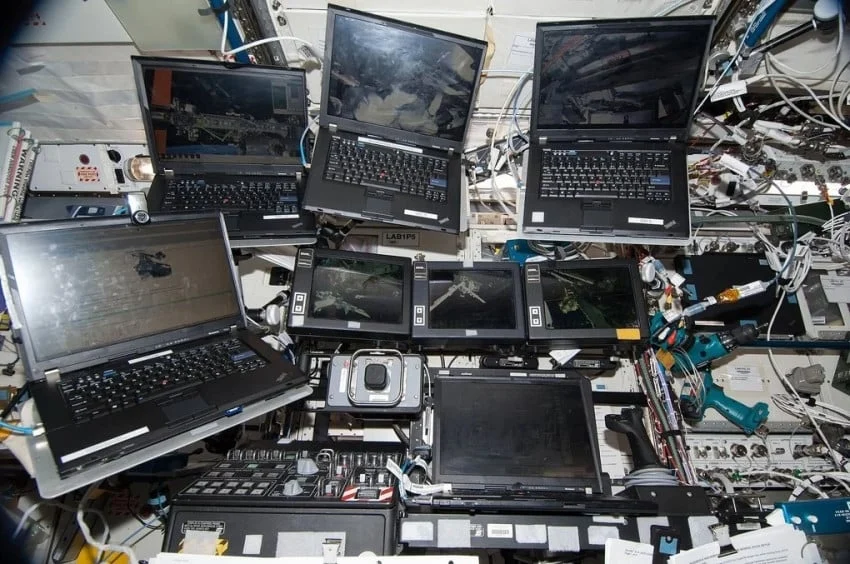
The International Space Station (ISS), a marvel of modern engineering and the primary laboratory for microgravity research, is undergoing a quiet but significant technological transition. After more than three decades of faithful service, the venerable Lenovo ThinkPad, a staple of space exploration, is being phased out of active duty aboard the orbiting laboratory. NASA has confirmed that the transition is driven by the necessity to upgrade aging hardware to meet the increasingly complex computational requirements of modern orbital research and mission-critical life support systems. While the ThinkPad’s black, boxy silhouette and signature red TrackPoint remain cultural icons of the tech industry, the harsh, unforgiving environment of space has necessitated a shift toward more modern, high-performance computing architectures.
A Legacy Spanning Three Decades
The relationship between IBM—the original manufacturer of the ThinkPad—and NASA began in the early 1990s, a period defined by the rapid evolution of mobile computing. The integration of commercial off-the-shelf (COTS) hardware into space missions was a strategic move by NASA to reduce costs and leverage the accelerating pace of the consumer electronics market.
The inaugural mission for the ThinkPad line occurred in December 1993, when the IBM ThinkPad 750C was launched aboard the Space Shuttle Endeavour for the STS-61 mission. This mission, which famously involved the repair of the Hubble Space Telescope, marked the first time a ThinkPad was utilized in orbit. At the time, the 750C was a pinnacle of portable computing, featuring a 10.4-inch color TFT display, a 33MHz Intel 486 processor, and a price tag of $4,699—a substantial investment that reflected the machine’s premium status and advanced capabilities for the era.
Following the success of the 750C, NASA deepened its reliance on the platform. Throughout the late 1990s and early 2000s, various iterations of the ThinkPad were qualified for space flight. Their reliability, mechanical robustness, and keyboard ergonomics made them ideal for the cramped, high-stakes environment of the Space Shuttle and, subsequently, the ISS.
Chronology of Evolution and Acquisition
The history of the ThinkPad in space is inextricably linked to the changing landscape of the global computer industry.
- 1993: IBM ThinkPad 750C makes its maiden voyage on STS-61.
- 1998: Assembly of the ISS begins; ThinkPads are utilized for initial station configuration and diagnostics.
- 2005: A pivotal year in corporate history occurs when Lenovo Group acquires IBM’s Personal Computing Division. NASA continues to procure ThinkPads under the new ownership, ensuring the continuity of the hardware lineage.
- 2008–2010: The ThinkPad T61p becomes the workhorse of the ISS. These units were heavily utilized for scientific experiments and station control interfaces.
- 2015–2020: NASA begins evaluating the next generation of portable computing, looking for hardware that can better handle high-speed data processing and radiation-hardened firmware requirements.
- 2023–2024: NASA officially signals the sunsetting of the legacy ThinkPad fleet, shifting toward more current commercial laptops that meet modern cybersecurity and performance standards.
The ThinkPad T61p: The Definitive Orbital Workstation
Among the various models that frequented the station, the ThinkPad T61p stands out as the most iconic. During the late 2000s, the T61p became the standardized unit for ISS operations. It served as a vital interface for the Crew Support Computer (CSC) and the Station Support Computer (SSC).
These machines were not mere consumer devices; they were integrated into the ISS’s local area network (LAN). They allowed astronauts to communicate with mission control, monitor environmental life support systems, and input data for biological and physical science experiments. The T61p’s durability was tested under extreme conditions, including exposure to high-energy cosmic rays, which can cause "bit flips" in memory. Lenovo’s hardware, paired with NASA’s custom software, proved resilient enough to maintain stability in a vacuum-adjacent environment.
Engineering Challenges in Low Earth Orbit (LEO)
Deploying a laptop in space is fundamentally different from using one in an office. NASA engineers must account for several environmental factors that can lead to hardware failure:
- Microgravity and Cooling: In the absence of natural convection, heat does not rise away from the components as it does on Earth. ThinkPads were modified with external cooling solutions and specialized docking stations to ensure that the internal fans and heat sinks could effectively dissipate heat in a weightless environment.
- Radiation Exposure: The ISS orbits within the Earth’s magnetosphere but is still subject to significantly higher levels of ionizing radiation than the surface. This can damage processors and degrade storage media over time.
- Fire Safety: Any electronic device on the ISS must pass rigorous flammability testing. The materials used in the chassis, keyboard, and power supplies must be non-toxic and self-extinguishing in the event of an electrical short.
- Data Connectivity: With the ISS operating as a high-speed data node, laptops must support encrypted communication protocols that can handle the latency of satellite-linked networks.
Official Perspectives and Technological Shifts
While NASA has not issued a formal "farewell" to the ThinkPad brand, officials from the Johnson Space Center have noted that the agency’s procurement strategy is increasingly dictated by the lifecycle of commercial hardware. The rapid obsolescence of CPU architectures and the need for seamless compatibility with Windows-based enterprise environments are the primary drivers of the switch.
Industry analysts suggest that NASA’s shift is a natural progression. "The computing power required for modern ISS research, which now includes advanced machine learning and real-time high-definition video processing, has outpaced the capabilities of older architectures," noted an aerospace technology consultant. "It is not a reflection of the quality of the legacy hardware, but rather an acknowledgment that the mission requirements of 2024 are vastly different from those of 2005."
Lenovo, for its part, maintains a close relationship with NASA. The brand continues to provide high-performance workstations for ground-based mission control, simulation, and data analysis centers. While the "ThinkPad" nameplate may be disappearing from the ISS modules, the lineage of design and reliability that defined the brand remains a part of the agency’s broader operational infrastructure.
The Broader Impact of the Retirement
The departure of the ThinkPad from the ISS marks the end of an era in space exploration history. It represents the transition from the "early" commercial space age—characterized by adapting consumer technology—to a new phase of hyper-specialized, highly efficient orbital computing.
The implications of this move are significant:
- Operational Efficiency: Newer hardware platforms offer higher processing speeds, allowing astronauts to conduct more complex experiments with faster turnaround times.
- Standardization: Moving to more modern, uniform hardware reduces the maintenance burden on the crew, who previously had to manage a diverse inventory of aging machines.
- Data Security: Modern laptops offer superior encryption and hardware-level security, protecting sensitive research data and the integrity of the station’s network.
As NASA looks toward the Artemis program and future missions to the Moon and Mars, the lessons learned from the ThinkPad era will be invaluable. The ability to integrate commercial hardware into deep-space habitats will be critical for future exploration. The ThinkPad proved that reliable, mass-produced technology could withstand the rigors of space, setting a benchmark for the next generation of portable computing hardware that will follow the crew into the next frontier.
Conclusion: A Lasting Legacy
The ThinkPad’s tenure at the International Space Station is a testament to the durability and innovative design that defined the brand for decades. From the early days of the Space Shuttle to the current era of commercial spaceflight, these machines served as the primary interface between humanity and the cosmos.
While the hardware is being retired, its influence on space-hardened computing will persist. The ThinkPad did not just assist in scientific discovery; it became part of the story of the ISS itself—a symbol of the bridge between terrestrial technology and the stars. As NASA transitions to new computing solutions, the legacy of the ThinkPad remains a cornerstone of the history of human spaceflight, reminding us that even in the vacuum of space, the right tool—built with quality and foresight—can change the world, and everything beyond it.