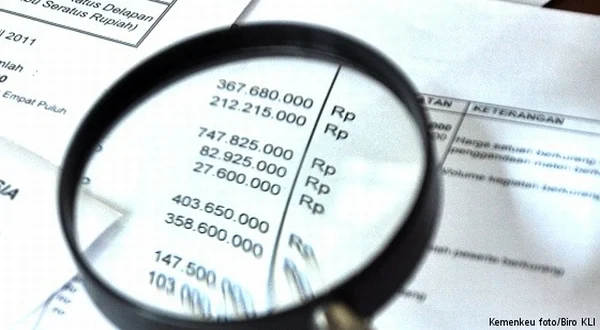
The Indonesian government officially presented the Draft Law on the Accountability for the Execution of the 2013 State Budget, commonly known as the RUU APBN-P, during a plenary session at the House of Representatives (DPR RI) in Senayan, Jakarta. The submission marked a crucial constitutional step in ensuring fiscal transparency and legislative oversight regarding how public funds were allocated, managed, and utilized throughout the 2013 fiscal year.
During the parliamentary session, then-Minister of Finance Muhammad Chatib Basri delivered the government’s comprehensive report on the national financial statements. The presentation addressed not only the realized expenditures and revenues of the 2013 state budget, but also confronted head-on the complex economic headwinds, structural hurdles, and auditing complications that characterized that fiscal period.
The financial reporting for 2013 carried profound significance for the administration’s fiscal credibility, particularly because the central government’s financial statements—known as Laporan Keuangan Pemerintah Pusat (LKPP)—received a Qualified Opinion, or Wajar Dengan Pengecualian (WDP), from the Supreme Audit Agency (BPK). This designation indicated that while the financial statements were generally presented fairly, certain accounting treatments, asset classifications, and outstanding obligations required specific qualifications and corrective measures.
Background Context of the 2013 State Budget and BPK Audit Findings
The Supreme Audit Agency’s decision to grant a WDP status to the 2013 LKPP was a focal point of discussion during the parliamentary proceedings. Explaining the rationale behind the audit exception, Finance Minister Chatib Basri outlined the specific accounting friction points that prevented the government from securing an unqualified or "Wajar Tanpa Pengecualian" (WTP) opinion.
According to the Ministry of Finance, the qualifications issued by the BPK stemmed primarily from four long-standing, complex financial categories:
- Over-lifting receivables in the oil and gas sector.
- Unresolved oil and gas sales receivables.
- Credit assets originating from the former Indonesian Bank Restructuring Agency (BPPN), a legacy institution formed in the wake of the 1997-1998 Asian financial crisis.
- Civil servant and state apparatus pension expenditure liabilities.
These issues represented systemic and historical accounting challenges that required coordinated cross-sectoral interventions, often involving multiple state agencies, regulatory adjustments, and protracted asset recovery procedures. The management of former BPPN assets, for instance, had complicated government balance sheets for over a decade, involving non-performing loans, asset restructuring, and legal hurdles in transferring ownership titles definitively to the state. Similarly, fluctuations in commodity volumes and pricing frameworks made the calculation of oil and gas over-lifting receivables vulnerable to discrepancies between projected and realized figures.
Despite these accounting caveats, the submission of the accountability bill underscored the executive branch’s commitment to legislative scrutiny, allowing lawmakers to review, debate, and ultimately vote on the formal closure of the 2013 budget cycle.
Macroeconomic Pressures and External Shocks in 2013
The execution of the 2013 State Budget did not occur in a vacuum; rather, it unfolded against a backdrop of severe global and domestic economic turbulence. Throughout 2013, emerging market economies faced unprecedented capital outflows and currency volatility triggered by shifting monetary policy signals from major central banks.
Minister Chatib Basri elaborated on the external factors that exerted immense pressure on Indonesia’s macroeconomic framework. Chief among these was the signal given by the United States Federal Reserve regarding the potential tapering of its quantitative easing program—commonly referred to as "tapering off." This announcement sent shockwaves through global financial markets, prompting foreign investors to repatriate capital from emerging economies, including Indonesia, back to dollar-denominated assets.
Simultaneously, the global economic landscape was marked by a sluggish recovery from the global financial crisis, compounded by a noticeable cooling in international commodity prices. As a major exporter of raw commodities, coal, and palm oil, Indonesia experienced a sharp reduction in export earnings, which directly impacted state revenues and overall economic growth momentum.
On the domestic front, these external shocks translated into significant internal pressures. Indonesia’s current account deficit widened noticeably, driven by softening export revenues juxtaposed with robust domestic demand for imported goods. This widening deficit placed severe downward pressure on the Indonesian Rupiah, triggering a period of sharp currency depreciation that complicated corporate balance sheets, increased imported inflation risks, and inflated the costs associated with foreign-denominated debt servicing.
Government Policy Responses and Economic Stabilization Measures
To counter the compounding effects of domestic imbalances and external financial shocks, the Indonesian government, in close coordination with Bank Indonesia, deployed a series of stabilization policies designed to restore market confidence and protect the integrity of the state budget.
Among the cornerstone policies implemented during this period was the adjustment of subsidized fuel prices. In June 2013, the government raised the prices of subsidized gasoline and diesel—a politically sensitive and economically consequential move aimed at reining in the ballooning fiscal deficit caused by high global oil prices and surging domestic consumption. This fiscal consolidation measure was designed to alleviate pressure on the state budget and signal to international rating agencies and investors that Indonesia remained committed to fiscal prudence.
In addition to energy subsidy reform, the administration focused heavily on strengthening the current account balance through export promotion policies, enhancing domestic processing requirements under the newly introduced mining laws, and implementing stringent monitoring of foreign exchange earnings.
Bank Indonesia, meanwhile, acted decisively on the monetary front by raising its benchmark interest rate multiple times throughout 2013 to anchor inflation expectations, defend the Rupiah, and curb excessive capital flight. These synchronized fiscal and monetary interventions helped stabilize financial markets, preventing a more severe economic contraction, though they inevitably altered the macroeconomic assumptions upon which the original 2013 APBN targets had been constructed.
Chronology of the 2013 Budget Cycle and Legislative Review
The presentation of the RUU APBN-P 2013 on Tuesday, June 24, 2014, represented the culmination of a rigorous multi-year financial cycle that began with the formulation of the budget in mid-2012. A detailed chronology highlights the key milestones of the 2013 state budget process:
- Mid-2012 to Late 2012: The government and the DPR deliberate on macroeconomic assumptions, revenue projections, and expenditure priorities, resulting in the enactment of the Law on the 2013 State Budget in late 2012.
- January to December 2013: The executive branch executes the budget amid escalating global market volatility, domestic currency depreciation, and fiscal pressures that necessitate a budget revision (APBN-P 2013) mid-year to adjust subsidy allocations and revenue targets.
- Early 2014: Following the close of the fiscal year, line ministries compile their financial reports, which are then consolidated into the Laporan Keuangan Pemerintah Pusat (LKPP) and submitted to the Supreme Audit Agency (BPK) for comprehensive auditing.
- Mid-2014: The BPK completes its audit of the 2013 LKPP, issuing a Qualified Opinion (Wajar Dengan Pengecualian) due to unresolved accounting treatments regarding oil/gas receivables, legacy BPPN assets, and pension obligations.
- June 24, 2014: Minister of Finance Chatib Basri formally presents the RUU APBN-P 2013 before the DPR RI plenary session at Gedung Nusantara II, Senayan, initiating the formal legislative debate and accountability review.
Implications and Future Outlook for State Financial Management
The parliamentary debates surrounding the 2013 State Budget Accountability Bill highlighted ongoing structural challenges in Indonesia’s public financial management. While the receipt of a WDP opinion indicated that the government’s financial reporting was transparent enough to identify discrepancies, it also underscored the urgent need for institutional reforms to resolve legacy accounting issues once and for all.
Economists and fiscal policy analysts noted that resolving issues surrounding former BPPN assets and oil/gas receivables required closer inter-agency cooperation between the Ministry of Finance, state-owned enterprises in the energy sector, and law enforcement or asset-recovery agencies. Failure to clear these recurring audit qualifications risked dampening investor perceptions regarding the institutional maturity of Indonesia’s public sector accounting standards.
Furthermore, the experience of executing the 2013 budget served as a valuable stress test for subsequent fiscal policymaking. It demonstrated the vulnerability of emerging market budgets to external monetary shocks, commodity price cycles, and structural current account deficits. The lessons learned from the 2013 fiscal adjustments informed subsequent administrations on the importance of maintaining fiscal buffers, accelerating structural reforms to diversify export earnings, and maintaining disciplined management of energy subsidies.
As the DPR proceeded with its review of the accountability bill, lawmakers were tasked with balancing critical oversight of past financial performance with forward-looking legislative support for policies aimed at achieving unqualified audit opinions in future fiscal years. The session ultimately reinforced the foundational principle of democratic governance in Indonesia: that executive spending of public funds must continuously be subjected to rigorous, transparent, and constructive legislative accountability.