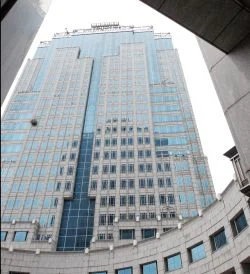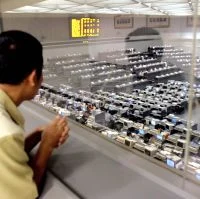
The global financial architecture experienced a profound tremor in October 2008, a period now etched into economic history as the zenith of the Global Financial Crisis. Amidst cascading market liquidations across international borders, the Indonesia Stock Exchange (IDX)—known locally as Bursa Efek Indonesia (BEI)—issued a formal and urgent appeal to domestic investors and publicly listed companies. Following yet another steep plunge of 733 points on the United States Wall Street indices, regulatory authorities in Jakarta sought to quell rising panic, asserting that the domestic economy possessed sufficient underlying strength to weather the external storm. This intervention highlighted the delicate interplay between emerging market exchanges and the seismic shocks originating from Western financial epicenters during one of the most volatile eras in modern capitalism.
Main Facts and Market Overview
The core of the market disturbance centered on the relentless downward spiral of Wall Street, which reverberated across global trading floors from Asia to Europe. On October 16, 2008, United States equities suffered another catastrophic decline, shedding 733 points in a single session as investors panicked over the unfolding subprime mortgage fallout, credit market freezes, and systemic banking failures.
In response to the panic spilling over into the domestic market, IDX Director of Listing Eddy Sugito firmly urged market participants to maintain composure. Speaking to financial journalists in Jakarta, Sugito emphasized that while the Indonesian bourse was not immune to external sentiments, market participants and listed corporations had no rational basis for panic. He pointed out that the Indonesian economy retained robust fundamental indicators capable of absorbing external shocks. Furthermore, regulators highlighted that local investors held a substantial stake in the domestic market, providing a localized cushion against the flight of foreign capital that typically characterizes such global liquidity crunches. Sugito specifically advised investors to look toward fundamentally sound local equities—particularly state-owned enterprises (SOEs) or Badan Usaha Milik Negara (BUMN)—as prime accumulation targets amidst the indiscriminate market sell-offs.
Chronology of the 2008 Financial Meltdown
To fully understand the context of the IDX’s advisory in October 2008, one must examine the rapid deterioration of global financial stability that preceded the Wall Street plunge. The crisis did not materialize overnight; rather, it was the culmination of years of loose monetary policy, complex and opaque financial derivatives, and a housing bubble in the United States.
The timeline of escalation intensified dramatically in the months leading up to the October stock shock:
- March 2008: The near-collapse and subsequent emergency acquisition of investment banking giant Bear Stearns by JPMorgan Chase, backed by the Federal Reserve, signals severe stress in the US credit markets.
- September 7, 2008: The US government places government-sponsored mortgage giants Fannie Mae and Freddie Mac into conservatorship to prevent a catastrophic collapse of the housing finance system.
- September 15, 2008: Lehman Brothers files for Chapter 11 bankruptcy protection after the US government declines to orchestrate a rescue bailout. This event triggers an immediate global liquidity freeze, sending shockwaves through international banking networks.
- September 16, 2008: Insurance titan American International Group (AIG) is rescued by the Federal Reserve through an $85 billion emergency loan to prevent systemic failure.
- Late September to October 2008: Central banks worldwide, including Bank Indonesia, initiate coordinated liquidity injections and interest rate adjustments. Stock exchanges globally experience extreme volatility, characterized by historic intraday swings and successive double-digit point losses on major indices like the Dow Jones Industrial Average, FTSE 100, and Nikkei 225.
- October 16, 2008: The Dow Jones plunges 733 points, prompting urgent reassurance statements from emerging market regulators, including the Indonesia Stock Exchange, to prevent localized bank runs and panic selling.
Supporting Data and Economic Context
The severity of the 2008 crisis is quantified by unprecedented macroeconomic indicators and market statistics. During this period, the Dow Jones Industrial Average (DJIA) lost a staggering percentage of its value, falling from highs near 14,000 points in 2007 to troughs below 7,000 points by early 2009.
In Indonesia, the Jakarta Composite Index (JCI)—known as Indeks Harga Saham Gabungan (IHSG)—faced immense downward pressure as foreign institutional investors pulled capital back to their home markets to shore up domestic balance sheets. Trading on the IDX was subjected to extreme stress, leading regulatory bodies to implement temporary trading halts and relaxed buyback rules for publicly listed companies to stabilize valuations. Despite these external pressures, Indonesia’s macroeconomic fundamentals in late 2008 presented a stark contrast to the crippled banking sectors of the West. The country boasted steady gross domestic product (GDP) growth of over 6 percent annually, relatively low levels of foreign debt compared to the private sector leverage seen in developed nations, and a burgeoning domestic consumer base that insulated domestic enterprises from total export collapse.
Official Responses and Regulatory Measures
The stance adopted by Eddy Sugito and the broader management of the Indonesia Stock Exchange reflected a coordinated communication strategy deployed by emerging market regulators worldwide. Financial authorities recognized that market sentiment often decoupled from actual corporate performance during panics, creating self-fulfilling prophecies of insolvency and asset devaluation.
By publicly directing investor attention toward state-owned enterprises (BUMN) such as major banking institutions, telecommunications providers, and energy firms, the IDX sought to anchor market valuations in tangible assets. BUMNs historically commanded significant market capitalization on the local exchange and maintained strong balance sheets backed by state revenue streams and resilient domestic demand. Furthermore, the Indonesian government and Bank Indonesia worked in tandem to ensure that domestic commercial banks maintained adequate liquidity levels. Measures were enacted to ease short-term financing constraints, guarantee banking deposits, and maintain confidence in the national currency, the rupiah, which had also come under speculative pressure during the global capital flight.
Broader Impact and Implications
The events of October 2008 left an indelible mark on global financial regulation, corporate governance, and investor psychology. For emerging markets like Indonesia, the crisis served as a profound stress test, revealing both vulnerabilities and structural strengths.
On one hand, the episode demonstrated that no economy, regardless of its internal growth rate, is entirely decoupled from the financial hubs of New York, London, and Frankfurt. The globalization of capital flows meant that foreign institutional sell-offs could severely depress domestic equity valuations, independent of the operational health of local corporations. On the other hand, the relative resilience of Indonesia’s banking sector—having undergone rigorous structural reforms following the Asian Financial Crisis of 1997–1998—prevented a systemic domestic meltdown.
The strategy advocated by the IDX in 2008—urging calm, emphasizing economic fundamentals, and redirecting focus toward state-backed local equities—became a foundational playbook for crisis communication in subsequent market downturns. It underscored the vital role of regulatory transparency and proactive messaging in preventing irrational retail investor panic during global economic convulsions. Ultimately, the 2008 crisis catalyzed long-term shifts toward enhanced risk management, stricter capital adequacy standards for financial institutions, and a greater appreciation for domestic market depth across Southeast Asia’s premier exchanges.