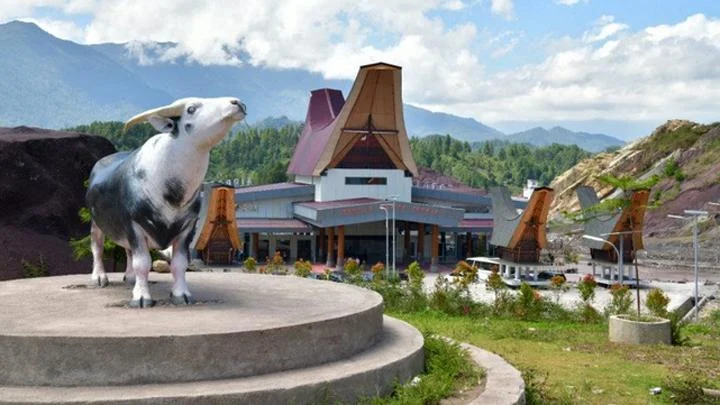
The formal inauguration of Toraja Airport, formerly known as Buntu Kunik Airport, in Tana Toraja Regency, South Sulawesi, marks a significant milestone in Indonesia’s ongoing infrastructure development strategy. President Joko Widodo, widely known as Jokowi, led the inauguration ceremony on Thursday, March 18, 2021, emphasizing the critical role the new aviation hub plays in unlocking the economic and tourism potential of the region. Broadcast live via the official YouTube channel of the Presidential Secretariat, the event underscored the administration’s broader commitment to bridging geographic divides across the archipelago, particularly in culturally and economically rich regions that have historically faced logistical bottlenecks.
The establishment of Toraja Airport is expected to serve as a catalyst for regional revitalization. During his address, President Jokowi expressed optimism that the operationalization of the airport would directly stimulate local economic activities, generate employment opportunities for the surrounding communities, and foster the emergence of new economic centers within Tana Toraja and its neighboring areas. By significantly reducing travel time compared to overland journeys from regional hubs like Makassar, the facility aims to facilitate the smoother movement of people, goods, and services, thereby integrating the region more deeply into the national economy.
A Decades-Long Chronology of Construction and Engineering Challenges
The realization of Toraja Airport was far from straightforward, characterized by a protracted timeline that spanned an entire decade. The initial planning and construction of the airport commenced in 2011. The project was conceived to replace the aging and geographically constrained Pongtiku Airport located in Rantetayo, which faced severe limitations regarding runway expansion and aircraft capacity due to safety concerns and surrounding terrain. However, shortly after its inception, the construction of the new airport encountered significant setbacks, leading to prolonged delays that stalled progress for several years.
The project experienced a renewed sense of urgency when President Jokowi’s administration prioritized its completion. In 2018, construction resumed under a concerted effort by the central government in coordination with the Ministry of Transportation. Phase one of the revived project was successfully executed and completed by mid-2020, paving the way for initial flight trials and the gradual commencement of commercial operations. Following its completion, major domestic carriers, namely Wings Air and Citilink, established regular scheduled flights connecting Toraja directly to Makassar, the capital of South Sulawesi province.
Engineering Feats: Overcoming the Challenging Topography of Tana Toraja
One of the most remarkable aspects of Toraja Airport’s development is the sheer scale of the engineering challenges involved. Tana Toraja is renowned for its dramatic, mountainous terrain, characterized by steep hills and deep valleys. Constructing a modern aviation facility capable of handling commercial aircraft in such an environment required unprecedented civil engineering interventions.
According to Minister of Transportation Budi Karya Sumadi, the construction process was among the most difficult undertaken by the ministry due to the extreme topography. To create a sufficiently flat and safe landing strip, engineers and construction crews had to systematically level and cut through three distinct hills within the project area. This massive earthmoving effort allowed for the establishment of a robust aviation infrastructure that could withstand the geographical constraints of the region.
Technical Specifications and Phased Development
Toraja Airport spans a total land area of 141 hectares, designed to accommodate future growth and increasing passenger demand. The development of the facility has been structured in distinct phases to optimize resource allocation and operational readiness.
In its initial phase, the airport features a runway length of 1,600 meters, specifically engineered to accommodate medium-sized turboprop aircraft such as the ATR 72, which are standard for regional Indonesian routes. The airside infrastructure also includes an apron measuring 94.5 by 67 meters and a taxiway dimensions of 124.5 by 15 meters.
To accommodate larger narrow-body jet aircraft, such as the Boeing 737, the second phase of development was planned to extend the runway length to 2,000 meters, with a width of 30 meters. Furthermore, ongoing infrastructure enhancements in 2021 included targeted operations to clear remaining topographical obstacles and hills situated near the runway thresholds to ensure strict adherence to international aviation safety standards. On the landside, the terminal building occupies a footprint of 1,000 square meters, equipped with passenger facilities designed to handle a capacity of approximately 150 passengers during peak operational hours.
The Etymology and Cultural Significance of the Name Change
Prior to its official designation as Toraja Airport, the facility was widely recognized during its development phase as Buntu Kunik Airport, named after the specific local geographical area where it was built. The decision to officially rename the facility to Toraja Airport involved a comprehensive consensus-building process rooted in local cultural traditions and administrative procedures.
The renaming was the result of formal agreements reached between the local regency government and traditional leaders, customary figures, and community representatives spanning 19 sub-districts across Tana Toraja. Following this broad-based community consensus, the proposed name was officially submitted to the Regional House of Representatives (Draped) for formal enactment through a plenary session. Subsequently, the regional administration forwarded the proposal to the provincial government and ultimately to the Ministry of Transportation for official legal recognition and national integration into Indonesia’s aeronautical information publications. This meticulous process ensured that the airport’s identity deeply reflects the cultural heritage and pride of the indigenous Torajan population.
Strategic Implications for Regional Tourism and Connectivity
The opening of Toraja Airport is widely regarded by economists and tourism experts as a pivotal turning point for Tana Toraja, a destination globally celebrated for its unique megalithic culture, distinctive traditional architecture (tongkonan), elaborate funeral rituals, and breathtaking highland landscapes. Historically, the primary deterrent for international and domestic tourists visiting Tana Toraja has been the arduous eight-to-ten-hour overland journey from Sultan Hasanuddin International Airport in Makassar.
By cutting travel time down to approximately 45 to 50 minutes via direct commercial flights, the airport effectively eliminates the logistical barrier that previously limited visitor numbers. Enhanced connectivity is projected to yield immediate benefits for the local hospitality sector, including hotels, homestays, tour operators, and artisan enterprises that rely on tourism revenue. Furthermore, improved transport links are anticipated to facilitate the distribution of local agricultural produce and specialty commodities to broader markets, thereby diversifying the regional economy beyond tourism.
Broad Economic and Infrastructural Analysis
From a broader macroeconomic perspective, the completion of Toraja Airport aligns with the Indonesian government’s National Strategic Projects framework, which prioritizes infrastructure development in outer, frontier, and underdeveloped regions. Economists note that while capital-intensive infrastructure projects in mountainous terrains involve substantial initial investments and complex engineering solutions, their long-term multiplier effects on regional gross domestic product (GDP) can be profound.
By integrating remote cultural hubs into the national aviation network, the central government aims to reduce regional disparities, lower logistics costs over time, and encourage private sector investments in regional tourism infrastructure. As secondary and tertiary airports like Toraja continue to mature, their success will largely depend on the sustained coordination between local governments, national carriers, and tourism boards to maintain reliable flight frequencies and market the destination effectively to global travelers. The inauguration thus stands not merely as an administrative milestone, but as a foundational pillar for sustainable regional development in South Sulawesi.