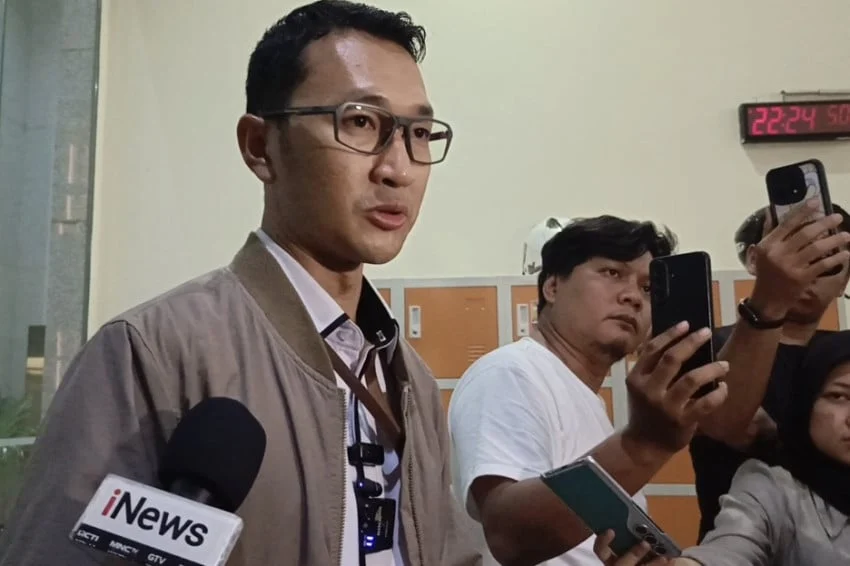
The Corruption Eradication Commission of the Republic of Indonesia has executed one of the most high-profile sting operations in recent history, seizing cash estimated in the hundreds of billions of rupiah packed inside dozens of suitcases, moving boxes, and storage containers. The operation, locally known as an Operasi Tangkap Tangan (OTT), targeted a sprawling bribery network centered around the processing and issuance of Building Rights Titles, widely known as Hak Guna Bangunan (HGB), within Bogor Regency, West Java. The coordinated raid, which unfolded on Monday, September 14, 2026, marks a watershed moment in the ongoing battle against systemic corruption within the country’s agrarian and spatial planning bureaucracy.
According to official statements from the anti-graft agency, the sweep extended far beyond a single municipal office, ensnaring a total of 17 individuals across multiple jurisdictions, including Bogor and Tangerang. Among those taken into custody are elite bureaucrats holding immense regulatory power, local land office heads, and prominent political figures. The staggering volume of physical evidence recovered underscores the immense scale of illicit financial flows plaguing land administration in Indonesia’s rapidly developing satellite regions surrounding the capital city.
Chronology and Execution of the Operation
The intelligence-led sting operation was the culmination of months of discreet surveillance by the KPK’s covert investigation units. Operating under strict operational secrecy, enforcement teams moved in on multiple targets simultaneously on the afternoon of Monday, September 14, 2026. The raids targeted locations across Bogor Regency and Tangerang City, where suspects were allegedly in the process of finalizing illicit transactional agreements related to land titling and corporate spatial clearances.
Upon breaching the primary locations, investigators discovered an unprecedented cache of physical wealth. Rather than standard digital transfers or modest banking transactions, the suspects allegedly utilized physical cash to avoid regulatory scrutiny and paper trails. KPK spokespersons revealed that the currency—comprising both Indonesian Rupiah and various foreign exchange currencies—was densely packed into roughly twenty heavy-duty suitcases, cardboard packing boxes, and reinforced plastic storage containers.
The sheer physical volume of the cash necessitated specialized transport logistics to move the seized items securely to the KPK’s Red and White Building in Kuningan, South Jakarta. Forensic accountants and asset-tracing specialists immediately set to work utilizing automated cash-counting machines, a process that extended well beyond the initial hours of the detention due to the sheer magnitude of the bills.
Profiles of the Arrested Parties
The gravity of the September 14 operation is underscored by the senior status of the individuals apprehended. The KPK confirmed that 17 people were secured during the synchronized raids. The roster of detainees reads like a cross-section of institutional power within Indonesia’s land management and political spheres.
Among the most notable figures caught in the net is Lampri, who serves as the Director General of Land and Spatial Control and Order (PPTR) under the Ministry of Agrarian Affairs and Spatial Planning/National Land Agency (ATR/BPN). As a high-ranking national bureaucrat, the Director General holds supreme oversight regarding spatial violations, land conversions, and regulatory enforcement nationwide. His entanglement in a local HGB processing bribery scheme highlights potential vulnerabilities at the apex of agrarian governance.
In addition to the Director General, regional administrative heads responsible for frontline land certification were also apprehended. These include Sontang Coin Manurung, Head of the Bogor Regency Land Office I (Kantah), and Tardi, Head of the Tangerang City Land Office. These offices sit at the frontline of massive commercial and residential real estate developments, where the acquisition of HGB certificates for vast tracts of land represents immense financial stakes for corporate investors and developers.
The operation also reached into the political arena, netting prominent political figures. Among those detained are Fahd El Fouz, widely known as Fahd A. Rafiq, a senior politician affiliated with the Golkar Party with a history of past legal entanglements, and Arif Sugiyanto, the former Regent of Kebumen. The presence of these political actors points toward a complex nexus between state bureaucracy, regional political patronage networks, and private commercial interests seeking expedited land titles.
Scale of Seized Assets and Financial Implications
While the official financial audit of the seized cash is ongoing, initial preliminary estimates provided by the KPK indicate that the total nominal value approaches hundreds of billions of rupiah. This places the Bogor-Tangerang operation among the largest physical cash seizures in the history of the commission.
The reliance on physical cash—packaged in suitcases and boxes—suggests a concerted effort by the syndicate to bypass the reporting thresholds of the Indonesian Financial Transaction Reports and Analysis Centre (PPATK). In recent years, corrupt actors have increasingly pivoted away from traditional domestic banking channels toward hard currency to obscure the ultimate beneficial owners of illicit funds and to facilitate quick, untraceable payoffs for high-value bureaucratic sign-offs.
The economic implications of HGB corruption in regions like Bogor and Tangerang are profound. Bogor Regency, situated directly south of Jakarta, has experienced exponential growth in residential, industrial, and commercial real estate development. The issuance of HGB titles grants legal security to corporations and developers to utilize state-owned or privately acquired land for commercial building purposes for extended periods. When the administrative pathway to obtaining these crucial legal instruments is compromised by bribery, it creates an uneven playing field, incentivizes regulatory capture, and undermines public trust in the rule of law.
Institutional Response and Legal Framework
In the wake of the arrests, the KPK has reiterated its commitment to following the evidence wherever it leads, regardless of the institutional rank or political affiliation of the suspects. Under Indonesia’s Corruption Eradication Law, the 17 detained individuals are currently undergoing an intensive 24-hour initial interrogation phase, following which the commission is legally mandated to determine their formal suspect status and transition them into pre-trial detention.
Legal analysts and governance watchdogs have praised the operation as a necessary intervention in a sector long plagued by allegations of land mafias and administrative extortion. Civil society organizations focusing on agrarian reform have long pointed out that land acquisition processes in Indonesia’s buffer zones are highly susceptible to rent-seeking behavior, given the high land values and intense competition between corporate developers and local communities.
Broader Impact on Indonesia’s Agrarian Sector
The fallout from the September 2026 raids is expected to reverberate across the Ministry of Agrarian Affairs and Spatial Planning. Calls for immediate administrative reforms, digital transparency in land certification, and stricter internal oversight are mounting from both legislative bodies and anti-corruption watchdogs.
The involvement of a sitting Director General and multiple regional land office heads forces the central government to confront systemic vulnerabilities within the civil service. Observers note that restoring integrity to the land titling process is essential not only for domestic legal certainty but also for maintaining investor confidence. Foreign and domestic investors rely heavily on transparent, predictable, and corruption-free land administration to secure property rights and execute long-term capital projects.
As the KPK continues its forensic examination of the seized suitcases, boxes, and electronic devices recovered during the raids, further disclosures regarding the ultimate beneficiaries and the systematic network of bribery are anticipated in the coming days. The case stands as a stark reminder of the persistent challenges facing Indonesia’s governance institutions as they attempt to dismantle deeply entrenched cartels operating at the intersection of bureaucratic power and private wealth.