A harrowing rescue operation in the remote wilderness of Mimika, Central Papua, has brought to light the desperate plight of victims caught in the crossfire of the ongoing insurgency in the region. Demerina Uamang, a 23-year-old woman, was successfully evacuated by a joint task force on Monday, September 14, 2026, after enduring 20 days of unimaginable suffering in the deep forests of the Alama District. Her survival, while miraculous, stands as a grim testament to the humanitarian toll exacted by the Armed Criminal Group (KKB) operating in the Papua highlands.
The evacuation, carried out by the Damai Cartenz-2026 Operations Task Force, marked the end of a weeks-long ordeal that began in late August. Demerina was one of nine women abducted by the KKB during an incident in the Jila District. Her rescue, however, was marred by the discovery of her companion, Yosina, who had succumbed to starvation and exposure before authorities could reach their location in Kampung Bela 1.
The Chronology of an Abduction
The ordeal for Demerina and her companions began on August 17, 2026. While the nation was observing Independence Day, the victims were seized by members of the KKB in the Jila District of Mimika. The motive behind the mass abduction remains a subject of ongoing investigation by security forces, though such acts of intimidation are frequently used by the armed groups to assert control over remote indigenous populations and to disrupt local civilian infrastructure.
Following their capture, the group was forced into the dense, mountainous terrain of Papua. Over the subsequent days, the captives were subjected to harsh conditions, forced to march through unforgiving geography with minimal sustenance. Recognizing the dire nature of their circumstances, Demerina and Yosina managed to break away from their captors and flee into the wilderness.
For the next 20 days, the two women wandered through the dense jungles of the Alama District. Without access to food or clean water, their condition deteriorated rapidly. It was not until September 7, 2026, that a local village head from the area reported the presence of the women to authorities in the Jila District. This critical piece of intelligence triggered a mobilization of the Damai Cartenz task force, though the rescue was immediately complicated by the extreme topography and severe weather conditions that define the Mimika region.
The Rescue Operation and the Discovery of Tragedy
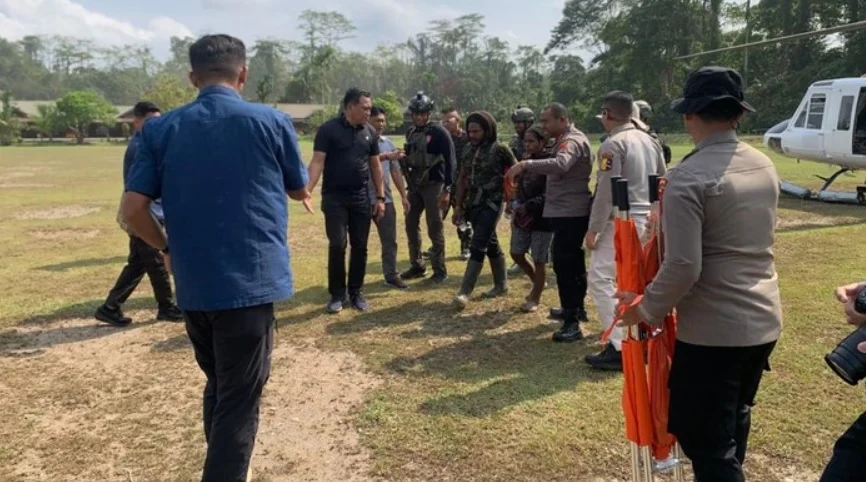
The retrieval of Demerina was a high-stakes mission that required precise coordination between military and police personnel. Using a Polri P-3002 Bell helicopter, the task force attempted to reach the coordinates provided by local residents. However, the mission faced a four-day delay due to persistent, extreme weather. Low-hanging clouds and thick fog frequently blanket the Alama District, rendering aerial operations hazardous.
When rescuers finally reached the remote location in Kampung Bela 1, they were met with a heartbreaking scene. Demerina was found in a severely weakened state, suffering from extreme malnutrition and dehydration. Nearby, they discovered the body of Yosina. According to official reports from the task force, Yosina had passed away due to the lack of food and the physiological toll of the 20-day ordeal.
Kombes Pol Yusuf Sutejo, the Public Relations Chief of the Damai Cartenz-2026 Operation, confirmed the tragic details of the discovery. "Adik Uamang (Demerina) was not alone. She was with her colleague, Yosina. Unfortunately, Yosina was found dead, her body having wasted away due to the absence of any sustenance or medical support during their time in the forest," Sutejo stated during a press briefing on Monday.
Demerina was immediately airlifted to Timika, the capital of Mimika Regency, where she was admitted to a medical facility for urgent stabilization and care. Her survival is considered a medical marvel given the duration of her exposure to the elements without resources.
Contextualizing the Conflict in Central Papua
The incident in Jila and Alama is symptomatic of the deteriorating security landscape in the Central Papua province. The region has seen a spike in localized violence, with armed groups often targeting both security forces and civilians to gain leverage.
Humanitarian experts note that the use of civilian populations as human shields or as instruments of psychological warfare has become a recurring tactic among KKB factions. By kidnapping local residents, these groups seek to create a climate of fear, effectively paralyzing local administration and forcing civilians to either comply with their demands or flee their ancestral lands.
Data from the Regional Security Assessment shows that 2026 has been a particularly volatile year. The strategy employed by the Damai Cartenz task force—a collaborative effort between the Indonesian National Police (Polri) and the Indonesian National Armed Forces (TNI)—focuses on a "soft-approach" strategy, prioritizing the protection of civilians and community engagement. However, the geographic isolation of districts like Jila and Alama makes the enforcement of security and the delivery of humanitarian aid exceptionally difficult.
Humanitarian and Strategic Implications
The tragedy of Yosina and the suffering of Demerina underscore the urgent need for a more robust humanitarian infrastructure in the highlands. When civilians are forced to flee into the forest to escape conflict, they are often beyond the reach of traditional medical and rescue services.
From a strategic perspective, the incident highlights the difficulty the state faces in maintaining a presence in the "blank spots" of the map. The KKB utilizes this lack of state infrastructure to operate with relative impunity in the deep forests. The delay in the rescue operation, while attributed to weather, also reflects the logistical limitations that security forces encounter when operating in the rugged terrain of the Jayawijaya mountains and the surrounding districts.
Security analysts have suggested that the government must increase its investment in early warning systems and intelligence-gathering at the village level. The fact that the rescue was initiated only after a village head traveled to report the sighting suggests a breakdown in communication channels that needs to be addressed. Had the report been made immediately following the abduction, the outcome for Yosina might have been different.
Looking Ahead: Security and Support
As of mid-September 2026, Demerina remains under medical supervision in Timika. She is also undergoing trauma counseling to help her process the loss of her companion and the psychological impact of the abduction. The local government of Mimika has pledged to provide full support for her recovery and has committed to assisting the families of the victims involved in this incident.
The Damai Cartenz task force has reiterated its commitment to tracking the perpetrators of the kidnapping. Operations are ongoing in the Alama and Jila districts to ensure the safety of other residents and to restore stability to the region.
The death of Yosina and the ordeal of Demerina serve as a stark reminder of the human cost of the Papua conflict. While political discussions regarding the future of the region continue at the national level, the reality on the ground remains one of constant peril for those caught in the middle. The resilience shown by Demerina is being hailed by local authorities, but for the community in Mimika, the incident is a profound tragedy that demands not only a security response but a renewed focus on protecting the basic human rights of the civilian population.
The incident has also prompted calls from civil society organizations for increased international monitoring of the humanitarian situation in Papua. The inability of civilians to access basic services—or even safety—during times of conflict has raised concerns about the ongoing protection of human rights in the province. As the investigation into the KKB’s actions continues, the story of these nine women will likely remain a focal point in the discourse regarding the path toward peace and stability in Papua.
For now, the priority remains the health of the survivor and the continued efforts to secure the area, ensuring that no other residents of the Jila district fall victim to the cycle of violence that has claimed yet another life in the unforgiving forests of Central Papua. The Indonesian government faces the dual challenge of neutralizing the armed threat while simultaneously rebuilding the trust of the local indigenous communities, a task that remains as complex as the geography of the land itself.