The ongoing maritime search and rescue operation in the waters of the Sunda Strait received a high-level visit on Monday, September 14, 2026, as Head of News Gathering for iNews Media Group, Lukman Hanafi, traveled directly to the Joint SAR Post located at Carita Beach in Pandeglang Regency, Banten Province. The visit served as a formal expression of gratitude and deep appreciation directed toward the personnel of the National Search and Rescue Agency (Basarnas) and the broader joint operational team. These teams have been working tirelessly under challenging maritime conditions to locate five journalists and three vessel crew members who went missing during a professional assignment at sea.
The disappearance of the media personnel and ship crew has triggered one of the most intensive regional search operations in Banten waters in recent years. As authorities, families, and media organizations converge on the coastline to monitor recovery efforts, the presence of senior media management highlights the gravity of the situation, the solidarity within the journalistic community, and the persistent hope for positive developments in the ongoing search mission.
High-Level Coordination at the Joint SAR Post
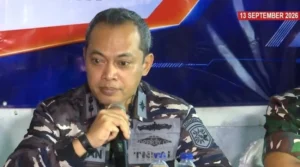
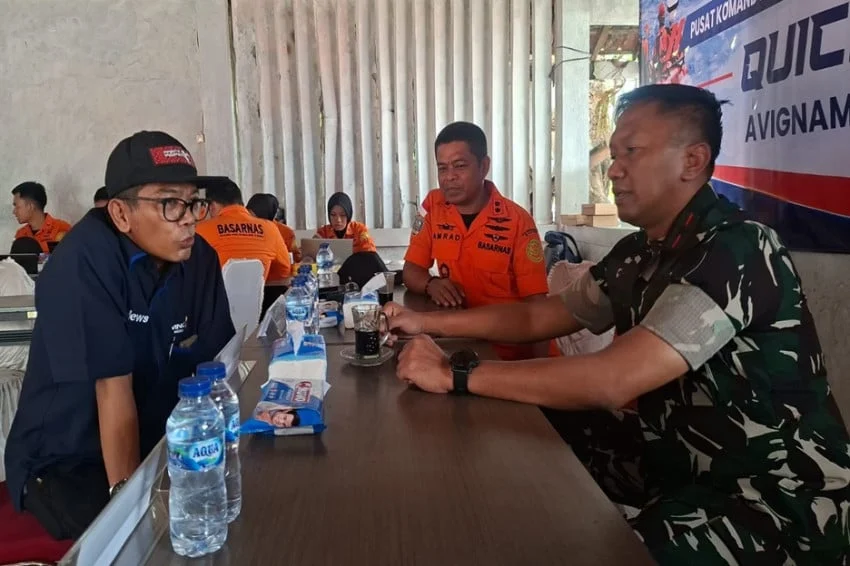
Upon arriving at the tactical headquarters in Carita Beach, Lukman Hanafi engaged in crucial briefings and discussions with key regional leaders and operational commanders. Among those present at the command post were Banten Governor Andra Soni, Head of the Banten Search and Rescue Office Al Amrad, Commander of Military Resort Command (Danrem) 064/Maulana Yusuf Brigadier General TNI Daru Cahyadi Soeprapto, and Head of Public Relations for the Banten Regional Police Commissioner Maruli Ahiles Hutapea.
The high-level gathering focused on evaluating the current tactical deployment, assessing maritime weather patterns, and analyzing search radiuses to maximize the effectiveness of the operation. During the discussions, regional officials reaffirmed their commitment to utilizing all available state resources—ranging from naval assets and aerial surveillance to specialized diving teams—to trace the path of the missing vessel and its occupants.
Lukman Hanafi took the opportunity to personally thank each official and operational leader for their unwavering dedication. He emphasized that the immense physical and mental strain placed upon the rescue personnel does not go unnoticed by the media industry or the public. The collaborative synergy demonstrated by Basarnas, the Indonesian National Armed Forces (TNI), the Indonesian National Police (Polri), local government agencies, and civilian volunteers stands as a testament to institutional cooperation during times of crisis.
Meeting with the Family of the Missing Journalist
Beyond official coordination meetings, the visit carried a deeply personal and compassionate dimension. Lukman Hanafi met directly with Juliasih, the mother of Yudistiro Pranoto, a dedicated journalist from iNews Media Group who is among the missing personnel. Mrs. Juliasih, accompanied by other grieving family members, traveled to the Carita Beach Joint SAR Post to maintain a vigil and receive direct updates from the frontlines of the operation.
The emotional weight of the meeting underscored the human cost of the incident. Families of the missing individuals have maintained a continuous presence near the operational zone, clinging to updates provided by search coordinators. Lukman spent considerable time offering moral support, reassurance, and company to Mrs. Juliasih, communicating that iNews Media Group remains steadfastly by her side and is providing continuous support to all affected families during this agonizing period of uncertainty.
Management assured the families that every conceivable effort is being deployed on the ground and at sea, ensuring they are kept fully informed of operational updates as search sweeps progress hour by hour.
Chronology of the Sunda Strait Incident
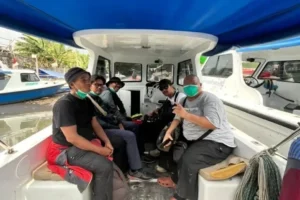
To understand the scope of the current rescue mission, it is vital to examine the timeline of events that led to the activation of the Joint SAR Post. The incident began when a small maritime vessel carrying a reporting team comprising five journalists and three professional ship crew members set out into the Sunda Strait. The team was deployed to cover a significant regional assignment, capturing environmental and maritime developments within one of Indonesia’s most historically and economically vital waterways.
Days into their voyage, routine check-ins ceased, and maritime communications with the vessel went completely dark. As hours turned into a full day without contact, newsroom supervisors escalated the situation, alerting local authorities and initiating emergency protocols. Basarnas Banten immediately declared a missing persons emergency at sea, prompting the establishment of the Joint SAR Post along the Pandeglang coastline.
Throughout the initial seven-day operational window, search efforts faced notable hurdles. The Sunda Strait is characterized by unpredictable weather patterns, strong underwater currents, fluctuating tidal surges, and heavy commercial maritime traffic. These geographic and meteorological complexities required search teams to deploy sophisticated sonar equipment, radar tracking, and coordinated surface sweeps extending from the coastline of Banten toward the southern waters of Lampung.
Extension of the Search and Rescue Operation
Given the expansive search grid and the persistent determination of rescue coordinators to locate the missing persons, official channels announced a crucial operational update prior to Lukman’s visit: the search operation has been officially extended by an additional three days.
This decision provides a vital window of opportunity for rescue teams to comb previously uncharted sectors, re-examine high-probability drift zones, and utilize specialized underwater exploration tools. The extension reflects both the statistical probabilities of maritime drift currents in the Sunda Strait and the relentless pressure from families, media institutions, and the public to exhaust all viable rescue protocols before transitioning the status of the operation.
Operations on subsequent days have been heavily centralized and coordinated from strategic logistical points, including the Port of Pelindo in Cilegon. From this maritime hub, larger rescue vessels, patrol boats, and rubber dinghies are dispatched daily to scour specific coordinates mapped out by drift-model simulations provided by meteorological and oceanographic experts.
The Broader Implications for Journalism and Maritime Safety
The ongoing incident in the Sunda Strait has cast a sharp, reflective light on the inherent dangers faced by field journalists, particularly those reporting from marine and remote environments. While news organizations routinely prioritize the safety of their personnel, maritime reporting inherently involves navigating volatile natural elements where risks can escalate rapidly.
Industry analysts and press freedom advocates have noted that this crisis serves as a stark reminder of the sacrifices media workers make in the pursuit of truth and public information. Journalists often accompany security forces, disaster management teams, and maritime explorers into high-risk zones, sharing the same physical vulnerabilities as operational personnel.
Furthermore, the situation has underscored the critical importance of robust safety protocols, real-time satellite tracking equipment, and mandatory maritime safety gear for all media crews embarking on aquatic assignments. As the search operation continues under the extended three-day mandate, media networks across Indonesia are closely monitoring developments, fostering an atmosphere of professional solidarity, and keeping vigils for the safe return of their colleagues.
Outlook for the Final Days of the Extended Search
As the extended timeline progresses, the Joint SAR Post at Carita Beach remains a hive of round-the-clock activity. Operational briefings occur at dawn and dusk, mapping out strategies that leverage wind trajectory data, reports from passing cargo ships, and coastal sweeps conducted by local fishermen and volunteer networks.
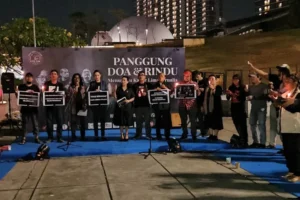
While the emotional toll on the families and colleagues of Yudistiro Pranoto and his fellow missing crew members deepens with each passing day, the resolve of the search teams remains unbroken. The concerted presence of media leadership, regional governmental heads, military commanders, and law enforcement chiefs at the frontline posts signals a unified front dedicated to bringing closure to the families and honoring the dedication of those who went missing in the line of duty.
The coming days will be critical. The entire nation, anchored by the tireless efforts of the SAR teams in Banten, watches and waits, hoping that the extended operations will yield the answers and recoveries so desperately sought by all involved.