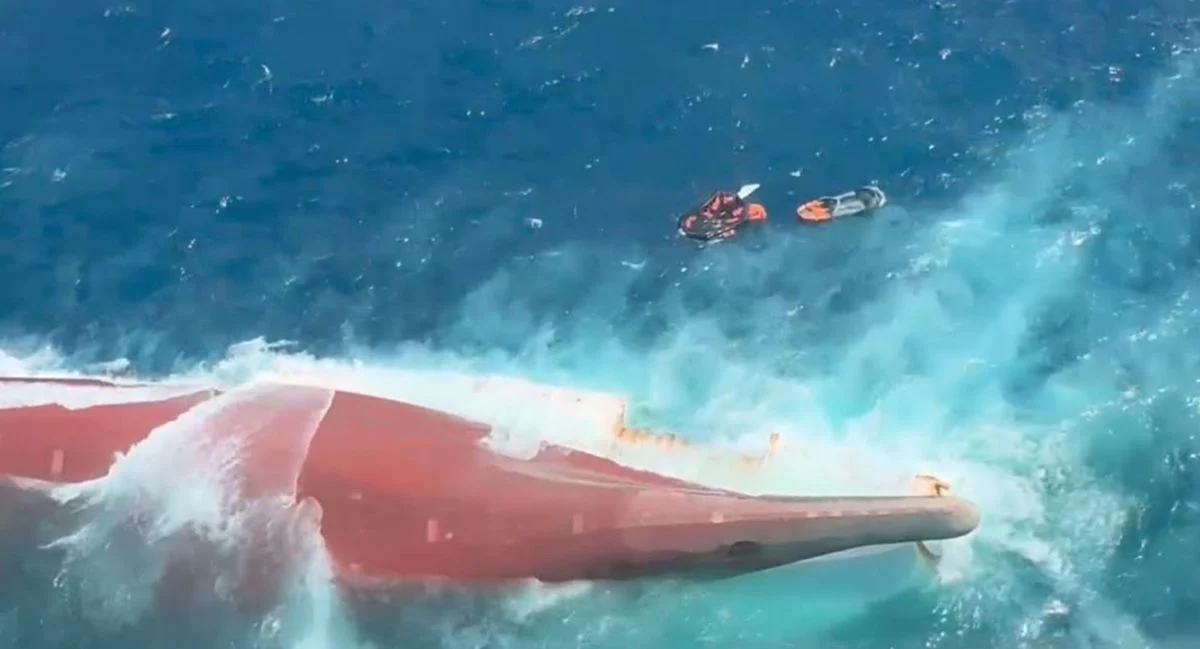
The maritime transportation sector in Indonesia is currently facing a significant crisis following the tragic capsizing of the KM Virgo Transport 8 in the Java Sea. The vessel, which was operating the vital Surabaya-Banjarmasin route, encountered catastrophic conditions that led to it overturning during the early hours of Sunday, September 13, 2026. As of Monday, September 14, 2026, a massive search and rescue operation involving joint task forces from the National Search and Rescue Agency (Basarnas), the Indonesian Navy, and the Water Police is underway to locate and evacuate the 243 individuals reported to be on board.
The incident has sent shockwaves through the national transportation network, raising urgent questions regarding maritime safety protocols, weather monitoring systems for commercial vessels, and the structural integrity of inter-island shipping in the face of increasingly unpredictable climate patterns.
Chronology of the Maritime Disaster
The sequence of events leading to the disaster began on Saturday, September 12, 2026, when the KM Virgo Transport 8 departed from Tanjung Perak Port in Surabaya, East Java. The vessel was scheduled for a routine crossing to Banjarmasin, South Kalimantan, a route frequently used for both passenger transport and logistics.
According to preliminary reports, the vessel maintained standard communication protocols throughout the initial leg of the voyage. However, the situation deteriorated rapidly as the ship navigated the deeper waters of the Java Sea. By the early hours of Sunday, September 13, 2026, at approximately 02:00 WITA (Central Indonesian Time), the vessel lost all communication with local port authorities.
At the time of the distress signal—or lack thereof—the vessel was estimated to be positioned approximately 80 nautical miles from the Basirih SAR Pier in Banjarmasin. Meteorological data for that timeframe indicated high-intensity weather systems, including heavy rainfall and significant wave heights, which are common in the Java Sea during seasonal transitions but proved insurmountable for the vessel under the prevailing circumstances.
Vessel Manifest and Passenger Demographics
Official records provided by the shipping operator indicate that the KM Virgo Transport 8 was carrying a total of 243 souls. The manifest breakdown is as follows:
- 30 crew members, including the captain, engineering staff, and deck hands.
- 213 passengers, comprising a mix of travelers returning to their hometowns and commercial commuters.
The presence of over 200 passengers highlights the significant reliance of local communities on sea transportation for inter-island connectivity. The sudden nature of the capsizing has left the families of those on board in a state of uncertainty, with authorities establishing command centers at both the Port of Surabaya and the Basirih Pier to provide real-time updates to waiting relatives.
The Role of Adverse Weather and Maritime Safety
The Java Sea is notorious for its complex navigational challenges, particularly the erratic weather patterns that can shift within minutes. While the investigation into the exact cause of the capsizing is ongoing, preliminary assessments point toward a combination of high-impact wave action and potential mechanical instability caused by the extreme sea state.
Maritime experts note that when a ship of the size and class of the KM Virgo Transport 8 encounters waves exceeding three meters—which were recorded in the area during the incident—the risk of "broaching to" or taking on water through vehicle decks increases exponentially. The incident serves as a stark reminder of the limitations of commercial vessels when faced with severe maritime turbulence.

Official Response and Search Operations
In the immediate aftermath of the loss of contact, the Indonesian authorities mobilized a multi-agency response. The "Joint Search and Rescue Team" (Tim SAR Gabungan) consists of:
- Basarnas: Coordinating the aerial and maritime search grids, utilizing helicopters to scan the surface and rescue vessels to patrol the last known coordinates.
- Indonesian Navy (TNI AL): Deploying patrol vessels to manage the search area and provide support for potential underwater search operations if the vessel is confirmed to have submerged.
- Water Police (Polairud): Assisting in coastal monitoring and ensuring that the search zone remains clear of unauthorized traffic.
A spokesperson for the regional maritime authority emphasized that the search area is being expanded based on current modeling of ocean currents. "We are working against time and the elements. Our primary objective is to locate survivors in the debris field, followed by the recovery of the vessel to determine the specific failure points," the spokesperson noted.
Broader Implications for Indonesian Shipping
The sinking of the KM Virgo Transport 8 is not merely an isolated accident but a potential catalyst for a broader review of maritime safety regulations in Indonesia. Historically, the nation’s reliance on archipelagic shipping requires stringent adherence to safety standards.
Analysts suggest several areas that will likely come under government scrutiny in the coming weeks:
- Weather Warning Integration: The efficacy of real-time weather data transmission to commercial vessels. The question remains whether the vessel was advised to alter its course or delay departure due to the predicted storm front.
- Safety Equipment Readiness: An audit of the availability and functionality of life rafts, life vests, and emergency beacons on vessels operating on long-haul routes.
- Age and Maintenance of the Fleet: A review of the vessel’s maintenance records and its certification to operate in high-risk weather conditions.
- Communication Infrastructure: An evaluation of why the vessel lost contact so suddenly, potentially indicating a failure in the ship’s primary and secondary communication suites.
Economic and Social Impact
The disruption of the Surabaya-Banjarmasin route has immediate economic consequences. This route is a critical artery for the movement of people and goods between the islands of Java and Kalimantan. The loss of the vessel will likely cause delays in logistics, impacting supply chains for commodities and essential goods.
Beyond the economic sphere, the tragedy carries a profound social weight. The "14 September 2026" disaster will be marked as a significant day in the country’s modern maritime history. As the search operation continues, the focus remains on the humanitarian aspect—providing support to the victims’ families and ensuring that search efforts are as thorough as possible despite the challenging conditions in the Java Sea.
Looking Forward: Investigation and Accountability
As the investigation progresses, the National Transportation Safety Committee (KNKT) is expected to play a lead role in determining the cause of the disaster. This involves examining the ship’s logs, interviewing survivors—if any are found—and analyzing data from the Vessel Monitoring System (VMS).
Accountability will be a central theme in the upcoming parliamentary hearings regarding the incident. There is growing public demand for transparency regarding how the vessel was cleared for departure despite the reported weather conditions. Furthermore, the maritime industry will be watching closely to see if this incident results in stricter enforcement of the "No Sail" policy during extreme weather events.
For now, the focus of the nation remains firmly on the search and rescue teams currently braving the turbulent waters of the Java Sea. The international community, often observing the challenges of the Indonesian maritime landscape, continues to watch as the search grid narrows in hopes of finding survivors among the wreckage. The tragedy of the KM Virgo Transport 8 is a sobering reminder of the constant battle between human infrastructure and the unpredictable power of the ocean, highlighting the ongoing necessity for continuous improvement in safety, communication, and emergency response capabilities in the maritime sector.
As the sun rises over the search zone on this Monday morning, the families, the authorities, and the public wait with bated breath for any sign of progress in the search for the 243 people whose journey was interrupted by the unforgiving forces of nature. The story of the KM Virgo Transport 8 is still unfolding, and its final chapter will depend on the effectiveness of the current rescue mission and the subsequent thorough investigation into the systemic failures that allowed this tragedy to occur.