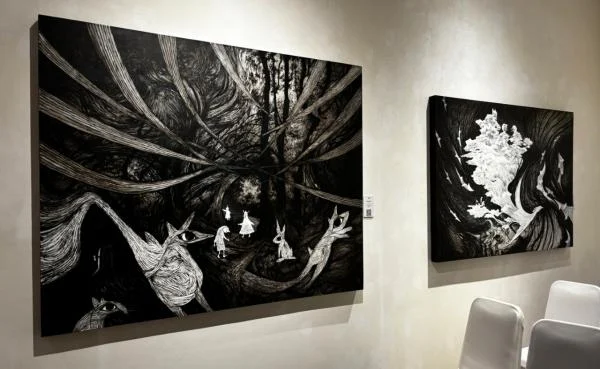
The inaugural art exhibition titled Jelaga di Ujung Raya has achieved a remarkable milestone, blending the raw, destructive power of fire with the delicate nuance of fine art to generate substantial financial support for disaster relief and wildlife conservation efforts. Held at the prestigious Galeri Zen1 in Menteng, Jakarta, the exhibition, which runs from September 12 to October 13, 2026, serves as a bridge between the creative community and urgent social-environmental causes. By utilizing high-temperature fire sprayers to create complex, abstract compositions, participating artists have successfully raised hundreds of millions of rupiah, with all proceeds earmarked for the victims of the recent blaze in Desa Adat Sade, Nusa Tenggara Barat (NTB), and the rehabilitation of habitats affected by forest and land fires (karhutla).
The Genesis of a Unique Artistic Vision
The exhibition is the result of a strategic collaboration between the safety technology entity Lithium Fire Killer (LFK) and renowned Indonesian contemporary artist Arkiv Vilmansa. The partnership represents an unconventional synergy: LFK, a company specializing in advanced fire suppression and thermal safety technology, provided the tools and safety infrastructure, while Vilmansa and twenty other prominent Indonesian artists provided the vision.
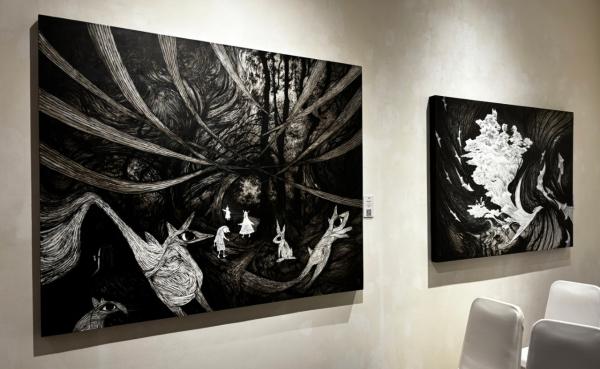
The central premise of the exhibition revolves around the duality of fire. In its uncontrolled state, fire is a catastrophic force that consumes livelihoods and ecosystems; however, when harnessed and directed with precision, it becomes a tool for creation. The "fire art" pieces displayed are not merely paintings; they are scorched artifacts, where the heat intensity dictates the texture, color depth, and permanent scarring of the canvas. This process mirrors the very destruction the exhibition seeks to mitigate, creating a profound, tangible link between the medium and the cause.
Chronology of the Event and Humanitarian Impact
The preparation for Jelaga di Ujung Raya spanned several months, culminating in the official launch on September 12, 2026. The initial phase of the exhibition focused on the live demonstration of the fire-creation technique, allowing collectors and art enthusiasts to witness the volatile process firsthand.
The timeline of the initiative is as follows:
- Early 2026: Concept development between LFK and Arkiv Vilmansa.
- Mid-2026: Recruitment of 20 contributing artists and coordination with environmental NGOs.
- September 12, 2026: Grand opening at Galeri Zen1, featuring the first live demonstrations and the commencement of the silent auction.
- September 14, 2026: Announcement of the successful sale of three primary "fire-technique" works, with total proceeds reaching a multi-hundred million rupiah threshold.
- September 15 – October 13, 2026: Continued public viewing and fundraising campaigns.
The beneficiaries of this auction were selected based on the immediate urgency of their respective crises. Desa Adat Sade, a cultural landmark in NTB, suffered a devastating fire that displaced numerous families and destroyed traditional structures. The funds raised are intended to assist in the reconstruction of homes and the preservation of the village’s cultural heritage. Simultaneously, the funds allocated to wildlife recovery will be funneled through the World Wide Fund for Nature (WWF) to support ongoing efforts to restore biodiversity in areas severely damaged by Indonesia’s recurring forest and land fires.
Addressing the Risks of Modern Fires
While the art itself captures the attention of the public, the inclusion of Lithium Fire Killer (LFK) as a collaborator serves a dual purpose. Beyond artistic expression, the exhibition acts as an educational platform regarding fire safety, specifically concerning the risks associated with the proliferation of electric vehicles (EVs) and lithium-ion battery technology.
As the global transition to renewable energy accelerates, the risk of "thermal runaway"—a condition where a lithium-ion battery enters an uncontrollable, self-heating state—has become a significant concern for urban planning and public safety. By positioning the exhibition in the heart of Jakarta’s commercial district, the organizers aim to raise awareness about how to manage fires involving advanced battery technologies, a challenge that standard water-based fire suppression systems often fail to address.
Data-Driven Context: The Crisis of Forest Fires in Indonesia
The motivation behind the charity auction is rooted in sobering environmental data. According to reports from the Ministry of Environment and Forestry (KLHK), Indonesia experiences significant spikes in forest and land fires (karhutla) during the dry season, typically peaking between August and October. These fires are not only a local tragedy for the affected communities but also contribute significantly to regional carbon emissions.

The cost of restoring a single hectare of degraded peatland or forest can reach tens of millions of rupiah, depending on the ecosystem complexity. By donating the proceeds of the auction to professional organizations like the WWF, the artists ensure that the funds are applied to scientifically validated restoration projects. This approach shifts the focus from temporary relief to long-term environmental sustainability.
Official Perspectives and Expert Analysis
Observers in the Indonesian art market have noted that the intersection of "activist art" and high-end gallery culture is gaining momentum. Art critics argue that by incorporating a medium that is inherently dangerous—fire—the artists are forcing the audience to engage with the reality of climate change and disaster vulnerability in a way that traditional media cannot.
A spokesperson for the collaborative project noted, "The beauty of this exhibition lies in the fact that we are using the very thing that destroys our forests and homes to build a path toward recovery. It is a symbolic act of taking control over a chaotic element."
Furthermore, the collaboration with LFK underscores a shift toward corporate social responsibility (CSR) where private companies are moving beyond simple monetary donations to provide technical solutions for public safety. This integrated model of "art-meets-science" is seen as a blueprint for future fundraising efforts in the Indonesian cultural sector.
Implications for the Future of Charity and Art
The success of Jelaga di Ujung Raya suggests that high-net-worth individuals and corporate entities are increasingly drawn to philanthropic initiatives that offer high-level engagement and a strong narrative. The "fire art" is not merely a commodity; it is a testament to the urgency of the times.

As the exhibition continues through mid-October, the organizers hope to attract additional corporate sponsors to scale the impact of their donation. The success of this venture has already sparked discussions regarding a potential national tour, potentially bringing the message of fire safety and environmental stewardship to other major cities in Indonesia.
Conclusion
The Jelaga di Ujung Raya exhibition stands as a testament to the power of collective action. By transforming the volatile medium of fire into a vessel for charity, the artists and the technical team at LFK have demonstrated that even the most destructive forces can be channeled to create a positive, lasting impact. The funds raised will provide a lifeline to the displaced residents of Desa Adat Sade and offer a fighting chance to the wildlife struggling to reclaim fire-ravaged habitats.
Beyond the financial contributions, the exhibition has succeeded in elevating the conversation around fire safety in the age of electrification. As the global community continues to grapple with the realities of climate change and the risks of modern technology, initiatives like this serve as a vital reminder that safety, education, and art are not mutually exclusive—they are, in fact, the essential components of a resilient society. The ongoing exhibition at Galeri Zen1 invites the public to witness this unique blend of destruction and creation, serving as a beacon of hope for those affected by the fires that so frequently threaten the nation’s heritage and biodiversity.