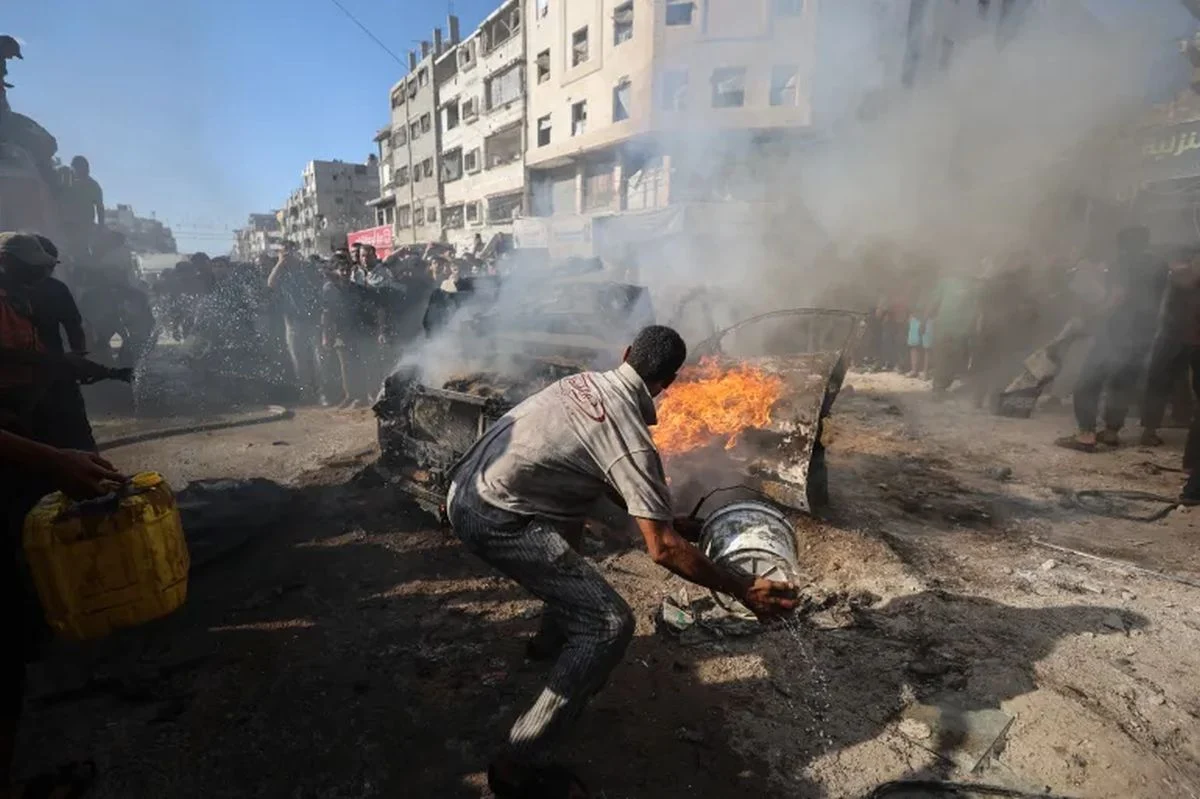
The humanitarian catastrophe in the Gaza Strip has reached a harrowing new milestone, with the Palestinian Ministry of Health confirming that the death toll from the ongoing Israeli military campaign has climbed to 73,919. This staggering figure, reported as of September 22, 2026, underscores the profound and escalating scale of human suffering in the region since the conflict intensified in October 2023. Beyond the loss of life, the ministry reported that the number of wounded has surged to 174,977, overwhelming an already decimated healthcare infrastructure that remains critically undersupplied.
The Current Toll and Humanitarian Reality
In the 24-hour reporting period leading up to the announcement, local hospitals received the bodies of five individuals killed in Israeli airstrikes, while 25 others were admitted with injuries. These daily figures, while appearing incremental, represent a continuous cycle of violence that has persisted for nearly three years. The ministry further noted that 834 bodies remain trapped under the rubble, inaccessible to emergency responders due to ongoing hostilities and the structural instability of destroyed urban areas.
Since the nominal "truce" phase that occurred in October of the previous year, the intensity of operations has resulted in at least 1,399 additional fatalities and 4,863 injuries. The cumulative effect of these losses on the Gaza Strip’s population—which was already suffering from systemic blockades prior to the 2023 escalation—is profound. The destruction of residential, educational, and medical facilities has left millions in a state of permanent displacement, struggling for basic necessities such as clean water, food, and medicine.
Chronology of the Escalation
The conflict, which traces its most recent intensification to the events of October 2023, has evolved through several distinct phases. Initial heavy aerial bombardment transitioned into complex ground incursions, leading to the fragmentation of the Gaza Strip into isolated zones.
Throughout 2024 and 2025, international mediation efforts led by regional stakeholders and global powers struggled to maintain durable ceasefire agreements. The failure of these diplomatic initiatives resulted in periodic flare-ups, each leaving a deeper scar on the civilian population. By early 2026, the conflict had transformed from a high-intensity war into a protracted, grinding battle of attrition, characterized by targeted strikes, limited ground movements, and an increasingly desperate humanitarian environment.
Political Rhetoric and the Threat of Forced Displacement
Adding to the gravity of the situation is the recent inflammatory rhetoric emanating from the Israeli leadership. Israel Katz, the Minister of Defense, issued a stark and widely condemned threat regarding the potential mass displacement of the population of Gaza City. Speaking at a ceremony commemorating the 1973 Arab-Israeli War, Katz declared that should any Israeli soldier or civilian be captured by Hamas, the government would move to forcibly evacuate the entire population of Gaza City—estimated at one million people—to the southern regions of the Strip.
Katz’s rhetoric has been interpreted by international observers as a shift toward more extreme military policies. His remarks specifically targeted regional adversaries, including Iran and the government of Turkey under President Recep Tayyip Erdogan, framing the conflict as part of a broader regional struggle. Analysts suggest that such rhetoric is being amplified by the upcoming Israeli general elections, where domestic political competition often leads to hardening stances on security and territorial control.
International and Humanitarian Perspectives
The international community remains deeply divided over the trajectory of the war. Human rights organizations have consistently warned that the tactics employed by Israeli forces, combined with the threats of forced population transfer, violate international humanitarian law. The Geneva Conventions strictly prohibit the collective punishment of civilian populations and the forced transfer of residents in occupied territories, regardless of the security justifications provided by occupying or warring powers.

International aid agencies, including the United Nations Relief and Works Agency (UNRWA) and various NGOs, have repeatedly stated that the healthcare system in Gaza is beyond the point of collapse. With a casualty count exceeding 73,000, the lack of surgical equipment, anesthetics, and electricity has forced doctors to perform life-saving procedures in sub-optimal conditions, often on the floors of makeshift clinics. The psychological trauma, particularly among the youth who make up a significant portion of Gaza’s demographic, is described by psychologists as an intergenerational catastrophe that will have long-term consequences for the region.
Strategic Implications and Future Outlook
The military and political implications of the current status quo are significant. From a strategic perspective, Israel’s ongoing campaign aims to dismantle the infrastructure of Hamas; however, the lack of a clearly defined post-conflict governance plan has created a power vacuum. This void has facilitated further instability, leading to recurring skirmishes even in areas previously declared "secured" by the Israel Defense Forces (IDF).
For the Palestinian residents of Gaza, the prospect of an "evacuation to the south" is viewed with extreme apprehension. Previous instances of mass movement have resulted in overcrowded tent cities with virtually no infrastructure, leading to outbreaks of disease and extreme vulnerability to secondary strikes. The threat issued by Katz suggests that the Israeli government may be considering a total territorial re-ordering of Gaza City, a move that would fundamentally alter the demographics and geography of the coastal enclave.
Economic and Diplomatic Consequences
The financial burden of the war has also weighed heavily on all parties involved. Israel’s economy has faced fluctuations due to the sustained mobilization of reservists and the high cost of defense operations. Simultaneously, the Palestinian economy in Gaza has been entirely erased, with the majority of the workforce displaced and productive assets destroyed.
Diplomatically, the situation has strained Israel’s relations with its Western allies. While the United States and several European nations maintain their support for Israel’s right to security, the sheer volume of civilian casualties has led to increased domestic pressure within those countries to demand a lasting ceasefire. The rhetoric from figures like Katz often complicates these diplomatic ties, as it distances Israel from the more moderate international consensus that emphasizes the protection of civilians and the necessity of a two-state framework.
Analysis: A Cycle of Impunity
The data released by the Ministry of Health is more than a set of statistics; it is a ledger of a breakdown in international order. When conflict continues for years without a diplomatic horizon, the distinction between military targets and civilian infrastructure tends to blur, leading to the high casualty counts witnessed today.
As the 2026 election cycle approaches in Israel, the discourse is likely to remain focused on security hardline policies. For the people of Gaza, this means that the threat of further displacement and the reality of daily survival remain the only constants. Without a shift in international leverage or a fundamental change in the belligerents’ political calculus, the death toll is unfortunately projected to continue its upward trajectory, further distancing the prospect of a sustainable peace in the Levant.
The international community now faces the challenge of addressing not only the immediate need for humanitarian aid but also the long-term imperative of accountability and the restoration of a political process that can offer a viable alternative to the current cycle of destruction. As it stands, the 73,919 lives lost are a stark reminder of the cost of inaction and the volatility of the current regional status quo.