The Indonesian Communist Party (Partai Komunis Indonesia, or PKI) stands as one of the most significant and contentious entities in the history of 20th-century Indonesia, evolving from an anti-colonial movement into a major political force before its violent dissolution in 1966. Its trajectory—marked by ideological fervor, electoral success, and eventual systemic collapse—remains a central pillar of national historical inquiry. Understanding the PKI requires an objective examination of its growth, its role in the shifting tides of the Cold War, and the profound trauma of the 1965 national crisis that reshaped the Indonesian state.
The Genesis of Radicalism: From ISDV to PKI
The roots of organized communism in Indonesia were planted in 1914 with the establishment of the Indische Sociaal-Democratische Vereeniging (ISDV) by Dutch socialist Henk Sneevliet. Operating within the colonial framework of the Dutch East Indies, the organization sought to channel the rising nationalist sentiment toward Marxist objectives. By 1920, the movement underwent a structural transformation, rebranding itself as the Perserikatan Komunis di Hindia, which officially adopted the name Partai Komunis Indonesia (PKI) in 1924.
The party’s early years were defined by militant opposition to colonial rule. In 1926, the PKI orchestrated an ambitious, though ultimately ill-fated, uprising against the Dutch administration. The failure of this revolt triggered severe colonial repression, resulting in the mass arrest, imprisonment, and exile of thousands of cadres to penal colonies like Boven Digoel in West Papua. This period of forced dormancy persisted until the Japanese occupation and the subsequent Indonesian proclamation of independence in 1945, which provided a vacuum for the PKI to reorganize.
The 1948 Madiun Affair: A Defining Schism
Post-independence, the PKI re-emerged as a potent ideological force, yet its relationship with the young Republic remained deeply fraught. The defining crisis of this era was the Madiun Affair of September 1948. At the time, the Republic was embroiled in a diplomatic struggle with the Dutch, who were attempting to reclaim their former colony. Amidst this instability, the PKI and its affiliates—organized under the Front Demorasi Rakyat (FDR)—engaged in a direct confrontation with the republican government.
On September 18, 1948, the establishment of a "Soviet Republic of Indonesia" in Madiun by hardline elements within the communist movement signaled an open rebellion. President Sukarno and the central government viewed this as a betrayal of the national struggle against the Dutch. The ensuing military campaign, led by the Indonesian National Armed Forces (TNI), successfully suppressed the uprising within months. The aftermath was devastating for the PKI; key leaders, including Musso, were killed, and the party’s organizational structure was decimated, pushing the movement into the political fringes for the early 1950s.
The Resurgence of the 1950s and the Parliamentary Era
Following its near-total collapse, the PKI underwent a sophisticated transformation under the leadership of D.N. Aidit, Lukman, and Njoto. Adopting a strategy of "mass work," the party successfully pivoted toward grassroots organizing. By focusing on the grievances of the peasantry and the urban working class—demanding land reform and labor rights—the PKI expanded its influence far beyond its previous urban centers.
This grassroots success was validated by the 1955 general elections, the first democratic legislative elections in Indonesia’s history. Data from the General Elections Commission (KPU) confirms the scale of this comeback: the PKI secured over 6.17 million votes, capturing 16.36 percent of the national vote for the DPR (House of Representatives). This result earned them 39 seats, placing them fourth behind the PNI, Masyumi, and NU. Their performance in the Constituent Assembly elections was similarly impressive, with 80 seats. This period represented the peak of the PKI’s legitimacy within the parliamentary democratic system.
The Era of Guided Democracy and Nasakom
The political landscape shifted dramatically in 1959 when President Sukarno dissolved the Constituent Assembly and implemented "Guided Democracy." As executive power centralized under the President, the PKI found a strategic opening. Sukarno’s concept of Nasakom—an acronym for Nationalism, Religion, and Communism—provided a formal framework for the PKI to operate within the state’s ideological architecture.
During the early 1960s, the PKI became a dominant force in the national discourse. By 1965, the party claimed to have millions of members and affiliated mass organizations, such as the BTI (peasants) and SOBSI (labor). This proximity to power, however, brought the party into direct conflict with the military establishment, particularly the Indonesian Army, which grew increasingly wary of the PKI’s influence and its push for a "Fifth Force" (the arming of peasants and workers).
1965: The G30S Crisis and Its Aftermath
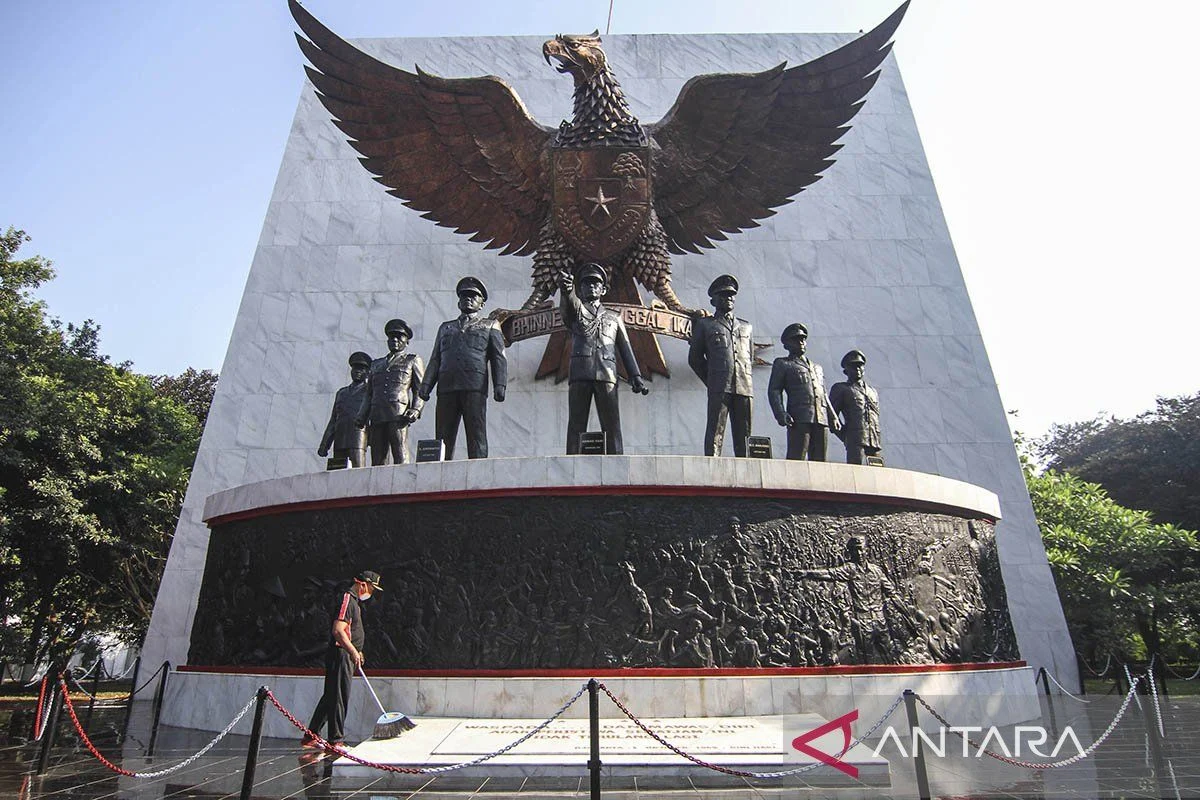
The trajectory of the PKI was permanently altered on the night of September 30, 1965. A group of military officers, claiming to act to prevent a coup by the "Council of Generals," kidnapped and executed six high-ranking Army generals and one lieutenant. The bodies were discarded in a well at Lubang Buaya, Jakarta.
The events of September 30 (G30S) served as the catalyst for a systemic purge. While historiography remains contested regarding the extent of the PKI’s central command’s involvement versus rogue elements, the immediate political fallout was absolute. The military, under the leadership of Major General Soeharto, blamed the PKI for orchestrating the coup. In the ensuing months, a massive campaign of violence swept through Java, Bali, and parts of Sumatra.
Investigations by the National Commission on Human Rights (Komnas HAM) have documented this period as one of the darkest in modern Indonesian history. The purge involved mass extrajudicial killings, systemic torture, forced disappearances, and the detention of hundreds of thousands without trial. These human rights violations effectively dismantled the organizational and social fabric of the communist movement in Indonesia.
The 1966 Dissolution and Legislative Legacy
On March 12, 1966, following the transition of power toward the emerging New Order, the PKI was formally dissolved and declared a banned organization. This executive decree was later codified by the Provisional People’s Consultative Assembly (MPRS) in Decree No. XXV/1966. The decree prohibited not only the party but also the dissemination or promotion of Marxist-Leninist ideology.
This legal prohibition remains in effect, serving as the foundation for the state’s stance on communism. The transition marked the definitive end of the PKI as a political entity and signaled the consolidation of the New Order regime, which would govern Indonesia for the next three decades until 1998.
Historical Re-evaluation and Archival Research
Six decades later, the events of 1965 and the history of the PKI remain subjects of rigorous academic and archival study. The National Archives of the Republic of Indonesia (ANRI) continues to emphasize the necessity of cross-referencing global archives—including those from the United States, Japan, and the former Soviet bloc—to construct a comprehensive, factual understanding of the era.
The contemporary discourse has moved toward a more nuanced examination of the past, focusing on the distinction between verified historical documents, official state narratives, and the socio-political consequences of the 1965 transition. By synthesizing these diverse sources, historians aim to provide a clearer picture of how a single political party’s rise and fall functioned as a microcosm of the global Cold War struggle, and how its legacy continues to influence Indonesia’s political and legal landscape today. The study of the PKI is, ultimately, a study of the complexities of nation-building, the fragility of democratic institutions, and the enduring importance of historical memory.