The Partai Komunis Indonesia (PKI), once a formidable pillar of the Indonesian political landscape, remains one of the most studied and contentious subjects in the nation’s modern history. From its origins as an anti-colonial movement in the early 20th century to its systematic dissolution in 1966, the party’s trajectory serves as a lens through which the volatility of Indonesia’s transition from colonial rule to independence and the subsequent Cold War-era shifts can be examined. Understanding the PKI requires a multidimensional approach, distinguishing between documented political history, state-mandated narratives, and ongoing historiographical debates fueled by international archives.
The Genesis of Indonesian Communism (1914–1926)
The intellectual roots of the PKI can be traced back to the establishment of the Indische Sociaal-Democratische Vereeniging (ISDV) in 1914, founded by Dutch socialist Henk Sneevliet. The organization initially operated within the framework of colonial political activism but gradually radicalized as it absorbed indigenous frustrations with Dutch hegemony. By 1920, the ISDV reorganized into the Perserikatan Komunis di Hindia, which officially adopted the name Partai Komunis Indonesia in 1924.
The party’s early years were marked by an uneasy blend of Marxist-Leninist ideology and anti-colonial nationalism. In 1926, the PKI spearheaded an armed uprising against the Dutch colonial administration. The insurrection, which lacked broad popular support and strategic coordination, was swiftly crushed by colonial authorities. The aftermath was severe: thousands of party members were arrested, executed, or exiled to the infamous Boven Digoel penal colony in Papua. This repression effectively neutralized the PKI as a functional political force for several decades, pushing its remnants into clandestine operations or exile.
The Madiun Incident: A Mid-Century Crisis
The post-independence era brought a brief resurgence of leftist activity, culminating in the 1948 Madiun Affair. On September 18, 1948, amidst the fragile struggle for sovereignty against the returning Dutch, the PKI and the Front Demokrasi Rakyat (FDR) declared a "Soviet Republic of Indonesia" in the city of Madiun, East Java.
Historians characterize the event as the climax of the rift between the Republican government and leftist factions who opposed the government’s diplomatic compromises with the Dutch. The military, under the leadership of the Indonesian Republican forces, moved quickly to suppress the uprising. Within months, the movement was dismantled; high-ranking party leaders, including Musso, were killed, and thousands of cadres were incarcerated. The Madiun incident solidified the military’s role as the primary guardian of the state and established a deep-seated distrust between the nationalist government and the communist movement.
Resurrection and Political Dominance in the 1950s
Despite the near-total destruction of its leadership in 1948, the PKI proved remarkably resilient. Under the pragmatic leadership of D.N. Aidit, Lukman, and Njoto, the party underwent a radical transformation in the early 1950s. Adopting a "mass line" strategy, the PKI shifted its focus toward labor unions, peasant cooperatives, and youth organizations, effectively positioning itself as a defender of the common citizen against the perceived corruption of the governing elite.
The 1955 general elections, the first in the nation’s history, validated this strategy. The PKI emerged as a major national player, securing 6.18 million votes—roughly 16.4 percent of the total—which translated to 39 seats in the House of Representatives (DPR). In the concurrent elections for the Constituent Assembly, the party garnered 80 seats. By the mid-1950s, the PKI was the fourth-largest political force, trailing only the PNI, Masyumi, and Nahdlatul Ulama. This electoral success turned the PKI into a mainstream political entity that could no longer be sidelined by traditional elites.
The Era of Guided Democracy (1959–1965)
Following President Soekarno’s 1959 decree returning Indonesia to the 1945 Constitution, the political system shifted to "Guided Democracy." This period was defined by a delicate power equilibrium maintained by Soekarno between the three pillars of Indonesian politics: the nationalist camp, the religious groups, and the military, with the PKI acting as a central player in the President’s "Nasakom" (Nationalism, Religion, and Communism) doctrine.
As Soekarno’s power became more centralized, the PKI’s influence grew exponentially. By 1965, the party boasted an estimated membership of three million, with an additional 10 to 15 million affiliated with mass organizations. However, this growth sparked intense friction, particularly with the Indonesian Army. Tensions flared over land reform implementation—which the PKI pushed aggressively—and the party’s persistent demands for the creation of a "fifth force" (arming workers and peasants alongside the military). These ideological and organizational conflicts created a volatile atmosphere that would eventually lead to the events of late 1965.
The 1965 Turning Point: G30S and Its Aftermath
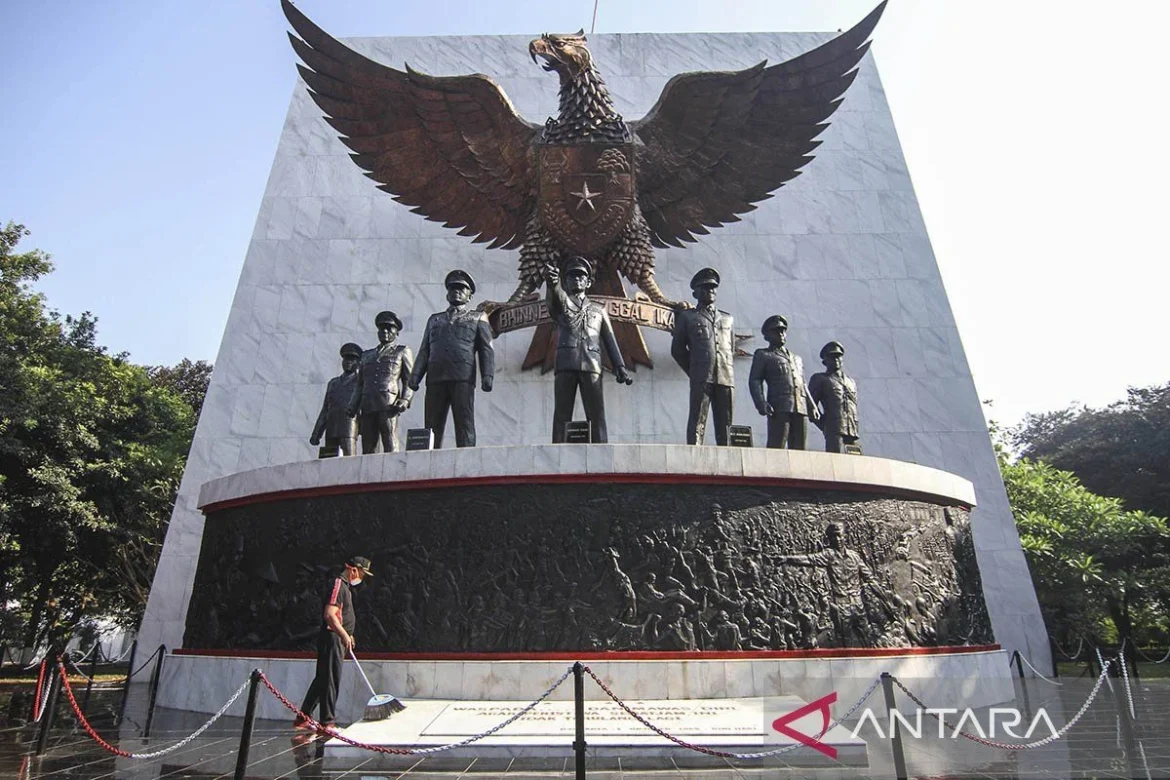
The night of September 30, 1965, remains the most controversial moment in modern Indonesian history. The "30 September Movement" (G30S) involved the abduction and execution of six Army generals and one lieutenant, whose bodies were disposed of in a well at Lubang Buaya, Jakarta.
The immediate aftermath saw a rapid change in the national political landscape. The Army, led by Major General Soeharto, seized the initiative to stabilize the country, blaming the PKI for orchestrating the coup. This led to a nationwide anti-communist purge that resulted in the imprisonment and mass killing of hundreds of thousands of individuals suspected of PKI affiliation. The scale of the violence, which occurred between late 1965 and 1966, has been categorized by the National Commission on Human Rights (Komnas HAM) as a series of grave human rights violations, involving extrajudicial killings, torture, forced labor, and disappearances.
Legislative Dissolution and the Rise of the New Order
On March 12, 1966, following the transition of power via the Supersemar decree, the PKI was officially disbanded and declared a prohibited organization. This executive action was subsequently ratified by the Provisional People’s Consultative Assembly (MPRS) through Decree No. XXV/1966. This decree remains in effect today, formally banning the dissemination of Marxism, Leninism, and Communism within the Republic of Indonesia.
The dissolution of the PKI effectively marked the end of the party’s existence as a legal political entity and signaled the collapse of the Soekarno era. The subsequent rise of the New Order government under Soeharto, which lasted until 1998, solidified the anti-communist stance as a foundational pillar of state policy for three decades.
Historiographical Perspectives and Archival Research
More than half a century later, the legacy of the PKI continues to be a subject of rigorous academic scrutiny. Contemporary researchers emphasize the need to move beyond the monolithic narratives established during the Cold War. The National Archives of the Republic of Indonesia (ANRI) has consistently advocated for a multi-source approach, integrating internal Indonesian documentation with declassified archives from the United States, Japan, and other international stakeholders.
Modern historiography seeks to disentangle the complexities of the 1965 event, questioning the extent of organizational involvement versus the roles played by various internal factions. While the legal prohibition of the party remains a settled issue in Indonesian law, the human rights implications and the sociological impact of the 1965-1966 violence remain vital components of the nation’s ongoing democratic discourse.
Implications for Modern Indonesia
The history of the PKI is not merely a record of a defunct political party; it is a fundamental chapter in the formation of the Indonesian state. The rise, institutionalization, and eventual destruction of the party shaped the current relationship between the military, the state, and civil society. As Indonesia navigates the complexities of the 21st century, the historical lessons of the mid-20th century—ranging from the dangers of extreme political polarization to the necessity of addressing historical grievances—continue to resonate within the national consciousness.
The commitment of state institutions like ANRI to maintain an open archive policy ensures that the history of the PKI will continue to be a subject of evidence-based inquiry. By analyzing the trajectory of the party, from its inception in the early 1900s to its final legal prohibition in 1966, scholars and citizens alike are better equipped to understand the intricate historical forces that have forged the Indonesia of today.