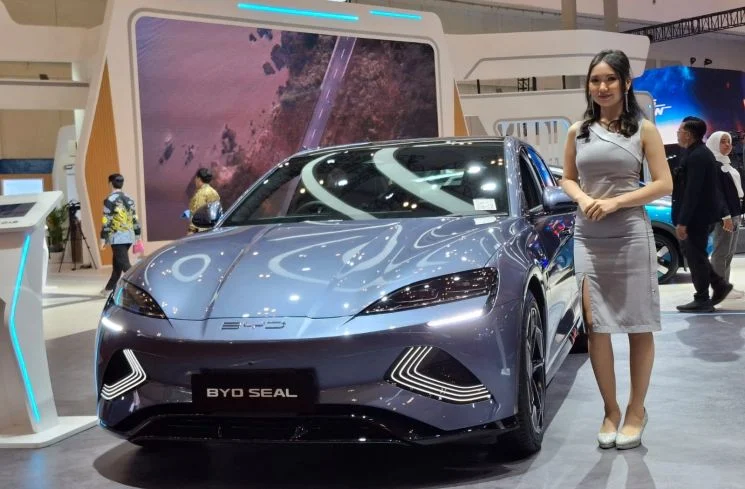
The Indonesian government has officially set an ambitious, long-term roadmap to transform the nation into a global hub for electric vehicle (EV) manufacturing. By mandating a progressive increase in the local content requirement—known as the Tingkat Komponen Dalam Negeri (TKDN)—the government aims to ensure that the domestic automotive industry moves beyond simple assembly processes to become a fully integrated ecosystem. The target stipulates that by 2030, electric vehicles produced within the country must achieve at least 80 percent domestic component usage, a move designed to stimulate local supplier growth and reduce reliance on imported industrial parts.
Minister of Industry Agus Gumiwang Kartasasmita underscored this strategic mandate during the recent inauguration of the BYD electric vehicle manufacturing facility in Subang, West Java. This facility represents a significant milestone in Indonesia’s industrial policy, marking the transition from a consumer market to a production powerhouse. The minister emphasized that the government’s approach is not merely about attracting foreign capital, but about fostering a sustainable and deep-rooted industrial structure that benefits the national economy.
The Chronology of TKDN Implementation
The government’s strategy is structured through a phased, data-driven timeline designed to allow manufacturers sufficient time to localize their supply chains. The regulation mandates the following trajectory for the minimum TKDN values:
- Phase 1 (Current to 2026): Manufacturers are required to meet a minimum of 40 percent local content. This initial hurdle ensures that early-stage entrants focus on building domestic assembly lines and establishing initial relationships with local component manufacturers.
- Phase 2 (2027 to 2029): The requirement scales up to 60 percent. During this period, the government expects deeper localization, specifically in the production of sub-assemblies, vehicle chassis components, and localized electronic control systems.
- Phase 3 (2030 and beyond): The mandate reaches its peak at 80 percent. At this stage, the policy aims to ensure that high-value components—potentially including battery pack integration and critical powertrain elements—are sourced or manufactured within Indonesian borders.
This tiered approach is designed to balance the necessity of attracting foreign direct investment (FDI) with the long-term objective of building indigenous technological capabilities.
Industrial Landscape and Economic Contributions
The impact of these regulations is already visible in the surge of interest from international automotive giants. Currently, 14 major manufacturing companies have committed to the Indonesian electric vehicle sector. These firms have collectively invested approximately Rp24.131 trillion into the nation, resulting in an annual production capacity of 409,860 units.
This growth is a vital component of Indonesia’s broader economic strategy, particularly as the manufacturing sector continues to outperform other segments of the national economy. In the second quarter of 2026, the non-oil and gas processing industry grew by 5.32 percent year-on-year, outpacing the national economic growth rate of 5.29 percent.
The manufacturing sector remains the engine of the Indonesian economy, contributing 16.83 percent to the national Gross Domestic Product (GDP), a value equivalent to Rp1,102.88 trillion. Furthermore, the sector is a massive employer, providing jobs for 19.99 million people as of early 2026. This labor intensity underscores the importance of the government’s push for deeper industrialization; by moving up the value chain, Indonesia is not only creating high-quality manufacturing jobs but also shielding its economy from the volatility of global commodity markets.
Global Competitiveness and Strategic Positioning
Beyond local metrics, Indonesia is rapidly ascending the ranks of global manufacturing powerhouses. According to World Bank data from 2025, Indonesia’s Manufacturing Value Added (MVA) reached $275.61 billion, propelling the country to the 12th position globally—an improvement from its previous ranking of 13th.
Within Southeast Asia, Indonesia stands unrivaled in terms of manufacturing scale, with an MVA more than double that of its closest regional competitor, Thailand. On a continental scale, Indonesia has cemented its place as the fifth-largest manufacturing force in Asia, trailing only the established industrial giants: China, Japan, India, and South Korea.
The significance of this growth cannot be overstated. In the first half of 2026 alone, non-oil and gas processed commodities generated $115.50 billion in export value, accounting for 82.03 percent of Indonesia’s total exports. This highlights that the nation is successfully diversifying its economy away from raw material extraction toward high-value industrial manufacturing.
Challenges and Policy Implications
While the trajectory is positive, analysts point out that achieving 80 percent TKDN by 2030 requires substantial investment in the upstream supply chain. "The challenge," notes a senior industrial policy observer, "lies in the battery sector and the specialized engineering required for electric motors. Meeting the 80 percent threshold requires more than just assembling frames; it requires an ecosystem of component suppliers that can meet international quality standards at competitive prices."
The government’s "affirmative action" approach—which includes tax incentives, infrastructure support, and favorable investment climates—is intended to bridge this gap. By forcing the hand of manufacturers, the government is essentially creating a guaranteed market for domestic suppliers. This "captive market" strategy encourages local businesses to upgrade their machinery and workforce skills to satisfy the demanding requirements of global EV brands.
Furthermore, the stability of the investment environment remains paramount. With Rp199.48 trillion in manufacturing investment recorded in Q2 2026, which represents nearly 39 percent of all national investment, the government must ensure that regulatory frameworks remain consistent. Investors in the EV sector require long-term policy certainty to justify the massive capital expenditure associated with building automated production facilities and testing laboratories.
The Role of Technology Transfer
A crucial, often overlooked element of the TKDN roadmap is the implicit requirement for technology transfer. By mandating higher local content, the government effectively compels multinational corporations to work closely with local vendors. This collaboration is expected to facilitate the transfer of technical expertise, quality control standards, and advanced manufacturing processes to the Indonesian workforce.
As these firms compete to meet the 80 percent local content goal, they are incentivized to establish R&D centers within Indonesia. These centers are essential for the long-term goal of not just producing foreign designs, but eventually contributing to the design and engineering of vehicles tailored to the specific needs of the ASEAN market.
Looking Ahead: The 2030 Vision
As Indonesia moves toward 2030, the success of the EV roadmap will likely be measured by the emergence of a domestic "battery-to-car" supply chain. If the government succeeds, the country will transition from an importer of automotive technology to an exporter of finished electric vehicles, potentially becoming the primary source of supply for the growing electric mobility markets across Southeast Asia and beyond.
The data supports the feasibility of this vision. With a robust manufacturing foundation, a massive labor force, and a clear regulatory path, Indonesia has established the necessary conditions for industrial success. The focus now shifts to the execution of these policies: maintaining the momentum of investment, ensuring the competitiveness of local suppliers, and continuing to integrate Indonesia into the global electric vehicle value chain.
The inauguration of the BYD facility in Subang is not merely a symbolic event; it is a signal to the global automotive industry that Indonesia is open for business, provided that business contributes to the domestic industrial fabric. For policymakers, the next few years will be critical in ensuring that the infrastructure—ranging from power grids to logistics—can support this massive industrial scale-up. If current trends continue, the 2030 target of 80 percent local content may serve as the catalyst that permanently alters the nation’s economic landscape, transforming Indonesia into an indispensable player in the future of global green transportation.