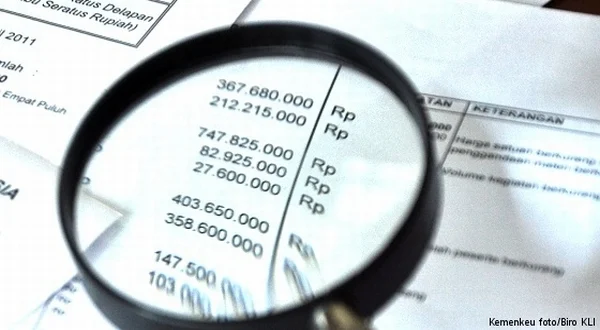
The Indonesian government formally presented the Draft Law on the Accountability for the Execution of the 2013 State Budget (RUU APBN) during a plenary session at the House of Representatives (DPR RI) in Senayan, Jakarta, outlining a complex fiscal year marked by external economic pressures, internal financial adjustments, and specific accountability exceptions noted by the state auditor.
During the parliamentary address, then-Minister of Finance Muhammad Chatib Basri detailed the performance, constraints, and audit outcomes of the 2013 fiscal period. Central to the government’s presentation was the addressing of the "Qualified Opinion" (Wajar Dengan Pengecualian or WDP) status bestowed upon the 2013 Central Government Financial Report (LKPP) by the Supreme Audit Agency (BPK). The financial report, which serves as the ultimate accounting ledger of the nation’s revenue and expenditure execution, faced scrutiny over several persistent, complex legacy and operational asset classifications.
Background Context of the 2013 State Budget and the WDP Audit Status
To fully comprehend the gravity of the 2013 State Budget accountability submission, one must examine the institutional framework of Indonesia’s public financial management. Under Law Number 17 of 2003 on State Finance and Law Number 15 of 2004 on State Financial Management and Responsibility, the government is constitutionally mandated to submit a bill on the accountability of the APBN execution to the DPR, backed by an audited financial report from the BPK.
The BPK’s audit opinion is a crucial benchmark of financial transparency, governance, and accountability. An unqualified opinion (Wajar Tanpa Pengecualian or WTP) represents a clean bill of health, indicating that the financial statements are presented fairly in all material respects. Conversely, a Qualified Opinion (WDP) implies that while the financial statements are generally reliable, certain specific items or areas diverge from standard accounting principles or lack sufficient documentation and verifiable asset valuations.
In the case of the 2013 LKPP, Minister Chatib Basri explicitly identified four primary factors that triggered the BPK’s qualification. These elements had historically plagued central government bookkeeping and required systematic structural reforms to resolve permanently.
Detailed Breakdown of BPK Audit Exceptions for the 2013 LKPP
The four core financial items cited by the Ministry of Finance as the basis for the BPK’s WDP opinion reflected deep-seated complexities within state asset management, revenue collection, and long-term liabilities:
-
Over-lifting Receivables (Piutang Over Lifting): In the oil and gas sector, "over-lifting" occurs when a contractor takes more petroleum than their entitled production share during a specific period, creating a debt or receivable owed back to the state. Tracking, valuing, and reconciling these volumes across numerous production sharing contracts (PSCs) presented continuous administrative hurdles for state bookkeepers.
-
Oil and Gas Sales Receivables (Piutang Penjualan Migas): The monetization and physical delivery of the state’s share of oil and gas generate substantial revenues. However, timing differences in invoicing, payment settlements, and foreign exchange conversions often led to discrepancies between delivered volumes and recorded cash inflows, triggering audit exceptions.
-
Former Indonesian Bank Restructuring Agency (BPPN) Credit Assets: Following the 1997-1998 Asian Financial Crisis, BPPN was established to restructure and recover massive amounts of non-performing loans (NPLs) from collapsed national banks. As these assets were transferred, written off, restructured, or sold over the subsequent decades, tracing the residual value, legal status, and accounting treatment of these legacy credit portfolios remained an immense challenge for state auditors.
-
Pension Expenditure Funds (Dana Belanja Pensiun): Managing civil servant, military, and police pension liabilities involves complex actuarial calculations and multi-agency coordination between state treasuries, PT Taspen, and PT Asabri. Discrepancies in beneficiary data, fund disbursements, and long-term liability provisioning contributed to the audit qualifications.
Despite these accounting challenges, financial technocrats and policy analysts noted that the WDP status did not imply systemic corruption or fiscal embezzlement, but rather highlighted technical accounting deficiencies in recording complex state assets and legacy liabilities inherited from previous economic crises.
Macroeconomic Dynamics and Fiscal Pressures of 2013
The execution of the 2013 State Budget did not occur in an economic vacuum. The government faced severe turbulence stemming from both international developments and domestic structural imbalances.
From the external perspective, 2013 was characterized by a distinct shift in global monetary policy and commodity cycles. The primary external shock originated from the United States Federal Reserve. In May 2013, then-Fed Chairman Ben Bernanke hinted at the eventual tapering of the central bank’s quantitative easing program—a policy shift widely known as the "tapering off" phenomenon. This announcement sent shockwaves through emerging market economies, triggering sudden capital outflows, liquidity tightening, and sharp currency depreciations across Asia, including Indonesia.
Simultaneously, the global economy experienced a general slowdown, leading to a marked cooling of international commodity prices. Because Indonesia’s export economy heavily relied on commodity shipments—such as coal, crude palm oil (CPO), and minerals—the decline in global commodity prices severely impacted state revenues and export earnings.
On the domestic front, these external headwinds manifested internally as intense pressure on the country’s current account balance. Indonesia’s current account slipped into a significant deficit, driven by robust import demand matched against weakening export receipts. This structural imbalance placed relentless downward pressure on the Indonesian Rupiah, exposing the domestic economy to imported inflation and foreign exchange volatility.
Government Policy Responses and Economic Stabilization Measures
Faced with these overlapping domestic and international challenges, the administration of President Susilo Bambang Yudhoyono, through the economic coordination team and the Ministry of Finance, deployed a series of stabilization policies aimed at restoring macroeconomic equilibrium.
First, the government prioritized the strengthening of the current account balance by implementing measures to curb non-essential imports, encourage domestic processing of raw commodities through the implementation of the 2009 Mining Law (which mandated mineral processing and refining before export), and boost domestic manufacturing competitiveness.
Second, Bank Indonesia, working in tandem with fiscal authorities, enacted aggressive monetary stabilization measures, raising interest rates and intervening in the foreign exchange market to manage Rupiah volatility and anchor inflation expectations.
Third, and perhaps most politically sensitive, the government executed a major fiscal adjustment by reducing energy subsidies. In June 2013, the administration raised subsidized fuel prices—specifically Premium gasoline and Diesel (Solar)—by roughly 44 percent. While this policy sparked widespread public debate and temporary inflationary spikes, it was deemed an absolute fiscal necessity to prevent energy subsidies from consuming an unsustainable share of the national budget, thereby creating vital fiscal space for infrastructure development and targeted social assistance programs such as the Temporary Direct Cash Assistance (BBLSM).
Chronology of the 2013 APBN Lifecycle
To understand the broader context of the parliamentary submission in June 2014, it is helpful to trace the chronological milestones of the 2013 state budget:
- October–November 2012: Intensive deliberations between the government and the DPR regarding macro assumptions, revenue targets, and expenditure allocations for the 2013 fiscal year.
- January 2013: Official implementation of the 2013 APBN begins, set against an initial macroeconomic framework projecting steady growth and stable commodity prices.
- May–June 2013: The global "tapering off" announcement by the US Federal Reserve triggers capital flight from emerging markets, prompting domestic financial strain.
- June 2013: The government formally raises subsidized fuel prices to safeguard the fiscal balance against mounting energy subsidy costs.
- January–April 2014: The Supreme Audit Agency (BPK) conducts comprehensive field audits and verification processes on the 2013 Central Government Financial Report (LKPP).
- May 2014: BPK officially releases its audit results, granting a Qualified Opinion (WDP) due to lingering asset and receivable recording discrepancies.
- June 24, 2014: Minister of Finance Chatib Basri formally submits the RUU APBN 2013 Accountability Bill to the DPR RI plenary session, detailing both the audit exceptions and the macroeconomic justification for budget adjustments.
Implications and Broader Economic Analysis
The presentation of the 2013 APBN Accountability Bill offered critical lessons for future fiscal management in Indonesia. Economists and fiscal policy observers evaluated the event through several analytical lenses:
-
The Necessity of Asset Valuation Reform: The persistence of audit exceptions related to over-lifting, oil and gas receivables, and legacy BPPN assets underscored the urgent need for a modernized, integrated government financial management information system (Sistem Informasi Manajemen Keuangan Negara or SIMAK-BMN). Transitioning from cash-plus-commitments to full accrual accounting—a mandate set by subsequent government regulations—was viewed as the definitive solution to resolve legacy bookkeeping discrepancies.
-
Fiscal Resilience Against External Shocks: The 2013 fiscal experience demonstrated the high vulnerability of emerging market budgets to shifts in monetary policy by advanced economies. The episode reinforced the consensus among policymakers that maintaining fiscal buffers, disciplined deficit spending, and flexible subsidy frameworks are essential to absorbing external shocks without derailing long-term development goals.
-
Parliamentary Oversight and Democratic Accountability: The submission of the accountability bill to the DPR reinforced the principles of transparency and legislative oversight. By compelling the executive branch to publicly account for budget deviations, macroeconomic policy shifts, and audit findings, the legislative process ensured that public funds remained subject to continuous democratic scrutiny.
Conclusion
The formal submission of the 2013 State Budget Accountability Bill by Finance Minister Chatib Basri marked a critical milestone in Indonesia’s ongoing evolution toward transparent and accountable public financial management. While the persistence of a Qualified Opinion (WDP) highlighted systemic challenges in asset valuation and legacy accounting—specifically regarding oil and gas receivables and former BPPN assets—the broader narrative of the 2013 fiscal year was one of resilience. Navigating through severe external shocks, including the US Federal Reserve’s tapering signals, contracting commodity markets, and domestic current account pressures, the government utilized structural policy interventions, monetary tightening, and courageous subsidy reforms to stabilize the national economy and safeguard public finances for the future.