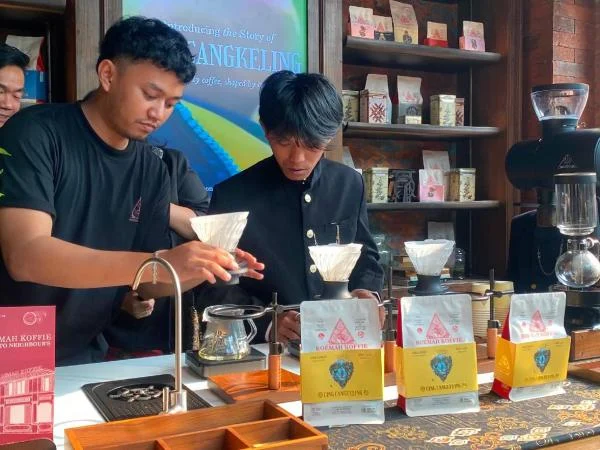
The highland regions of Garut, West Java, have long been recognized for their fertile volcanic soil and favorable microclimates suitable for high-quality Arabica coffee production. However, recent developments at the slopes of Mount Mandalagiri have introduced a significant shift in local specialty coffee cultivation. Farmers in this region are now successfully harvesting and processing Yellow Bourbon, a rare and visually striking coffee variety characterized by its bright yellow cherries. By employing sophisticated post-harvest fermentation techniques, local producers are transforming these unique beans into a premium commodity that is gaining attention from coffee enthusiasts and industry experts alike.
The journey of this variety in Garut began not as a commercial venture, but as a serendipitous discovery. For producers like Roby Siswanda, the presence of yellow-fruited coffee trees within their estates initially presented an enigma. While red-fruited Arabica is the standard across the Indonesian archipelago, the emergence of yellow cherries suggested a genetic variation that demanded further investigation. This discovery has since become a focal point for local agricultural innovation, demonstrating how Indonesian farmers are moving beyond traditional commodity farming toward high-value, artisanal production.
A Chronology of Discovery and Cultivation
The history of coffee cultivation in the Roby Siswanda family estate dates back to 2009. At the inception of their farming journey, the family focused on standard coffee husbandry, planting trees without immediate knowledge of specific varietal distinctions. The turning point occurred when the family identified approximately ten trees that consistently produced yellow cherries instead of the typical deep red.
Recognizing the potential for this anomaly, the family began a multi-year effort to propagate these trees, gradually increasing their presence on the farm. It was not until 2019 that the family significantly scaled their operations by opening a new, dedicated land plot. This expansion involved the planting of approximately 1,000 coffee trees, specifically aimed at cultivating the Yellow Bourbon variety.
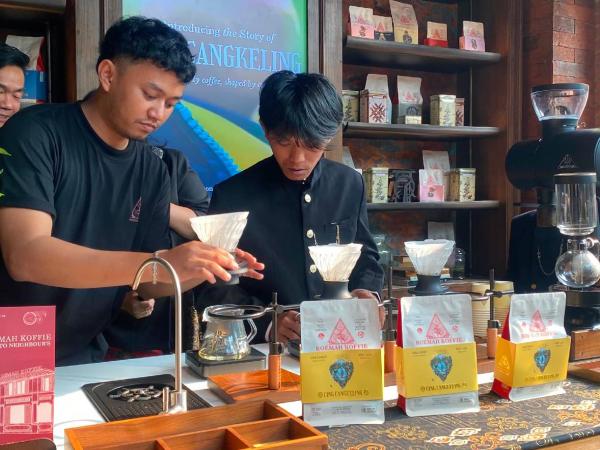
The timeline of their development highlights the patience required in specialty coffee farming:
- 2009: Initial establishment of the family coffee estate.
- 2010–2018: Observation and identification of the rare yellow-fruited Bourbon trees.
- 2019: Expansion of cultivation with 1,000 new trees dedicated to the variety.
- 2020–Present: Implementation of post-harvest experimentation and the transition from selling raw cherries to processed, value-added green beans.
Understanding the Yellow Bourbon Variety
The Yellow Bourbon variety is a natural mutation of the Red Bourbon coffee plant. Historically, it is most famously associated with Brazil, where it thrives in high-altitude environments. The color of the cherry is a result of a recessive gene that prevents the development of the anthocyanin pigments that usually turn coffee cherries red as they ripen.
Beyond its aesthetic appeal, the Yellow Bourbon is prized in the global specialty market for its distinct sensory profile. Compared to its red counterpart, the Yellow Bourbon often exhibits a cleaner acidity, higher perceived sweetness, and a buttery body. When grown in the unique volcanic soil of Garut, these characteristics are further influenced by the region’s specific mineral content and altitude, creating a terroir that is distinctly West Javanese.
The Role of Fermentation in Modern Coffee Processing
The transformation of the Yellow Bourbon coffee from a simple agricultural product to a high-end sensory experience is largely credited to advancements in fermentation. In the early stages of the farm’s expansion, the harvest was sold primarily as raw cherries to local collectors. At that time, the price per kilogram hovered around Rp7,000, reflecting a commodity-grade valuation where the unique qualities of the variety were largely ignored.
Today, the producers at Mount Mandalagiri have shifted toward a "specialty processing" model. Fermentation is a critical stage in post-harvest processing where sugars and mucilage surrounding the coffee bean are broken down by microorganisms. By controlling parameters such as temperature, time, and oxygen exposure, producers can influence the final flavor profile of the cup.

Techniques such as anaerobic fermentation—where the cherries are processed in an oxygen-free environment—are now being explored. This method can impart notes of tropical fruit, wine-like complexity, and enhanced floral aromatics that are highly sought after by specialty roasters. This transition allows farmers to capture a much higher percentage of the value chain, as processed beans are sold at a premium compared to raw, unpicked cherries.
Economic Implications for the Garut Coffee Industry
The success of the Yellow Bourbon project in Garut has broader implications for the regional economy. West Java has seen a resurgence in coffee production over the last decade, with "Jawa Barat" coffee becoming a brand synonymous with quality in both domestic and international markets.
Data from local agricultural boards suggests that moving from bulk sales to processed specialty coffee can increase farmer income by as much as 300% to 500%. In the case of the Mandalagiri farmers, the ability to harvest 70 kilograms of cherries per day during peak season provides a stable income stream, but the real growth lies in the "cup score." Specialty coffee is graded on a scale of 0 to 100, and beans scoring above 80 are considered "specialty." Through fermentation experimentation, the producers are aiming to consistently break into this category, which opens doors to export markets in Europe, Japan, and North America.
Challenges and Sustainability
Despite the success, the cultivation of Yellow Bourbon in Garut is not without challenges. Coffee plants are sensitive to climate change, pests, and soil depletion. The Bourbon variety, in particular, is known to be less resistant to coffee leaf rust (Hemileia vastatrix) compared to more robust varieties like Catimor or Robusta.
Maintaining the health of 1,000 trees requires rigorous agricultural management. Furthermore, the volatility of the coffee market means that farmers must balance the desire for high-quality, experimental processes with the necessity of ensuring a consistent yield. Sustainable farming practices, such as shade-grown cultivation and the use of organic fertilizers, are becoming standard among these farmers to ensure the long-term viability of their land.

The Future of Indonesian Specialty Coffee
The story of the Yellow Bourbon from Mount Mandalagiri serves as a microcosm of the current evolution within the Indonesian coffee industry. Farmers are no longer passive suppliers of raw materials; they are becoming active participants in the craft of coffee production. By leveraging their unique biological assets—such as the yellow cherries—and applying scientific methods like fermentation, they are positioning themselves at the forefront of the global "Third Wave" coffee movement.
Industry analysts suggest that the future of Indonesian coffee lies in this niche, high-quality production. As global consumer demand shifts toward transparency and unique origin stories, the ability of farmers to document their process—from the tree variety to the specific fermentation hours—will be the key to long-term profitability.
For the community in Garut, the progress made by the Roby Siswanda family and their neighbors acts as a blueprint. It demonstrates that with the right combination of curiosity, technical skill, and favorable natural conditions, smallholder farmers can compete on a global scale. As these producers continue to refine their craft, the world of coffee will likely hear much more about the unique, golden-hued beans originating from the slopes of Mount Mandalagiri. The journey from a simple, unknown tree in 2009 to a scientifically processed specialty product today is a testament to the resilience and innovation of Indonesia’s agricultural sector.