Long before it officially became an autonomous municipality within West Java on April 27, 1999, and decades prior to Indonesia proclaiming its independence in 1945, Depok held a status few modern residents realize: it operated as a self-governing private state complete with its own constitution, administrative apparatus, and democratically elected presidents. Today, Depok is widely recognized as a bustling dormitory city adjacent to the Indonesian capital of Jakarta, home to students, commuters, and rapid urban development. However, a deep dive into late-17th-century colonial archives reveals an extraordinary socio-political anomaly—a territory purchased by a wealthy European merchant that gradually evolved into a micro-republic governed outside the direct jurisdiction of the Dutch East Indies colonial administration.
The Genesis of Private Depok: Cornelis Chastelein and the 17th-Century Land Acquisition
The historical trajectory of Depok began in the final years of the 17th century, specifically in 1696, when a prominent Dutch East India Company (VOC) official and wealthy merchant named Cornelis Chastelein decided to invest heavily in real estate south of Batavia. Chastelein purchased a vast tract of land spanning approximately 12.44 square kilometers for the sum of 2.4 million guilders.
Unlike conventional colonial holdings that fell immediately under the direct governance of the Dutch administration, Chastelein’s newly acquired property held the legal status of particuliere landerijen (private land). This designation granted the landowner near-feudal authority over the territory, allowing him to establish autonomous local management. At the time of purchase, the expanse was largely an untamed wilderness, dense with tropical forests and wildlife.
To transform the terrain into productive agricultural estates—cultivating commodities such as coffee, indigo, and fruit—Chastelein imported and employed a large workforce consisting of enslaved individuals gathered from various regions across the archipelago, including Bali, Sulawesi, Timor, and the Moluccas. These laborers, who formed the demographic backbone of early Depok, cleared the dense forests and established small agrarian settlements. The boundaries of this private domain were remarkably extensive, stretching from what is now the modern city of Depok northward into areas currently known as Pasar Minggu in South Jakarta and Gambir in Central Jakarta.
A Progressive Will and the Seeds of Emancipation
Despite participating in the broader colonial economic framework of the era, Chastelein diverged significantly from his contemporary European landowners in his treatment of his enslaved workforce. As a devout and practicing Catholic, he held moral reservations regarding human bondage, which heavily influenced his final directives.
On June 28, 1714, shortly before his death, Chastelein drafted a progressive and historic testament. In his will, he granted unconditional freedom to all his enslaved workers upon his passing. Furthermore, to ensure their long-term survival and independence, he bequeathed them substantial parcels of land, residential houses, livestock, and agricultural equipment.

Recognizing that sudden emancipation without administrative structure could lead to internal conflict or external usurpation by colonial authorities, Chastelein appointed a trusted loyalist named Jarong van Bali to oversee the community during the transition. The freed population, affectionately and historically referred to as the Kaum Depok (Depok community), found themselves in a unique socio-legal position: they were landowners and free citizens living within a privately owned territory, distinct from both the indigenous kingdoms of Java and the centralized Dutch colonial state.
The Transition to Democracy and the Rise of the Depok Presidency
As the generations passed, the community recognized the necessity of establishing a formal, institutionalized government to prevent power struggles following the tenure of Jarong van Bali. Seeking a modern and stable governance model, the community consulted with legal professionals based in Batavia to draft a comprehensive civic structure.
This administrative evolution culminated in 1913 with the official establishment of Het Gemeente Bestuur van Het Particuliere Land Depok (The Municipal Government of the Private Land of Depok). Eschewing hereditary monarchy or authoritarian rule, the community instituted a democratic system of governance. Every three years, the citizens of Depok went to the polls to elect a head of state who held the official title of "President." Notably, the administrative framework did not include the position of a vice president; instead, the president was assisted by a dedicated secretary who managed day-to-day bureaucratic affairs.
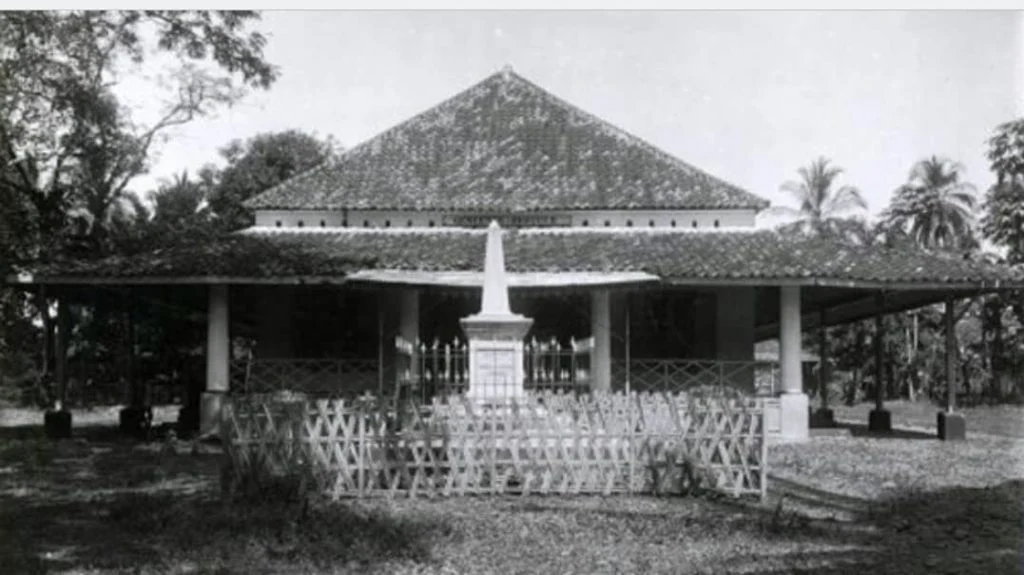
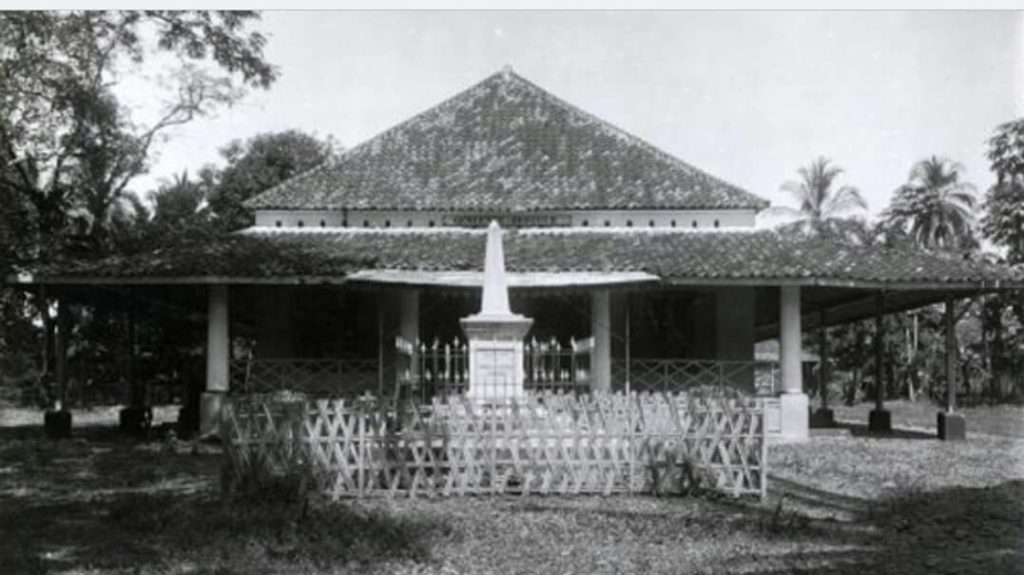
The administrative heart of this micro-republic was established at Kilometer 0, a central location marked by the historic Tugu Depok (Depok Monument). Adjacent to this symbolic center stood the primary government building, an architectural relic of the era that has since been repurposed into the Harapan Hospital.
Chronology of the Depok Presidency (1913–1952)
While historical records detailing the day-to-day policy decisions of early Depok administrations remain sparse, archival registries preserve the names of the individuals who successfully won election to the highest office during the territory’s distinct political existence:
- 1913–1921: Gerrit Jonathans made history by winning the inaugural election, serving as the first president of Depok. His administration laid the groundwork for civic administration, tax collection, and communal land management.
- 1921–1930: Martinus Laurens assumed office, navigating the community through the complex socio-political shifts occurring across the Dutch East Indies during the interwar period.
- 1930–1952: Leonardus Leander led the territory through the turbulent years of the Great Depression, the Japanese occupation of the Dutch East Indies during World War II, and the subsequent Indonesian National Revolution.
- 1952: Johannes Matjis Jonathans served as the final president of Depok, presiding over the dissolution of the private state and its formal integration into the newly sovereign Republic of Indonesia.
Socio-Cultural Identity of the Kaum Depok
The inhabitants of this autonomous territory developed a distinct cultural identity that blended European legal concepts, Christian religious practices, and diverse indigenous Nusantara traditions. Because Chastelein’s will stipulated that his freed slaves must be raised in the Christian faith and educated in Dutch culture, the Kaum Depok adopted European surnames, Western attire, and distinct social customs.
However, their daily lives remained deeply intertwined with the surrounding Sundanese and Betawi populations. This cultural synthesis created a unique sub-ethnicity within the colonial landscape. Despite their Westernized cultural markers, the community maintained a strong sense of local autonomy, fiercely protecting their land rights granted by Chastelein’s original testament against encroachment from neighboring regencies and the colonial administration alike.
Geopolitical Realities and the Integration into Indonesia
The unique status of Depok as a private republic could not indefinitely withstand the sweeping geopolitical transformations of the mid-20th century. Following the formal recognition of Indonesian independence by the Kingdom of the Netherlands in 1949, the sovereign government of Indonesia moved to streamline regional administration and eliminate colonial-era legal anomalies, including particuliere landerijen.
Recognizing the changing national landscape, the final president of Depok, Johannes Matjis Jonathans, initiated discussions with the central government regarding the formal handover of the territory. In 1952, through an official act of transfer, the private land administration was formally dissolved, and Depok was integrated into the administrative framework of the Republic of Indonesia.
Initially, the territory reverted to the status of a administrative district (kecamatan) under the regency of Bogor, West Java. For decades, it functioned primarily as a residential buffer zone for the expanding capital city. However, the legacy of its unique urban planning and historical identity persisted, culminating in its elevation to an independent municipality (kotamadya) on April 27, 1999.
Historical Implications and Modern Legacy
Examining Depok through the lens of political history offers a fascinating counter-narrative to the standard historiography of the Indonesian nationalist struggle. While mainstream historical discourse naturally focuses on the anti-colonial resistance movements that culminated in the 1945 Proclamation of Independence, the story of Depok highlights an alternate experiment in localized self-determination, democratic governance, and land reform initiated centuries prior.
Modern historians and urban sociologists studying the region emphasize that while the physical remnants of the colonial-era presidency—such as the old administration buildings and archival documents—have largely been absorbed by rapid urbanization, the historical consciousness of the city remains unique. The narrative of Depok transitioning from a colonial merchant’s private estate to a democratic micro-republic, and finally to a modern Indonesian metropolis, underscores the complex, multilayered foundations upon which contemporary Indonesian cities are built. Today, as millions of residents navigate its bustling commercial hubs and university campuses, Depok stands not merely as a modern commuter suburb, but as a historic site where an ambitious experiment in self-governance unfolded more than a century ago.