When modern travelers and residents think of Depok, they typically envision a bustling, densely populated satellite city nestled between Jakarta and Bogor in West Java, Indonesia. Officially established as an independent municipality on April 27, 1999—having previously served as a mere district within Bogor Regency—Depok is often viewed through the lens of contemporary urbanization. However, beneath its modern facade of university campuses, shopping malls, and commuter rail lines lies a fascinating and largely forgotten chapter of history. More than a century ago, this very region operated not as a colony or a traditional Indonesian regency, but as a self-governing private republic complete with its own constitution, democratic elections, and a head of state holding the title of President.
The origins of this peculiar administrative anomaly trace back to the twilight of the seventeenth century. In the late 1600s, a wealthy and influential Dutch VOC (Vereenigde Oostindische Compagnie) merchant named Cornelis Chastelein acquired a massive tract of land spanning approximately 12.44 square kilometers. Purchased for the sum of 2.4 guilders—a significant fortune at the time—this territory held a unique legal status. It was designated as particulier land (private land), meaning it existed entirely outside the direct administrative control and jurisdiction of the colonial Dutch East Indies government. Chastelein effectively became the supreme landlord and founder of what would eventually become the city of Depok.
At the time of Chastelein’s acquisition, the landscape of Depok bore little resemblance to the urban sprawl seen today. The territory was predominantly dense, untamed wilderness. To transform the terrain into productive agricultural land, Chastelein brought in a large workforce consisting of enslaved individuals and laborers originating from various cultural and ethnic backgrounds across the archipelago, including regions of Bali, Sulawesi, Ambon, and Java. The footprint of this private estate was remarkably expansive, stretching far beyond the boundaries of modern-day Depok to encompass areas now known as Pasar Minggu in South Jakarta, and reaching as far north as Gambir in Central Jakarta. The first permanent residents of this territory were the diverse groups of emancipated and enslaved laborers working under Chastelein’s supervision.
The Transformation from Private Estate to Self-Governing Republic
Cornelis Chastelein was known as a devout adherent of Protestantism, a personal conviction that heavily influenced his management style and his unprecedented testamentary decisions. Unlike many of his contemporaries who viewed enslaved populations purely as economic commodities, Chastelein developed a paternalistic yet progressive vision for his laborers. On June 28, 1714, shortly before his death, Chastelein executed a monumental last will and testament. In this document, he decreed that upon his passing, all of his enslaved workers would be granted complete personal freedom. Furthermore, he bequeathed to them substantial parcels of land, residential houses, livestock, and agricultural equipment to ensure their self-sufficiency.

Recognizing the immense potential for internal conflict and power struggles among the newly freed community, Chastelein appointed a trusted manager named Jarong van Bali to oversee the transition and maintain order. However, as decades passed, the community recognized the need for a more structured, permanent, and equitable form of governance to prevent instability. Fearing that autocratic rule or outside colonial interference would fracture the community after the tenure of temporary leaders, the inhabitants of Depok made a groundbreaking administrative decision: they opted to establish a democratic republic.
By the early twentieth century, specifically formalized in 1913 under the official administrative title Het Gemeente Bestuur van Het Particuliere Land Depok (The Municipal Government of the Private Land of Depok), the territory instituted a democratic electoral system. The citizens of Depok systematically elected their own head of state, adopting the presidential title rather than traditional monarchical or colonial designations. This micro-republic operated with a distinct separation of roles; while there was no office of the vice president, the president was supported by a dedicated administrative secretary. The legal framework, constitution, and governance mechanisms of this unique entity were meticulously drafted by a prominent Batavia-based attorney, ensuring the republic functioned with formal bureaucratic precision.
Chronology of Leadership: The Presidents of Depok
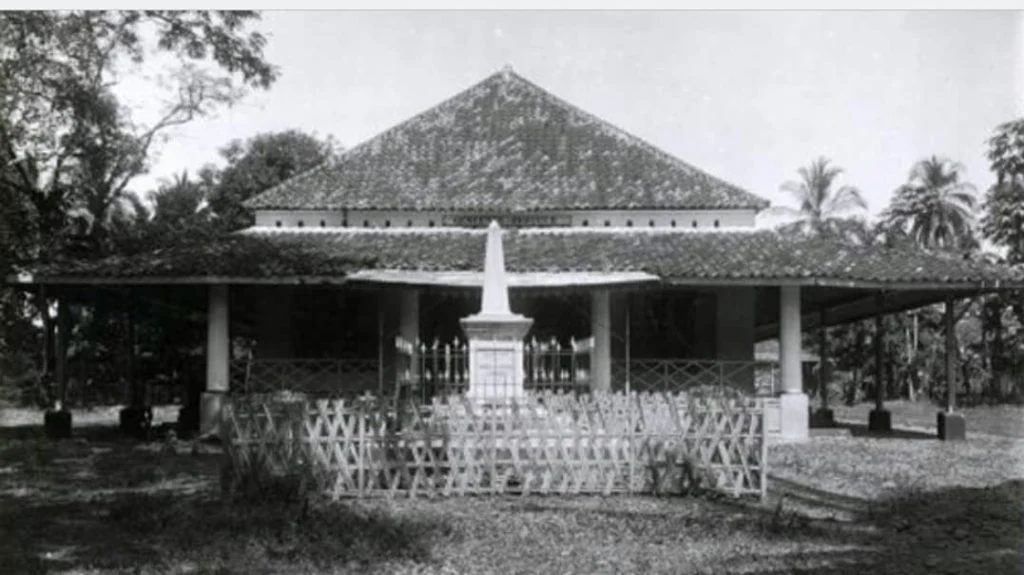
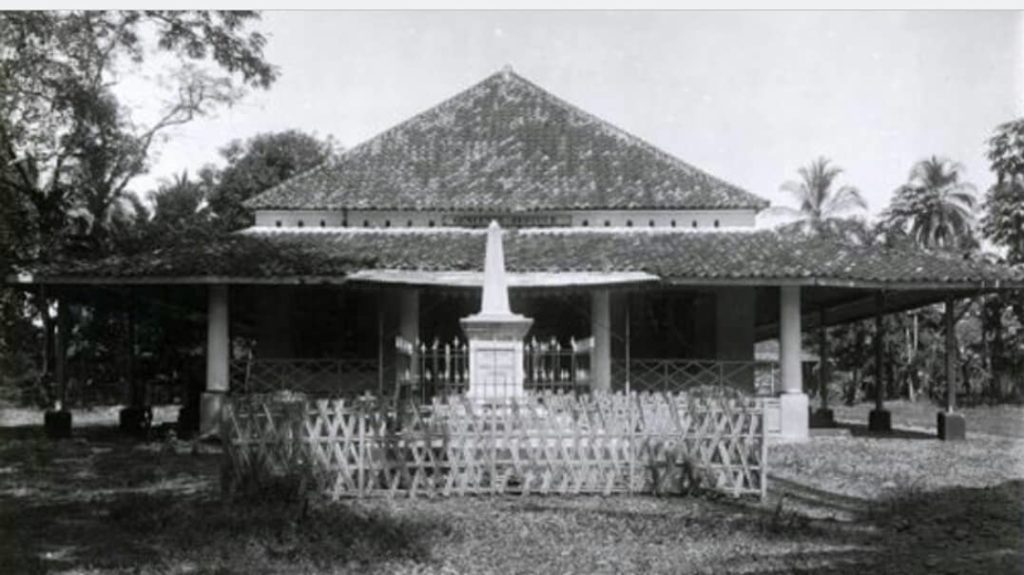
The political history of the Republic of Depok is marked by a unique succession of democratically elected leaders. Elections were held rigorously every three years, ensuring a regular rotation of executive power. The heart of this autonomous government was anchored at a specific geographical marker known today as Kilometer 0, which was famously marked by the Depok Monument. Situated in close proximity to this administrative hub was the primary government building, an architectural structure that has survived the test of time and now serves a modern function as the Harapan Hospital.
The inaugural president of Depok was Gerrit Jonathans, who assumed office in 1913, marking the official commencement of the territory’s formalized republican governance. Following Jonathans’ tenure, the presidency saw subsequent leaders chosen by the populace. Martinus Laurens took the helm in 1921, steering the community through the complex socio-political shifts of the interwar period. He was succeeded by Leonardus Leander, who assumed the presidency in 1930. The final leader to hold the office was Johannes Matjis Jonathans, who began his presidential term in 1952.
Despite the historical significance of these administrations, detailed archival records documenting the daily policy decisions, legislative acts, and internal governance of each presidential term remain remarkably scarce. Much of what is known has been reconstructed through colonial-era land deeds, municipal archives, and oral histories preserved by the descendants of the original community.
The Dissolution and Reintegration into Indonesia
The unique status of Depok as a self-governing private enclave could not endure indefinitely, particularly as the broader nationalist movement swept across the archipelago, culminating in Indonesian independence in 1945. The geopolitical reality of a sovereign republic existing within the sovereign borders of the newly born Republic of Indonesia created significant administrative friction.
The transition of power was formally executed in 1952. The fourth and final president of Depok, Johannes Matjis Jonathans, officially surrendered the administration of the private land to the Indonesian government through a formal deed of transfer (akta penyerahan tanah partikulir). This historic act formally dissolved the independent municipal governance structure of Het Gemeente Bestuur, integrating the territory fully into the legal and administrative framework of the Republic of Indonesia, first as part of West Java’s rural districts and eventually as an autonomous city decades later.
Broader Historical Implications and Legacy
When analyzing Depok through a contemporary lens, the city’s modern municipal age—having only celebrated its 22nd anniversary as an independent kotamadya—belies its profound historical depth. In reality, the organized human settlement, civic administration, and self-governance of Depok span a continuous history of over three centuries.
The legacy of the "Depok Belanda" (Dutch Depok) community and its brief experiment as a democratic republic offers historians a fascinating case study in localized autonomy, colonial legal loopholes, and early democratic governance in Southeast Asia. While the physical remnants of the presidential era are now largely confined to historical markers, archival photographs, and heritage buildings repurposed for modern use, the story of Depok remains a striking reminder of how deeply layered and unexpected Indonesia’s local histories truly are.