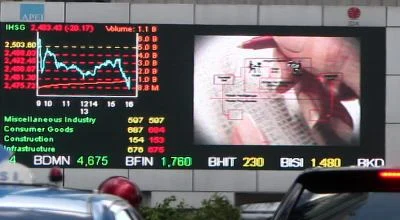
PT Bursa Efek Indonesia (BEI) along with its consolidated subsidiaries officially recorded a notable decline in financial performance for the 2011 fiscal year, posting a 19.4 percent drop in net profit. According to the comprehensive consolidated statement of profit or loss ending December 31, 2011, which was publicly released on Saturday, March 31, 2012, the exchange’s net income fell to Rp299.825 billion. This figure represents a clear contraction compared to the previous fiscal year of 2010, during which BEI successfully hauled in a net profit of Rp358.041 billion.
Despite achieving an increase in overall revenue streams during the corresponding period, the exchange found its bottom line heavily compressed by a sharp escalation in operational expenditures. The financial data reveals a complex year for Indonesia’s premier capital market operator, characterized by robust top-line growth offset by mounting internal costs, macroeconomic pressures, and escalating investments in technological infrastructure aimed at modernizing the local trading environment.
Financial Breakdown and Operational Realities of 2011
A deeper examination of the financial statements reveals a nuanced picture of BEI’s economic health throughout 2011. On the revenue side, the stock exchange actually demonstrated positive momentum. Total operating revenues climbed from Rp667.16 billion in 2010 to reach Rp699.32 billion by the end of December 2011. This top-line growth was primarily driven by transaction fees, listing fees, and other service-related revenues derived from a relatively active, albeit volatile, domestic capital market.
However, the growth in revenue was heavily outpaced by a surge in operational expenses. BEI reported that its total operating burdens jumped significantly from Rp371.30 billion in 2010 to Rp445.21 billion in 2011. Market analysts examining the financial reports noted that the increase in expenditures was largely tied to ongoing enhancements in the exchange’s technological infrastructure, particularly the maintenance and upgrading of the Automated Trading System (JATS-NextG), increased human resource allocation, and regulatory compliance costs.
Despite the compression in net profit, the exchange’s balance sheet remained robust and resilient. Total assets experienced steady growth, expanding to Rp3.763 trillion at the close of 2011, up from Rp3.555 trillion recorded at the end of the previous fiscal year. This expansion in assets underscored the underlying financial stability of the institution, reflecting sustained capital accumulation and retained earnings from prior profitable periods despite the temporary earnings dip.
Context and Chronology of the Indonesian Capital Market in 2011
To fully understand the financial outcome of BEI in 2011, it is essential to contextualize the macroeconomic and geopolitical environment surrounding the global and domestic financial markets during that era. The year 2011 was marked by severe global financial turbulence, largely triggered by the deepening European sovereign debt crisis, particularly the fiscal instability in Greece, Italy, and Spain, alongside the sluggish post-crisis economic recovery in the United States.
Domestically, Indonesia was navigating a period of strong economic growth characterized by a high GDP growth rate hovering around 6.5 percent, robust domestic consumption, and substantial foreign direct investment. However, these positive domestic fundamentals also brought challenges, including inflationary pressures and fluctuating capital flows. Foreign portfolio investors frequently rotated funds in and out of the Jakarta Composite Index (IHSG), creating bouts of high volatility.
Throughout the first half of 2011, the IHSG displayed resilience, occasionally hitting record highs as emerging market assets remained attractive to global funds seeking higher yields. Yet, the third quarter of 2011 brought sharp corrections as the European debt crisis reached a crescendo, causing sudden capital outflows from emerging markets, including Indonesia. Trading volume and market liquidity experienced temporary contractions during these risk-off periods, directly influencing the transaction-dependent revenue model of the stock exchange.
Strategic Investments and Infrastructure Upgrades

A crucial element contributing to the rise in operational expenses for BEI in 2011 was its aggressive capital expenditure and operational investment cycle. In the preceding years, the exchange management had committed to a multi-year modernization roadmap aimed at increasing market capacity, transparency, and trading speed to align with global standards.
A centerpiece of this technological overhaul was the implementation and continuous optimization of the JATS-NextG trading platform, which replaced older legacy systems to handle higher order matching speeds and accommodate a rapidly expanding investor base. Furthermore, the exchange invested heavily in bolstering its surveillance systems to detect market manipulation, insider trading, and irregularities in real-time, fulfilling stringent regulatory mandates set by the Financial Services Authority—which at the time was transitioning through regulatory shifts alongside Bank Indonesia and Bapepam-LK.
These investments, while temporarily burdening the 2011 profit margins through higher depreciation and maintenance costs, were viewed by the board of directors and market observers as necessary expenditures to future-proof the Indonesian capital market. The expansion in total assets to Rp3.763 trillion was a direct reflection of these capital-intensive investments in hardware, software, and facilities designed to support long-term market growth.
Expert Analysis and Market Implications
Financial analysts and market observers responding to the release of BEI’s 2011 financial report generally interpreted the 19.4 percent profit decline as a manageable cyclical adjustment rather than a structural weakness. Because BEI operates as a self-regulatory organization (SRO) with a unique business model closely tied to national economic activity and stock market turnover, its earnings are naturally sensitive to market cycles.
Experts pointed out that the increase in operational expenses was a logical byproduct of running a larger, more sophisticated exchange infrastructure. As Indonesia sought to position itself as a leading financial hub within the Association of Southeast Asian Nations (ASEAN), maintaining a state-of-the-art technological backbone was non-negotiable. Analysts noted that absorbing higher short-term costs was a calculated trade-off to ensure long-term scalability, enhanced investor protection, and improved market liquidity.
Furthermore, the growth in total assets to nearly Rp3.8 trillion provided reassurance to stakeholders that the exchange maintained a solid capital cushion. This financial buffer enabled BEI to continue fulfilling its developmental mandates, including investor education programs, regional expansion of capital market access across various Indonesian provinces, and the introduction of new financial instruments.
Broader Economic Impact and Future Outlook
The financial performance of BEI in 2011 offered broader implications for the development of Indonesia’s financial sector. As the primary facilitator of corporate fundraising and public investment, the health of the stock exchange serves as a barometer for broader corporate sector confidence. Despite the dip in net profit, the fact that corporate entities continued to seek primary capital through initial public offerings (IPOs) and rights issues throughout 2011 demonstrated that the underlying demand for equity financing remained intact.
Looking beyond the immediate fiscal year, the strategic investments made during 2011 laid the groundwork for the subsequent expansion of the Indonesian capital market in the following decade. The enhanced infrastructure allowed the exchange to seamlessly handle exponentially higher daily trading values, a rapidly growing number of listed companies, and a massive influx of domestic retail investors in the years that followed.
In conclusion, while the 19.4 percent reduction in net profit to Rp299.825 billion marked a temporary earnings contraction for PT Bursa Efek Indonesia in 2011, it occurred within a context of revenue growth, strategic asset accumulation, and necessary technological modernization. By prioritizing long-term infrastructure over short-term profit maximization, the exchange positioned itself to support the future growth and maturation of the Indonesian financial landscape.