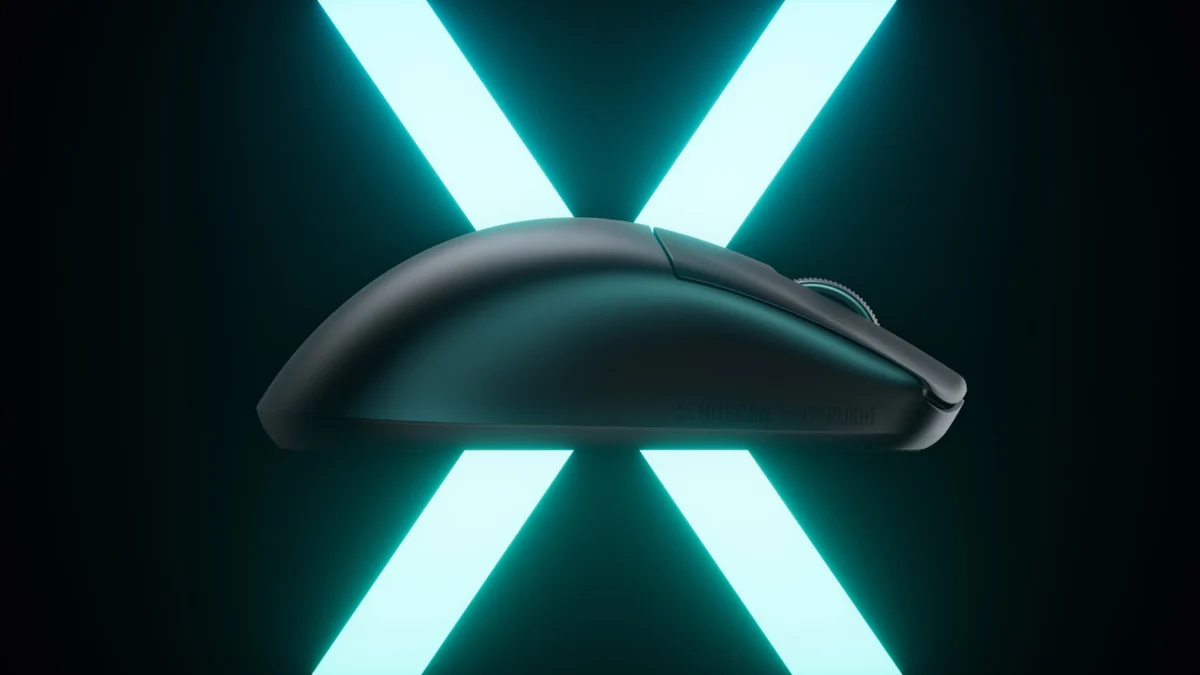
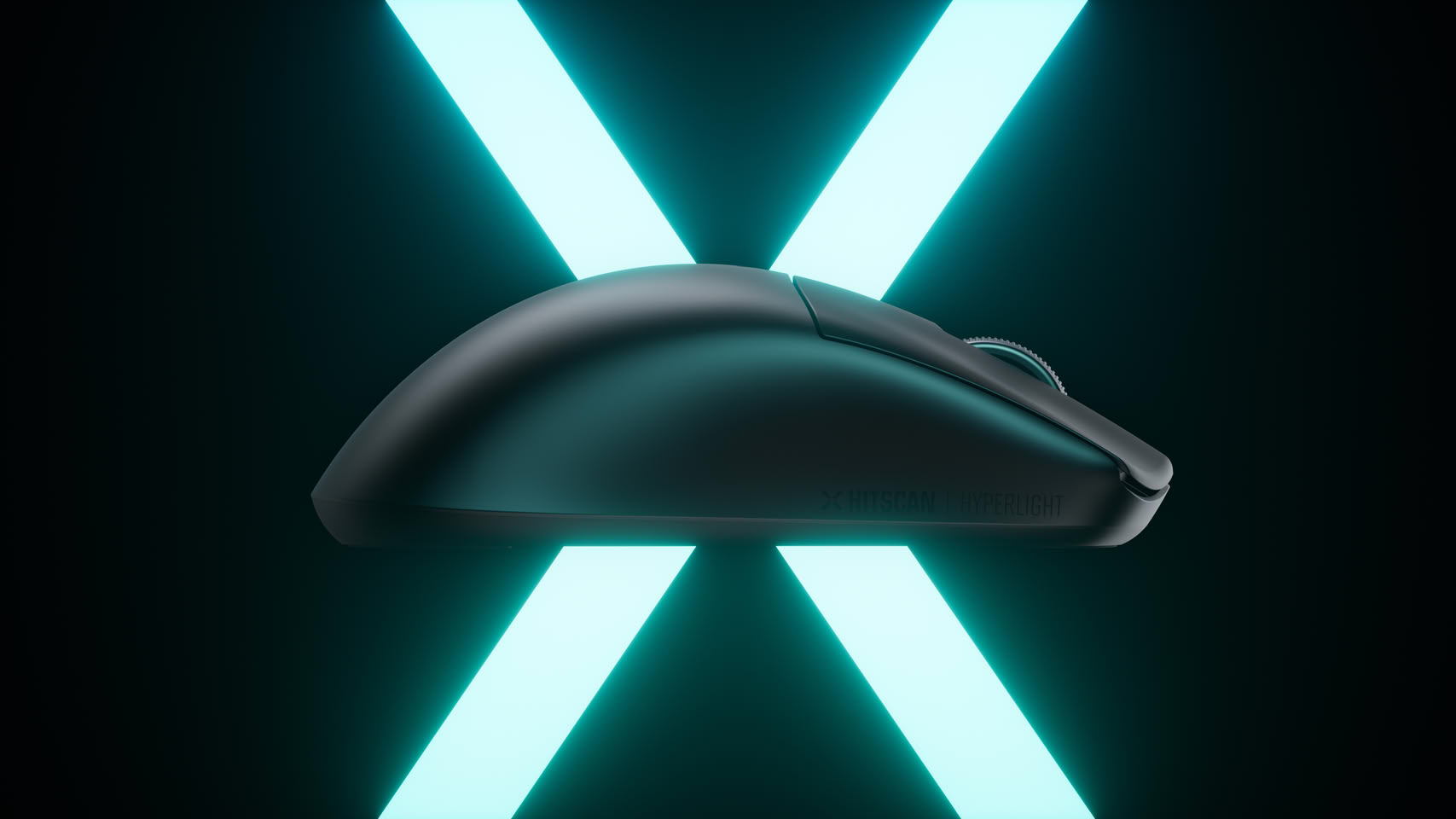
The landscape of competitive gaming hardware is continually evolving, driven by an unrelenting demand from esports professionals and enthusiasts for gear that minimizes latency, reduces physical fatigue, and maximizes precision. In the highly saturated market of gaming peripherals, manufacturers constantly seek innovative ways to shave off grams and eliminate milliseconds of input lag. Enter Hitscan, a brand known for its performance-oriented designs, which has officially announced its latest flagship offering: the Hitscan Hyperlight X. Revealed via the company’s official social media channels, this updated iteration of the popular Hyperlight lineage aims to redefine standards in ultra-lightweight mouse engineering. By combining a featherlight chassis, bleeding-edge internal hardware, and a novel click mechanism, the Hyperlight X positions itself as a formidable contender in the high-stakes arena of competitive PC gaming.
Evolution of the Hyperlight Series: From 39 Grams to 37 Grams
The journey of the Hitscan Hyperlight series has been defined by a rigorous pursuit of weight reduction without structural compromise. When the original Hyperlight entered the market, it garnered attention for tipping the scales at a remarkably low 39 grams. For players who engage in fast-paced tactical shooters and tracking-heavy arena titles, this minimal resistance against the mousepad translated into rapid, effortless flick shots and minimized wrist strain during prolonged gaming sessions.
However, rather than resting on its laurels, Hitscan’s engineering team scrutinized every millimeter of the design. The newly announced Hyperlight X pushes the envelope even further, achieving an astonishing baseline weight of approximately 37 grams, though final figures may vary slightly depending on the specific configuration and user setups. While a two-gram reduction might appear negligible to the casual observer, veteran competitive players understand that even minute adjustments to mass distribution and inertia can significantly alter the tactile feel and responsiveness of a gaming mouse. This relentless drive to reduce weight places the Hyperlight X in an elite echelon of ultra-lightweight peripherals, challenging established giants in the industry.
Revolutionary SPDT Mechanical Switches and Latency Breakthroughs
While the reduction in mass is a notable achievement, the most significant engineering leap in the Hyperlight X lies within its click architecture. Traditional gaming mice rely on standard mechanical or optical micro-switches to register inputs. Hitscan, however, has opted for a sophisticated approach by integrating SPDT (Single Pole Double Throw) mechanical switches into the Hyperlight X.
The implementation of SPDT switches is designed to fundamentally alter how electrical signals are processed upon actuation. By utilizing a dual-throw contact configuration, these switches allow for alternative detection and processing methods that drastically minimize input latency. In competitive gaming—where fractions of a second dictate the outcome of a gunfight—every millisecond saved is a competitive advantage.
To substantiate these engineering claims, Hitscan has subjected the Hyperlight X to rigorous testing methodologies. According to technical specifications shared by the company, the mouse’s overall click latency has been measured using Optical Sensor Latency Test Tools (OSLTT). The results place the Hyperlight X’s responsiveness on par with industry-leading competitive mice, such as the acclaimed Endgame Gear OP1 8K. This benchmark is particularly telling, as the OP1 8K is widely celebrated for its wired polling rate capabilities and near-zero latency performance. By achieving comparable responsiveness, Hitscan demonstrates that the Hyperlight X is engineered to meet the stringent demands of professional esports athletes.
Next-Generation Internal Hardware: PixArt PAW3950 and Nordic nRF54L15
Beneath the sleek, perforated or solid shell options of the Hyperlight X lies a complete overhaul of the internal electronics suite, marking a substantial generational leap over its predecessor.
The previous iteration of the Hyperlight utilized the PixArt PAW3395 sensor paired with the Nordic nRF52840 microcontroller unit (MCU). While this combination was top-tier during its release, the rapid pace of hardware development necessitated an upgrade. The Hyperlight X deprecates these older components in favor of the cutting-edge PixArt PAW3950 sensor and the robust Nordic nRF54L15 microcontroller.
The PixArt PAW3950 sensor is renowned for its exceptional tracking fidelity, supporting higher maximum sensitivity ceilings, flawless surface compatibility, and finer incremental adjustments without smoothing, filtering, or positive/negative acceleration. Meanwhile, the integration of the Nordic nRF54L15 MCU ensures ultra-efficient power management and stable wireless connectivity, reducing connection jitter and supporting higher polling rates with minimal battery drain. This hardware synergy ensures that the tracking is as instantaneous and accurate as the click actuation provided by the SPDT switches.
Refined Ergonomics, Software Ecosystem, and Quality-of-Life Improvements
Hardware performance is only one pillar of a successful gaming peripheral; user experience and software integration are equally vital. Hitscan has applied targeted feedback from the community to refine the physical and digital ecosystem surrounding the Hyperlight X.
A notable pain point in previous ultra-lightweight mouse designs was the accumulation of debris and dust around recessed areas, particularly near the battery compartment and base plate. Hitscan has redesigned the bottom shell layout of the Hyperlight X, specifically addressing the battery cover enclosure to create a more sealed, dust-resistant environment. This structural adjustment not only improves the aesthetic longevity of the device but also simplifies maintenance for users who game in varied desktop environments.
Furthermore, Hitscan is rolling out an updated, web-based configuration utility. Eschewing heavy, resource-intensive standalone desktop software, the web-based firmware management tool allows users to customize polling rates, remap buttons, adjust sensor DPI stages, and configure complex macro sequences directly through modern web browsers. This approach ensures a lightweight software footprint, rapid updates, and cross-platform accessibility.
Market Positioning, Pricing Expectations, and Economic Implications
As of the current announcement phase, Hitscan has not yet disclosed the official retail pricing or the definitive global release date for the Hyperlight X. Industry analysts and market observers can, however, draw reasonable conclusions based on the pricing strategy of its predecessor.
The original Hitscan Hyperlight launched with a competitive price point of $89.99 through the brand’s official storefront. Given the inclusion of next-generation internal hardware—specifically the PixArt PAW3950 sensor, the advanced Nordic nRF54L15 MCU, and the specialized SPDT mechanical switch architecture—it is widely anticipated that the Hyperlight X will command a slightly higher retail price. Manufacturing components of this caliber, coupled with specialized click mechanisms, inherently drive up production costs. Nevertheless, if Hitscan maintains a price-to-performance ratio that undercuts larger mainstream conglomerates while delivering comparable or superior latency benchmarks, the Hyperlight X could secure a significant market share among performance-focused enthusiasts.
Broader Industry Impact and Technical Speculation
The introduction of the Hitscan Hyperlight X highlights a broader trend within the PC gaming peripheral industry: the convergence of ultra-low mass and high-frequency actuation processing. For years, the market was divided into camps—those prioritizing the absolute lightest chassis possible and those focusing heavily on switch tactile feel and debounce latency.
By merging a 37-gram shell with an advanced SPDT mechanical switch system and top-tier tracking hardware, Hitscan is effectively bridging this gap. This design philosophy poses a challenge to legacy manufacturers who have historically relied on brand recognition rather than rapid innovation cycles. As independent and boutique brands continue to push the boundaries of sensor implementation and click latency, consumers benefit from a rapidly accelerating technological baseline.
The debate among competitive gamers regarding the necessity of such minute latency reductions and weight savings remains active. While casual players may not perceive the millisecond differences offered by SPDT switches or a 37-gram weight, elite competitors operating at the highest echelons of games like Counter-Strike 2, Valorant, and Apex Legends often rely on every technological edge available. Hardware developments like the Hitscan Hyperlight X underscore the reality that in modern esports, equipment is no longer just a tool, but an extension of the player’s reflexes. As the release date draws closer, the gaming community will undoubtedly watch to see if real-world performance matches the ambitious specifications outlined by the manufacturer.