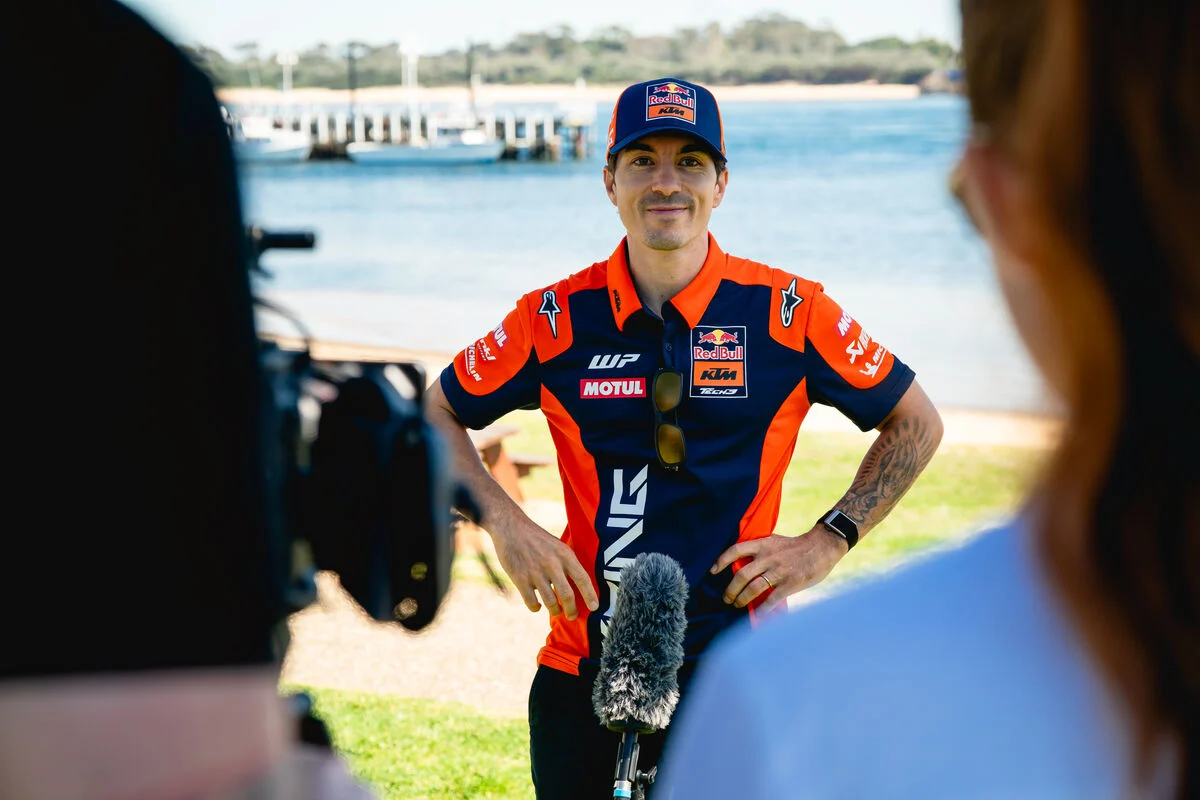
The demanding world of MotoGP presents athletes with not only physical hazards and high-speed pressures, but also complex contractual obligations that can dictate their professional decisions even when compromised by injury. Recently, Spanish Grand Prix motorcycle racer Maverick Vinales opened up about a stringent clause in his agreement with KTM that forced him to compete while enduring physical pain. The 31-year-old rider revealed that he was left with no viable alternative but to race through injury to avoid severe financial penalties, specifically the docking of his salary should he exceed the permitted threshold of missed Grands Prix during the 2026 MotoGP World Championship season.
This disclosure sheds light on the often-unseen friction between rider welfare, team interests, and strict corporate contracts within premier-class motorsport. For Vinales, the choice between recovery and financial security became a harrowing dilemma, highlighting the relentless nature of the MotoGP calendar and the unforgiving parameters governing professional rider contracts.
The Roots of Physical Adversity: A Timeline of Injuries
To understand Vinales’s current predicament, it is essential to examine the accumulation of injuries that plagued his career over preceding seasons. The physical toll began in earnest during the qualifying session for the German Grand Prix in 2025. During a high-stakes push for grid position, Vinales suffered a violent crash that resulted in a severe shoulder dislocation—an injury notorious for its instability and propensity to recur under the extreme physical demands of riding a 1000cc MotoGP prototype.
The aftermath of the German GP crash initiated a protracted battle with physical rehabilitation. In 2025 alone, the injury sidelined Vinales for four consecutive rounds. Although he made efforts to return, his body remained fragile. Following the grueling Indonesian Grand Prix at Mandalika later that year, the pain flared up again, forcing him to miss the majority of the flyaway rounds before making a brief, tentative return at the season finale in Valencia.
Hopes that the winter break would afford adequate healing were dashed as the 2026 season commenced. The recurring instability in his shoulder forced another interruption following the Grand Prix of the Americas. Medical assessments mandated surgical intervention, causing Vinales to sit out the subsequent Spanish and French Grands Prix. Yet, the surgical procedure and subsequent recovery periods were insufficient to fully resolve the underlying joint weakness.
The calendar offered no respite. Vinales was forced to miss a grueling sequence of races, including the British Grand Prix at Silverstone, the Aragon Grand Prix in Spain, the San Marino Grand Prix at Misano, and the Austrian Grand Prix at the Red Bull Ring. He finally returned to action at the Japanese Grand Prix, attempting to reintegrate into the competitive rhythm of the championship. However, the physical reality caught up with him once more during the Australian Grand Prix at Phillip Island, where he admitted to competing while heavily compromised by lingering shoulder pain.
The Contractual Ultimatum: Racing Under Duress
At the heart of Vinales’s recent disclosures is the commercial framework governing his tenure with KTM. Modern MotoGP contracts are multi-million-dollar agreements that bind factories and riders to strict performance and participation metrics. Typically, manufacturer contracts include Force Majeure or physical availability clauses that outline how compensation is handled during extended periods of rider absence due to injury.
In Vinales’s case, the contract stipulates a strict limit on the number of Grands Prix a rider can miss before financial penalties are invoked. Sources close to the paddock indicate that missing more than three races within a specified timeframe can trigger clauses allowing the team to proportionately reduce base salary payments, insurance payouts, or performance bonuses.

Faced with the prospect of substantial financial loss, Vinales found himself compelled to line up on the grid despite clear medical advisories suggesting a more conservative recovery approach. Speaking on the situation, the veteran Spaniard emphasized that the decision to ride in Australia and preceding rounds was not born out of competitive readiness, but rather out of financial self-preservation. "I was forced to race so that my salary would not be cut by KTM," Vinales candidly admitted, laying bare the pressures that athletes face when corporate interests intersect with personal health.
Broader Implications for Rider Safety and Contract Standards
The situation involving Maverick Vinales and KTM has sparked broader discussions within the MotoGP paddock regarding rider welfare, contractual transparency, and the standard terms of engagement between factories and athletes. Over the past decade, safety standards have evolved significantly, with Dorna Sports, the FIM, and team associations placing immense focus on concussion protocols, protective gear, and medical clearances.
However, the financial mechanisms underpinning rider contracts have remained largely shielded from public scrutiny. When financial incentives are structured in a way that penalizes an athlete for obeying medical advice to rest and recover, a dangerous incentive structure is created. Riders, driven by both competitive ambition and the fear of financial reprisal, may feel compelled to conceal injuries, rush rehabilitation timelines, or pilot high-performance motorcycles while physically compromised.
Such scenarios not only jeopardize the health and career longevity of the individual athlete but also introduce avoidable safety risks on the track. A rider lacking full muscular control and strength over a MotoGP machine is inherently more vulnerable to secondary crashes, which in turn pose a hazard to competitors sharing the tarmac.
Industry Response and the Path Forward
While KTM management has not publicly detailed the specifics of Vinales’s contract, representatives from various teams within the paddock acknowledge that participation clauses are standard practice in professional sports. Factories invest heavily in riders, and insurance policies often dictate strict parameters regarding continuous participation to mitigate financial losses when a bike sits idle or is piloted by a substitute rider.
Nevertheless, rider unions and legal experts in motorsport management are increasingly advocating for a re-evaluation of how injury absences are handled in premier-class contracts. Critics argue that modern agreements should incorporate more compassionate buffers for career-threatening or repetitive trauma injuries, ensuring that athletes are not economically coerced into competing while injured.
For Maverick Vinales, the immediate challenge remains physical recovery and navigating the remainder of the 2026 season under the shadow of his ongoing shoulder issues. As the championship progresses, the dialogue ignited by his candid remarks is expected to influence upcoming contract negotiations across the grid, prompting both riders and teams to seek more balanced terms that prioritize long-term health alongside commercial obligations.
Ultimately, the episode serves as a sobering reminder of the physical and mental toll exacted by elite motorsport. Beneath the glamour of the podium celebrations and high-speed telemetry lies a grueling reality where athletes must constantly weigh the integrity of their bodies against the rigid demands of professional contracts.