The Los Angeles Lakers approach the 2026/2027 NBA regular season facing one of the most significant transitional phases in modern franchise history. For the first time since the 2018/2019 campaign, the storied organization will take to the hardwood without LeBron James. Following an illustrious eight-year tenure in Los Angeles that included a championship, numerous playoff runs, and countless individual milestones, the 41-year-old superstar has officially taken his talents to the Eastern Conference to join the Philadelphia 76ers.
This monumental departure leaves a profound vacuum in both the locker room leadership and the tactical execution of the team. Yet, the front office and coaching staff have meticulously engineered a roster that is no longer tethered to the singular gravity of James. Slovenian maestro Luka Doncic has firmly established himself as the absolute centerpiece of the franchise’s long-term project, while homegrown guard Austin Reaves prepares to shoulder an elevated role in orchestrating the offense. As the league braces for another grueling 82-game marathon, analysts and fans alike are left pondering whether this revamped supporting cast possess the chemistry, depth, and defensive tenacity required to maintain elite status in a relentlessly competitive Western Conference.
The opening bell of the 2026/2027 NBA regular season is scheduled for Tuesday, October 20, 2026, in the United States, corresponding to Wednesday, October 21, in Indonesian time zones. The Lakers will make their much-anticipated debut just one day after tip-off, welcoming the Golden State Warriors to the iconic Crypto.com Arena in Los Angeles. The opening matchup is set for Wednesday, October 21, at 7:00 PM Pacific Daylight Time (PDT), translating to Thursday, October 22, at 9:00 AM Western Indonesian Time (WIB). This high-profile Pacific Division rivalry will serve as the initial litmus test for a franchise eager to project a youthful, dynamic identity to a global audience.
Assessing the Foundation: Looking Back at 2025/2026
To understand the magnitude of the upcoming campaign, one must examine the baseline established during the 2025/2026 regular season. The Lakers closed out that campaign with a commendable 53-29 record, securing the fourth seed in a fiercely contested Western Conference. This regular-season performance demonstrated that the team remained fundamentally viable at the top tier of the league hierarchy, even as James navigated the physical tolls of his late-career seasons.
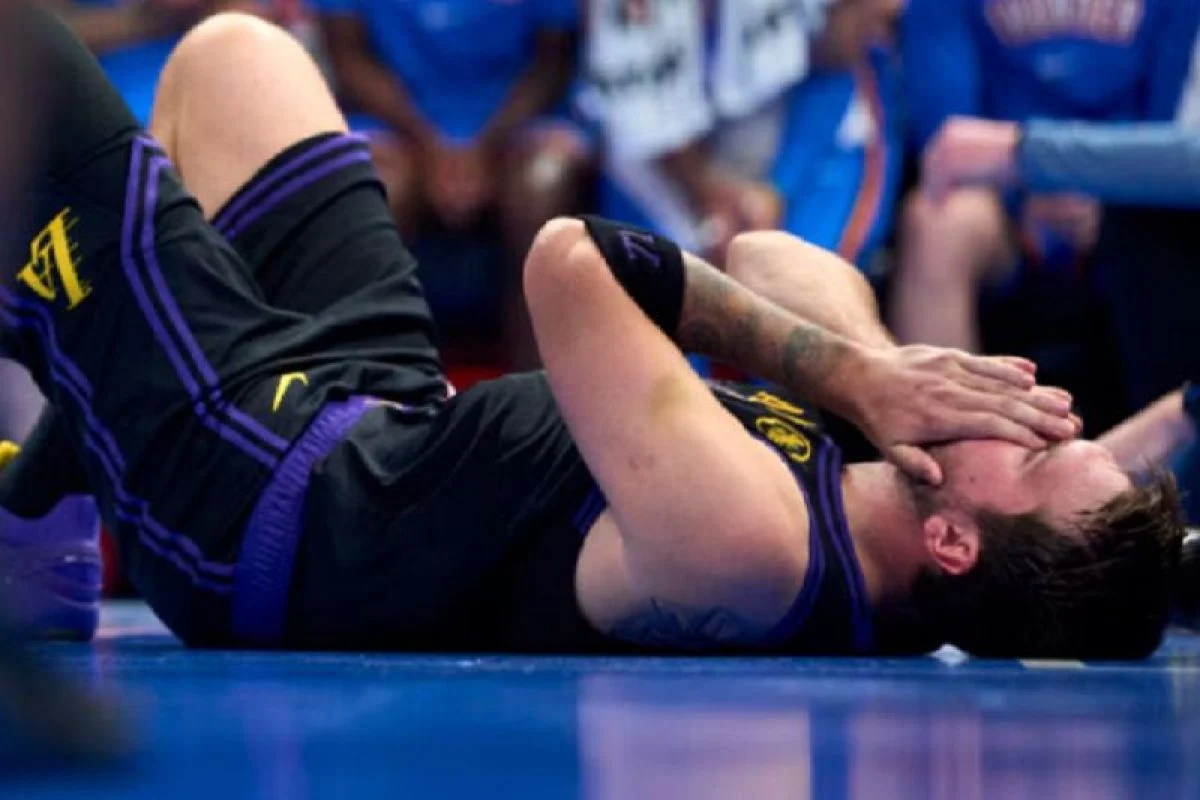
The postseason, however, provided a sobering reality check. In the opening round of the playoffs, the Lakers navigated a physical six-game series against the Houston Rockets, prevailing 4-2. Their momentum came to a screeching halt in the Western Conference Semifinals, where the Oklahoma City Thunder orchestrated a dominant 4-0 sweep. This postseason exit highlighted persistent structural flaws: a vulnerability to disciplined perimeter defenses, a lack of defensive consistency, and an over-reliance on primary creators when facing physical, athletic second-line defenses. Furthermore, an untimely injury to Luka Doncic during that series exposed the fragility of a rotation that lacked secondary playmaking depth when elite assignments locked down the perimeter.
Statistically, the Lakers produced an efficient offensive output during the 2025/2026 regular season, averaging 116.3 points per contest. However, their defensive metrics lagged behind championship standards, surrendering an average of 114.6 points per game. Finishing the year ranked 19th in defensive rating based on points allowed per 100 possessions, the front office recognized that replacing James’s production was only half the battle. Re-establishing defensive equilibrium became the primary directive of the summer.
Luka Doncic and Austin Reaves: The New Dual-Engine Offense
With James wearing a 76ers uniform, the keys to the Lakers franchise belong squarely to Luka Doncic. The elite guard cemented his status as a perennial MVP candidate during the 2025/2026 season, leading Los Angeles to 53 victories while capturing his second career NBA scoring title and earning a coveted spot on the All-NBA First Team. Doncic’s unparalleled ability to manipulate defensive spacing, control the tempo of a half-court possession, and deliver pinpoint passes out of the pick-and-roll makes him the ideal centerpiece for a modern NBA offense.
However, ascending to the undisputed leadership role brings unprecedented scrutiny. Opposing defenses can now tailor their game plans entirely around disrupting Doncic without needing to allocate primary resources to a secondary superstar like James. Consequently, Doncic’s durability and conditioning will dictate the team’s ceiling. If the Slovenian star encounters physical setbacks similar to those that hampered previous postseason runs, the coaching staff must rely heavily on their newly fortified depth.
Complementing Doncic in the backcourt is Austin Reaves, whose career trajectory points sharply upward. Reaves posted a career-best 23.3 points per contest during the 2025/2026 season, proving he can function as a high-volume offensive weapon. Beyond scoring, Reaves excels at secondary playmaking, attacking closeouts, and punishing defenses that over-help on Doncic’s penetrations.
Historical data from the previous season underscores the immense potential of this backcourt partnership. When Doncic and Reaves shared the floor, the Lakers compiled a stellar 30-11 record, generating a combined average of 56.8 points per game. With James’s departure, Reaves will inherit higher usage rates and critical decision-making responsibilities down the stretch of tight games. The central challenge for Reaves will be maintaining this offensive efficiency over an 82-game schedule while absorbing the physical pressure of elevated defensive attention.
Roster Evolution and Front Office Adjustments
Recognizing the need to transition toward a younger, more athletic supporting cast, Lakers General Manager and the front office executed a series of calculated roster moves during the offseason. The most impactful acquisition is undoubtedly big man Walker Kessler. Known for his elite shot-blocking and rim-protection capabilities, Kessler provides the exact defensive anchor the Lakers desperately required in the paint. His presence will allow Doncic and Reaves to aggressively pressure ball-handlers on the perimeter, knowing a formidable interior deterrent awaits at the rim.
To bolster the frontcourt depth, the franchise added Sandro Mamukelashvili, offering versatility and shooting touch from the forward position. Meanwhile, the perimeter rotation received significant upgrades with the arrivals of Collin Sexton, Quentin Grimes, and Jaden Hardy. Grimes brings critical three-and-D versatility to the wing, Sexton provides relentless downhill scoring aggression, and Hardy injects high-octane offensive production into the second unit.
The perimeter defense also gains an intriguing asset in Matisse Thybulle. While the departure of Marcus Smart removes a vocal, high-energy veteran presence, Thybulle’s disruptive ball-hawking skills and deflection prowess in passing lanes aim to compensate for the loss. Conversely, the roster turnover was substantial. The Lakers parted ways with Deandre Ayton, Rui Hachimura, and Jaxson Hayes, fundamentally altering the team’s frontcourt rotation and forcing head coach JJ Redick to rapidly install new defensive coverages and offensive schemes.
Head Coach JJ Redick Faces His Ultimate Test
Entering his second full season at the helm, head coach JJ Redick faces the most delicate balancing act of his young coaching career. Implementing a system that maximizes Doncic’s generational passing and scoring abilities requires precision, but Redick must simultaneously construct a framework that prevents the offense from becoming entirely predictable.
With eight new players integrated into the training camp roster, building chemistry and establishing a cohesive defensive identity are paramount. Redick must carefully manage the minute distributions of Doncic and Reaves to mitigate fatigue, while ensuring that bench units led by Sexton and Hardy maintain leads when the primary starters rest. Furthermore, the defensive schemes must improve drastically from a unit that struggled significantly in defending the perimeter during the previous postseason. If Redick can successfully forge a defensive-minded culture around Kessler and Thybulle while maintaining offensive fluidity, the Lakers will establish a legitimate identity independent of the James era.
Navigating the Gauntlet of the Western Conference
The road ahead is fraught with formidable adversaries. The Western Conference remains an unforgiving landscape populated by established contenders and surging young cores.
The Oklahoma City Thunder enter the season as the team to beat, having secured an astonishing 64 victories in the previous regular season behind the stellar play of Shai Gilgeous-Alexander. Meanwhile, the San Antonio Spurs, fresh off an inspiring run to the 2026 NBA Finals, continue to develop around the unique talents of Victor Wembanyama. The Denver Nuggets remain perennial threats anchored by Nikola Jokic, and the Minnesota Timberwolves have added star power with LaMelo Ball joining Anthony Edwards in the backcourt. Teams like the Houston Rockets and Dallas Mavericks further crowd the playoff picture, ensuring that every victory will be fiercely contested.
For the Lakers, securing a top-six seed to avoid the unpredictable perils of the Play-In Tournament is a primary objective. The immediate pressure of the regular-season opener against Golden State will set the tone, but all eyes are already fixed on a specific date on the winter calendar. On December 25, 2026, the Crypto.com Arena will host the Philadelphia 76ers for a high-stakes Christmas Day showdown. This encounter will mark LeBron James’s first game back in Los Angeles as an opponent, carrying immense emotional weight while serving as a stark measuring stick for the new-look Lakers.
Outlook: A New Chapter in Los Angeles
The departure of LeBron James undeniably closes a golden chapter in the history of the Los Angeles Lakers. Yet, historical precedent suggests that the franchise rarely stays dormant for long. Armed with a transcendent superstar in Luka Doncic, an ascending secondary star in Austin Reaves, and a rejuvenated, athletic supporting cast, the organization is uniquely positioned to remain competitive.
Success for the 2026/2027 Lakers will not be measured by replicating the exact statistical footprint of the past, but by forging a collective identity built on defensive accountability, spatial intelligence, and shared responsibility. If Doncic maintains his elite health, Reaves steps smoothly into his expanded role, and the newcomers quickly assimilate into Redick’s tactical vision, the purple and gold will prove that life after LeBron is not an era of decline, but rather the thrilling dawn of a new competitive horizon.