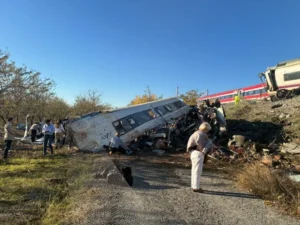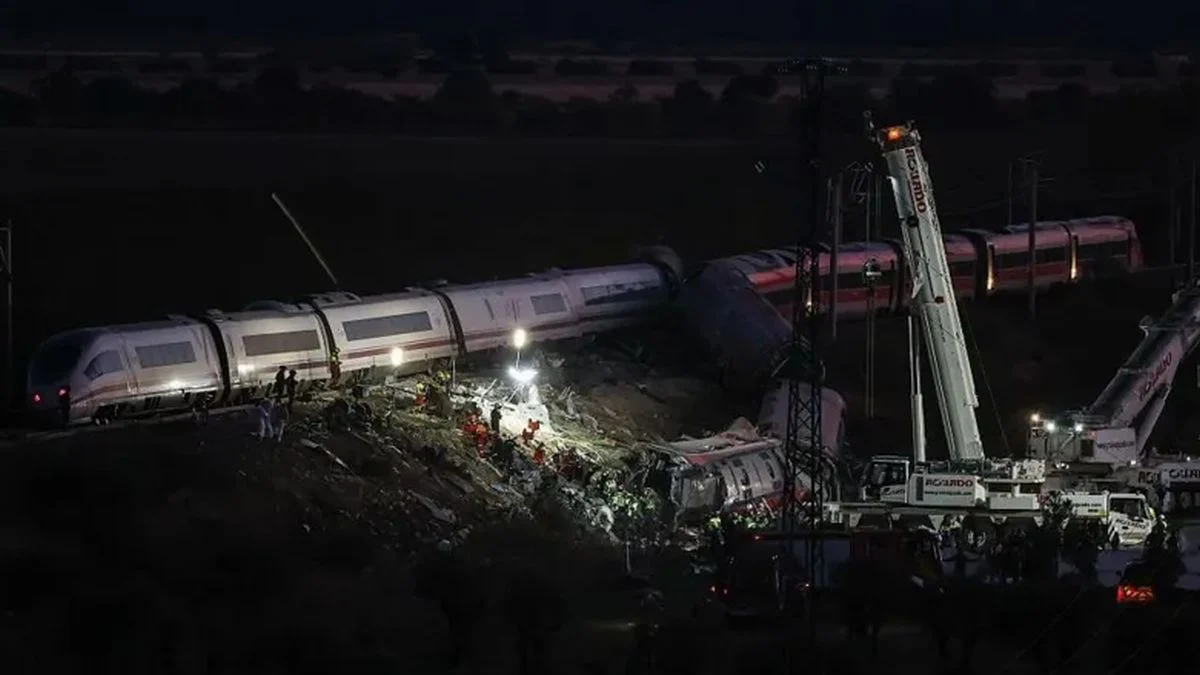
The Kingdom of Spain has declared a three-day period of national mourning following a catastrophic railway collision that claimed the lives of 68 individuals and left scores of others injured. The tragedy, which occurred on Wednesday, October 28, 2026, has sent shockwaves across Europe, marking one of the most devastating rail disasters in the continent’s modern history. As the nation grapples with the scale of the loss, emergency services, government officials, and forensic experts are working in tandem to address the immediate aftermath and investigate the systemic failures that precipitated the disaster.
Chronology of the Disaster
The incident unfolded on the high-speed rail corridor connecting Madrid and Seville, a vital artery in Spain’s transport infrastructure. According to preliminary reports, the catastrophe began when a train operated by the private rail company Iryo, carrying 147 passengers, was forced to come to a halt on the tracks due to a critical failure in the signaling and traffic management computer systems.
As the Iryo train remained stationary, a second train traveling along the same line toward Seville collided with the rear of the immobilized vessel. The force of the impact resulted in the derailment of several carriages and catastrophic structural damage to the metallic frames of the trains. The collision occurred during the evening hours, complicating initial rescue efforts as darkness hindered visibility.
By the early hours of Thursday, October 29, the Ministry of the Interior had mobilized hundreds of personnel to the site. The rescue operation, which continued under artificial lighting throughout the night, utilized heavy cutting machinery to breach the mangled steel of the carriages. Aerial support, including drones and helicopters, was deployed to provide thermal imaging and oversight to assist in locating victims scattered across the crash site.
Official Responses and Humanitarian Efforts
Prime Minister Pedro Sánchez addressed the nation on Thursday, visibly shaken by the scale of the tragedy. "The entire country is in mourning," Sánchez stated. "Lives have been shattered, families have been torn apart, and the pain is truly immense." The Prime Minister emphasized that the priority remains the identification of the deceased and the provision of psychological and medical support to the survivors and the families of the victims.
Minister of Transport Óscar Puente has provided critical insights into the technical aspects of the disaster. During a press briefing, Puente clarified that the stationary Iryo train had experienced a "systemic computer failure." Crucially, protocol dictated that once such a failure occurred, the 24-hour central control unit in Madrid was required to take manual oversight of the situation.
"The investigation is currently focused on the decision-making process at the central control level," Puente stated. "Initial data suggests that instead of implementing strict speed restrictions or halting traffic in the corridor entirely, instructions were issued to allow subsequent traffic to proceed without the necessary safety protocols in place." This revelation has raised urgent questions regarding the intersection of automation and human oversight in Spain’s sophisticated rail network.
Broader Implications for European Rail Safety
The Spanish rail network, particularly the Madrid-Seville line, is widely regarded as one of the most technologically advanced in the world. The implementation of the European Rail Traffic Management System (ERTMS) has long been touted as a benchmark for safety. However, the events of October 28 have exposed potential vulnerabilities in how these automated systems interact with human intervention.
Industry analysts suggest that this incident will necessitate a comprehensive audit of high-speed rail safety protocols across the European Union. The European Union Agency for Railways (ERA) is expected to play a significant role in the forthcoming investigation, ensuring that findings are shared with other member states to prevent similar lapses. The reliance on centralized control centers, while efficient, introduces a single point of failure that, when combined with human error, can lead to catastrophic results.

Beyond the technical failure, the disaster has reignited debates regarding the privatization of rail services. With the Iryo train being operated by a private entity and the infrastructure managed by state-run Adif, the division of responsibilities is under intense scrutiny. Legal experts anticipate a protracted series of inquiries to determine liability, ranging from software developers to dispatchers and oversight management.
Socio-Economic Impact and Public Sentiment
The loss of 68 lives represents a significant national tragedy for Spain. In the coming days, the country will see flags flown at half-mast, and public events have been canceled as a mark of respect. For the families of the victims, the process of identification—made difficult by the intensity of the collision—will be a grueling experience. The government has established specialized centers to provide grief counseling and legal support to the affected families.
The economic impact of the disruption to the Madrid-Seville line is expected to be substantial. As one of the most traveled routes in the country, the temporary closure of the line for debris removal and forensic investigation will cause significant logistical challenges. Furthermore, public trust in rail safety, which has historically been high in Spain, will require significant effort to restore.
Technical Analysis of the Failure
The failure of the computer system, as described by the Ministry of Transport, points toward a critical breach in safety protocols. In rail engineering, "fail-safe" mechanisms are designed to halt traffic automatically in the event of a system glitch. The fact that the control center in Madrid instructed the incoming train to continue indicates a fundamental breakdown in the chain of command.
Experts in rail signaling point out that the decision to override automated safety stops is a high-risk action that requires redundant verification. If the control center was indeed aware of the stationary train, the directive to proceed at high speed without restricted speed orders constitutes a severe violation of safety standards. This aspect of the investigation will likely form the basis of criminal negligence proceedings as the inquiry progresses.
Looking Forward: A Path to Recovery
As Spain moves through this period of mourning, the focus will gradually shift from immediate rescue to long-term investigation and legislative reform. The parliamentary opposition has already called for a full, transparent inquiry into the Ministry of Transport’s oversight policies.
The government has pledged full transparency, promising that all data logs, voice recordings from the control center, and system diagnostics will be made available to independent investigators. The resilience of the Spanish public, often tested by adversity, will again be on display as the nation supports the survivors. However, the lasting legacy of this event will be the changes made to the national rail infrastructure to ensure that such a failure of technology and human judgment can never recur.
In the coming weeks, the focus will be on:
- Forensic Identification: Utilizing DNA and dental records to identify the victims who remain unnamed.
- System Audit: A total review of the Madrid central control software and human-in-the-loop protocols.
- Legal Accountability: Establishing the chain of command that led to the authorization of the train movement.
- Infrastructure Restoration: Ensuring the structural integrity of the affected rail segment before resuming operations.
As of the latest updates, rescue teams are beginning to wind down their efforts, transitioning the site to specialized teams tasked with the slow, methodical process of clearing the wreckage. For the families, the search for closure has only just begun. For the nation, the task is to heal while ensuring that the lessons learned from this disaster lead to a safer, more robust future for European transit.