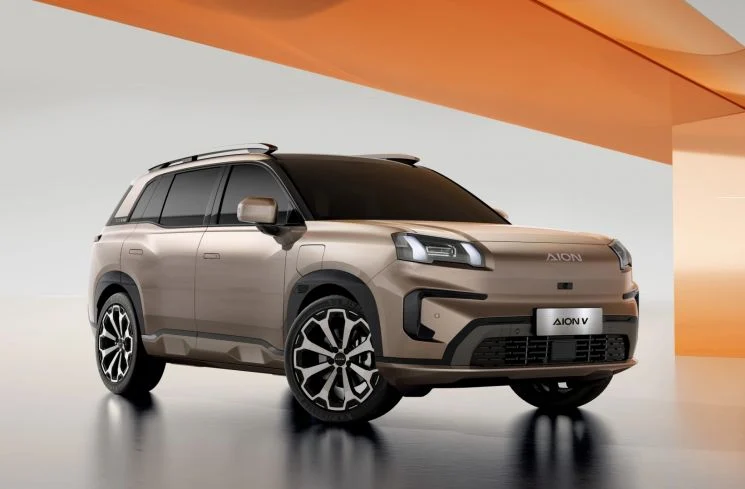
The Indonesian automotive landscape is undergoing a profound transformation as electrification shifts from a niche preference to a mainstream consumer choice. In the first quarter of 2026, the AION V has emerged as a cornerstone of this transition, cementing its footprint in the competitive C-SUV electric vehicle (EV) segment. Data released by the Association of Indonesia Automotive Industries (GAIKINDO) indicates that the AION V achieved a wholesale volume of 238 units in March 2026, a figure that underscores a growing market appetite for domestically assembled, high-utility electric vehicles.
This performance is not merely a reflection of individual sales success but a bellwether for the Indonesian automotive industry’s pivot toward local manufacturing. By leveraging a Completely Knocked Down (CKD) strategy, GAC AION Indonesia has managed to stabilize supply chains and streamline the ownership experience, effectively addressing one of the primary consumer concerns regarding the EV market: the latency between order and delivery.
The Strategic Shift Toward Local Production
For many years, the Indonesian EV market was heavily reliant on fully imported units, which often faced logistical hurdles and fluctuating tax structures. The shift toward local assembly for the AION V represents a strategic maturation of the market. By establishing a local production base, GAC AION Indonesia has successfully mitigated import-related uncertainties, providing consumers with the assurance of long-term parts availability and localized maintenance support.
The decision to transition to CKD production has yielded immediate dividends. In the first three months of 2026, market analysis showed that consumers in urban centers—specifically Jakarta, Surabaya, and Bandung—increasingly prioritized the "total cost of ownership" over the initial purchase price. This rational approach to purchasing, which weighs technology, resale value, and serviceability, has played directly into the strengths of the AION V.
Performance Milestones and Market Trajectory
The timeline of AION V’s market entry reveals a calculated approach to building brand equity. Since its initial introduction to the Indonesian market, the brand has focused on establishing a robust dealer network before scaling up production volumes.
- Q4 2025: GAC AION Indonesia completed its initial pilot phase for local assembly, focusing on quality control standards that mirror global benchmarks.
- January–February 2026: Initial deliveries of the locally assembled AION V began reaching customers, coinciding with the launch of several flagship showrooms in metropolitan areas.
- March 2026: The recorded 238-unit wholesale figure serves as a key indicator of production stabilization. Industry analysts suggest that this volume, while modest in the context of total internal combustion engine (ICE) sales, is highly significant for the mid-sized EV SUV segment, which had previously been dominated by premium, high-cost imported models.
Engineering Excellence and Technical Specifications
The AION V distinguishes itself through a balanced combination of range and luxury utility. At the heart of its technical appeal is a 75.3 kWh LFP (Lithium Iron Phosphate) battery pack. This battery chemistry is particularly well-suited to the Indonesian climate, known for its thermal stability and extended cycle life.
The vehicle delivers an impressive range of 602 km on a single charge under optimal conditions. This specification effectively addresses "range anxiety," a persistent barrier to EV adoption in a country where infrastructure is still undergoing development. Furthermore, the AION V integrates unique lifestyle features that resonate with the modern Indonesian consumer. A notable inclusion is the cabin refrigerator, which offers three distinct modes: freezing, cooling, and warming. This feature, while seemingly niche, highlights the manufacturer’s focus on adapting to the local lifestyle, where long-distance travel and family road trips remain a staple of automotive usage.
Official Perspectives on Market Dynamics
During a press briefing on April 16, 2026, Andry Ciu, CEO of GAC AION Indonesia, addressed the shift in consumer psychology. "We are observing a fundamental evolution in how our customers perceive electric vehicles," Ciu stated. "The conversation has moved beyond simply ‘going green’ to a more comprehensive evaluation of value. CKD is not just a logistical choice for us; it is a commitment to the consumer regarding the long-term utility of the vehicle, from the ease of routine servicing to the stability of the resale market."
Ciu further emphasized that the economic volatility of global energy markets has acted as a catalyst for EV adoption. As fuel prices remain subject to international fluctuations, the efficiency and predictable costs associated with operating an electric SUV like the AION V have made it a logical choice for households looking to hedge against inflation. "The AION V is positioned as a solution that combines advanced technology with the economic realities of the modern Indonesian family," he added.
Safety and Technological Integration
In an era where technology is as much about safety as it is about convenience, the AION V incorporates a suite of Advanced Driver Assistance Systems (ADAS) Level 2. These features include, but are not limited to, Lane Keeping Assist, Adaptive Cruise Control, and Autonomous Emergency Braking. By standardizing these safety features at a competitive price point—starting at Rp 465 million OTR Jakarta—AION is positioning its product as a "smart mobility" solution rather than just an alternative powertrain vehicle.
The inclusion of these safety features is a strategic response to the increasing demand for high-spec, safe, and family-oriented vehicles in the C-SUV segment. As urban traffic density continues to rise in Indonesian cities, the reliance on automated safety systems to reduce driver fatigue and prevent low-speed collisions has become a non-negotiable requirement for many buyers.
Broader Economic Implications
The success of the AION V and its local production model has significant implications for the wider Indonesian automotive ecosystem. Firstly, it signals to other global manufacturers that the Indonesian market is prepared for large-scale EV adoption if the pricing and service infrastructure are correctly aligned. The success of the CKD model serves as a case study for the Indonesian government’s push to become a global hub for electric vehicle manufacturing in Southeast Asia.
Furthermore, the surge in interest for mid-range electric SUVs is likely to force a competitive response from other manufacturers, potentially leading to a broader democratization of EV technology. As production scales increase, the economies of scale will likely drive down the costs of battery components and electronic systems, making future iterations of electric vehicles even more accessible.
Analyzing the Future Outlook
Looking forward, the trajectory of the AION V will likely depend on three critical factors: the continued expansion of the charging infrastructure, the sustainability of the local supply chain, and the evolution of government incentives for EV owners.
The current wholesale numbers indicate a healthy foundation, but the challenge for the remainder of 2026 will be to maintain this momentum against increasing competition. With several other manufacturers planning to introduce new EV models throughout the year, the "first-mover" advantage enjoyed by brands like AION in the local production space will be tested. However, the company’s focus on serviceability and the tangible comfort of their vehicles, such as the cabin climate control features, provides a unique differentiator that appeals to the specific needs of the domestic market.
Ultimately, the AION V is more than just a vehicle; it is a manifestation of a changing era in Indonesian transport. The shift from importing finished goods to manufacturing them domestically, combined with a consumer base that is increasingly tech-savvy and efficiency-oriented, suggests that the market for electric SUVs in Indonesia is set for a period of sustained growth. By balancing high-tech features with the practical needs of the Indonesian driver, GAC AION has carved out a position that is both commercially viable and strategically important for the future of the nation’s automotive industry. As 2026 progresses, the industry will watch closely to see if the AION V continues to serve as the benchmark for this new, electrified standard of mobility.