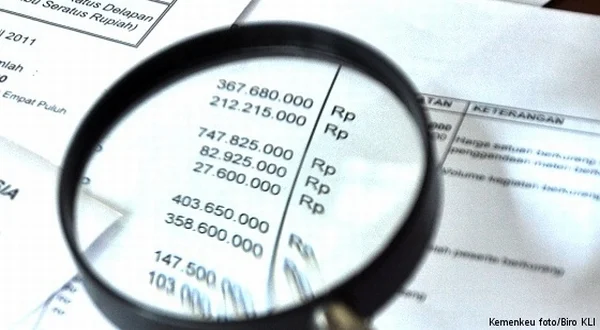
The Government of the Republic of Indonesia officially presented the Bill (RUU) concerning the Accountability for the Implementation of the 2013 State Budget (APBN) to the House of Representatives (DPR) during a plenary session at the Nusantara II Building in Jakarta on Tuesday, June 24, 2014. Minister of Finance Chatib Basri, representing the administration, provided a comprehensive overview of the fiscal year’s performance, acknowledging that the Audit Board of Indonesia (BPK) had issued a "Wajar Dengan Pengecualian" (WDP) or Qualified Opinion on the 2013 Central Government Financial Report (LKPP). This status indicates that while the financial statements are generally presented fairly, there are specific areas where the auditors could not obtain sufficient evidence or where accounting practices did not fully align with standards, preventing a "Wajar Tanpa Pengecualian" (WTP) or Unqualified Opinion.
Minister Basri detailed that the BPK’s decision to maintain a WDP status was rooted in several persistent accounting discrepancies. These primary issues included the management of over-lifting receivables in the oil and gas sector, receivables from the sale of oil and gas, the valuation of credit assets formerly managed by the Indonesian Bank Restructuring Agency (BPPN), and the administration of pension fund expenditures. These four pillars of contention have historically complicated the government’s efforts to achieve a clean audit, reflecting deep-seated structural challenges in state asset management and inter-departmental data reconciliation.
Identifying the Obstacles to a Clean Audit Opinion
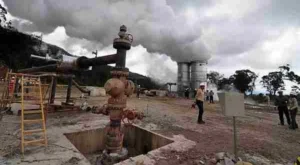
The BPK’s Qualified Opinion for the 2013 fiscal year highlights systemic issues within the Indonesian bureaucracy regarding asset tracking and revenue recognition. The first major hurdle mentioned by Minister Basri was the "over-lifting" of oil and gas. In the context of Production Sharing Contracts (PSCs), over-lifting occurs when a contractor or the state takes more than their stipulated share of production in a given period. This creates a receivable or a liability that must be reconciled. However, the complexity of these calculations and the lag in data reporting between the Ministry of Energy and Mineral Resources, SKK Migas, and the Ministry of Finance often result in discrepancies that auditors find difficult to verify.
Secondly, the credit assets inherited from the former Indonesian Bank Restructuring Agency (BPPN)—an entity established to handle the fallout of the 1997-1998 Asian Financial Crisis—continue to haunt the national balance sheet. Decades after the crisis, the valuation and legal status of these assets remain murky. The BPK has frequently noted that the documentation for these credit assets is incomplete or that the assets themselves have depreciated to a point where their recorded book value no longer reflects reality.
Furthermore, the accounting for pension funds for civil servants and military personnel presented a significant challenge in 2013. The government’s transition toward more transparent, accrual-based accounting requires a precise calculation of long-term liabilities. The BPK found that the data used to determine these obligations was often inconsistent, leading to "exceptions" in the audit report. Minister Basri emphasized that while these issues are significant, they represent a fraction of the total state budget, which is why the report received a "Qualified" rather than a "Disclaimer" or "Adverse" opinion.
The Global Macroeconomic Headwinds of 2013
The implementation of the 2013 APBN did not occur in a vacuum; it was shaped by one of the most volatile periods for emerging markets in the post-2008 era. Minister Basri explained that several external factors significantly impacted the government’s ability to meet its initial budgetary targets. The most prominent of these was the "Taper Tantrum" sparked by the United States Federal Reserve. In May 2013, then-Fed Chairman Ben Bernanke suggested that the central bank might begin scaling back its quantitative easing program.
This announcement triggered a massive capital flight from emerging economies back to the United States. Indonesia, as part of the "Fragile Five" (a term coined by Morgan Stanley to describe emerging markets overly dependent on foreign investment), saw its financial markets roiled. The resulting volatility led to a sharp depreciation of the Rupiah and a spike in bond yields, which in turn increased the cost of debt servicing for the state.
Simultaneously, Indonesia faced a slowdown in global demand and a decline in international commodity prices. As an export-oriented economy reliant on coal, palm oil, and minerals, the drop in prices directly impacted state revenues from non-tax sources and corporate income taxes. The combination of high import costs (exacerbated by a weak Rupiah) and lower export earnings put immense pressure on the Current Account Deficit (CAD), which reached a record level in mid-2013.
Domestic Policy Responses and Fiscal Adjustments
In response to these external pressures, the government was forced to take several "unpopular but necessary" steps to maintain fiscal sustainability. One of the most significant moves in 2013 was the adjustment of subsidized fuel prices. In June 2013, the government raised the price of Premium gasoline and solar diesel to curb the ballooning energy subsidies that were draining the state coffers and widening the budget deficit.
"The internal and external dynamics certainly had an impact on the changes in basic macroeconomic assumptions, which ultimately affected the implementation and achievement of the 2013 APBN targets," Minister Basri stated during the session. The fuel price hike was intended to provide more "fiscal space" for infrastructure development and social safety nets, although it also led to a temporary surge in inflation, which peaked at over 8% in the months following the policy change.
The government also implemented a "Stabilization Package" in August 2013, which included measures to simplify investment procedures, incentivize exports, and provide tax breaks for labor-intensive industries. These measures were designed to narrow the current account deficit and restore investor confidence, which had been shaken by the Fed’s policy shift.
Chronology of the 2013 Fiscal Year and Audit Process
The journey of the 2013 APBN began with its approval in late 2012, based on optimistic growth projections of 6.8%. However, by the first quarter of 2013, it became clear that the global environment was shifting. In June 2013, the government and the DPR agreed on the Revised State Budget (APBN-P 2013), which adjusted the growth target downward to 6.3% and accounted for the fuel subsidy changes.
Following the close of the fiscal year on December 31, 2013, the Ministry of Finance began the arduous process of consolidating financial reports from dozens of ministries and agencies. This consolidated report (LKPP) was submitted to the BPK in March 2014. Over the subsequent three months, BPK auditors conducted field inspections and data verification across various government branches.
The BPK’s final report, which was delivered to the DPR prior to the June 24 plenary session, concluded that the government had managed to keep the budget deficit within the legal limit of 3% of GDP, despite the volatility. However, the recurring issues with oil and gas receivables and legacy assets prevented the attainment of the coveted WTP status.
Reactions from the Legislative Branch and Financial Experts
The presentation of the RUU was met with a mixture of praise for the government’s macroeconomic management and criticism regarding its accounting failures. Members of the DPR’s Budget Committee (Banggar) noted that while the government successfully navigated the "Taper Tantrum," the persistence of the WDP status suggests a lack of seriousness in fixing the bureaucracy’s administrative "leaks."
Opposition members in the DPR pointed out that the WDP status has been a recurring theme for the administration, arguing that the "exceptions" noted by the BPK represent billions of Rupiah in potential state losses or uncollected revenue. Financial analysts have also weighed in, suggesting that while the WDP status does not necessarily indicate corruption, it does signal "governance inefficiency" that could affect Indonesia’s sovereign credit rating in the long term.
"Achieving WTP is not just about the numbers; it is about the integrity of the system," noted a senior economist from a Jakarta-based think tank. "The fact that over-lifting and BPPN assets are still listed as problems in 2014, for the 2013 budget, shows that the government needs to accelerate its institutional reforms."
Implications and the Path Toward Fiscal Transparency
The 2013 APBN accountability report serves as a critical document for the transition of power. With the 2014 presidential election approaching shortly after this session, the Basri-led Ministry of Finance aimed to leave a legacy of fiscal resilience. The government’s ability to maintain a budget deficit of approximately 2.3% of GDP in the face of global turmoil was seen as a sign of prudent management.
However, the "Qualified" audit opinion serves as a reminder of the work that remains. For future administrations, the priority will be to digitize asset management and harmonize the accounting standards between the central government and local governments. The Ministry of Finance has already begun implementing the Accrual-Based Accounting System, which is expected to provide a more accurate picture of the government’s financial health by recording transactions when they occur, rather than when cash changes hands.
The 2013 fiscal year will be remembered as a year of "stress-testing" for Indonesia. The government successfully avoided a full-blown financial crisis during the Taper Tantrum, but the BPK’s audit highlights that the "back-office" of the Indonesian state—its accounting and asset management—requires as much attention as its "front-office" macroeconomic policies. As Indonesia strives to become a top-ten global economy, the transition from WDP to WTP will be a key benchmark of its maturity and readiness for increased international investment.
In his closing remarks at the DPR, Minister Chatib Basri reaffirmed the government’s commitment to addressing the BPK’s findings. He emphasized that the administration would continue to refine its data reconciliation processes, particularly in the extractive industries, to ensure that the 2014 financial report could finally bridge the gap toward an Unqualified Opinion. The RUU on the 2013 APBN Accountability will now undergo further deliberation in the DPR commissions before being passed into law, marking the formal conclusion of a turbulent but transformative fiscal year.