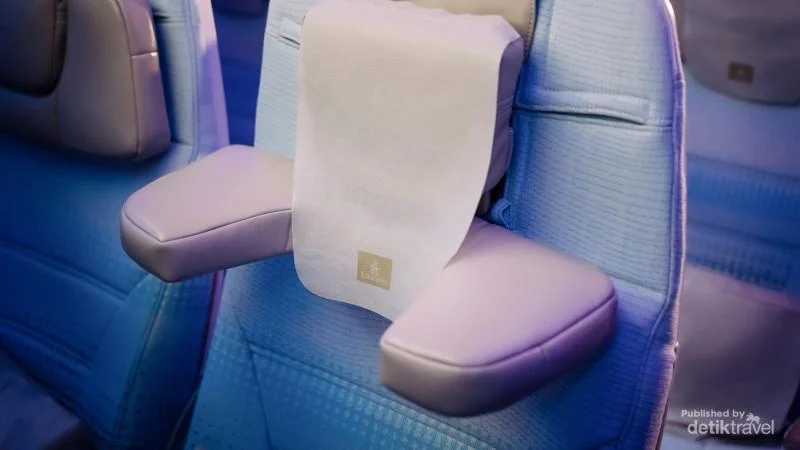
Emirates, the Dubai-based international carrier, has officially unveiled its latest cabin innovation, the U-Dream Headrest, marking a significant leap forward in passenger comfort for the economy class segment. As the aviation industry continues to recover and expand in the post-pandemic era, the competition for passenger loyalty has shifted from mere connectivity to the quality of the onboard experience. Emirates’ introduction of this world-first headrest technology is positioned as a cornerstone of its multi-billion dollar investment strategy aimed at elevating the standards of long-haul travel. Designed specifically to address the perennial challenges of sleeping in a seated position, the U-Dream Headrest is engineered to provide unprecedented neck and head support, effectively eliminating the need for traditional travel pillows.
A New Benchmark in Ergonomic Design and Passenger Comfort
The U-Dream Headrest is not merely a cushioned addition to the seat; it is a sophisticated piece of ergonomic engineering. Unlike conventional headrests that offer limited lateral support, the U-Dream features a unique architecture characterized by two flexible, foldable "wings." These wings can be adjusted inward by the passenger to cradle the head, preventing it from tilting forward or sliding sideways during sleep. This structural support is critical for long-haul flights, where passengers often spend ten or more hours in a confined space.
Beyond the lateral support, the headrest offers a high degree of vertical and angular flexibility. It can be moved up and down to accommodate passengers of varying heights and can be tilted to align with the specific spinal posture of the individual. This level of customization ensures that whether a passenger is reading, watching a movie on the Ice inflight entertainment system, or attempting to sleep, the headrest provides optimal cervical alignment. The design has undergone rigorous testing and has successfully secured certification from the European Union Aviation Safety Agency (EASA), ensuring that the innovation meets the highest global safety standards for aircraft components.
Strategic Rollout and Fleet Integration Timeline
The integration of the U-Dream Headrest into the Emirates fleet follows a meticulously planned chronology, reflecting the airline’s massive operational scale. The rollout began with the newly delivered Airbus A350 aircraft. Currently, three A350s in the Emirates fleet are already equipped with the technology, providing a real-world testing ground for passenger feedback. Emirates management has confirmed that the entire A350 fleet is scheduled to receive the U-Dream feature before the end of 2026.
Looking toward the future of the fleet, the U-Dream Headrest will be a standard feature on all 270 Boeing 777X aircraft that Emirates has on order. These aircraft, which represent the next generation of wide-body efficiency, will arrive from the factory with the headrests pre-installed. For the existing fleet, Emirates is embarking on one of the most ambitious retrofit programs in aviation history. Starting in 2027, the airline will begin installing the U-Dream Headrests on its iconic Airbus A380 and current Boeing 777 models as they undergo scheduled cabin refurbishments. This ensures that the "Emirates Experience" remains consistent across both new and legacy aircraft.
Official Responses and the Vision of Sir Tim Clark
Sir Tim Clark, the President of Emirates Airline, has been a vocal proponent of enhancing the economy class experience, arguing that the majority of the airline’s passengers deserve premium-level comfort even if they are not flying in First or Business Class. In a statement regarding the launch, Clark emphasized that Emirates’ philosophy is rooted in continuous innovation.
"Emirates never stops innovating to deliver the best possible experience for our customers," Clark stated. "With the U-Dream, we have found a way to significantly improve comfort for our economy passengers, particularly those on our longest flights. It is a game-changer for inflight sleep because it provides full neck support, making the traditional neck pillow obsolete. This is a testament to our commitment to our customers and reinforces our position as the airline with the best economy class in the world."
The airline has also invested in human capital to support this technological rollout. Cabin crew members have undergone specialized training modules to understand the mechanics of the U-Dream Headrest. This allows them to assist passengers—especially the elderly or those with mobility issues—in finding the perfect ergonomic setting for their journey. Early feedback from passengers has been overwhelmingly positive, with many noting the ease of use and the high-quality feel of the antimicrobial leather materials used in the construction.
The Economic and Competitive Implications
The introduction of the U-Dream Headrest comes at a time when the "Economy Plus" or "Premium Economy" sectors are seeing record growth. By upgrading the standard Economy experience, Emirates is effectively narrowing the gap between its entry-level seats and the premium cabins of its competitors. This move is a strategic play to capture a larger share of the price-sensitive but comfort-conscious traveler market.
From a maintenance and operational perspective, the U-Dream Headrest has been designed for longevity and hygiene. The outer material is a high-grade leather that is resistant to wear and tear, and more importantly, is easy to sanitize. Following the global health crisis, airlines have prioritized materials that can be quickly and effectively cleaned between flights. Emirates’ commitment to sanitizing each headrest after every flight serves as an additional layer of reassurance for passengers.
Furthermore, the decision to install these headrests across the entire wide-body fleet—which features wider aisles and larger overhead bins—strengthens Emirates’ brand identity as a carrier that does not compromise on space. While many airlines are moving toward "slimline" seats to pack more passengers into a cabin, Emirates is leveraging ergonomic features like the U-Dream to prove that density does not have to come at the expense of well-being.
Broader Impact on the Aviation Industry
The aviation industry is currently witnessing a "comfort war" among the big three Middle Eastern carriers (Emirates, Qatar Airways, and Etihad) and their East Asian rivals like Singapore Airlines and ANA. Innovations like the U-Dream Headrest set a new baseline for what passengers expect from a full-service carrier. When one major player introduces a feature that significantly improves the "sleepability" of a seat, competitors are often forced to follow suit or risk losing market share on lucrative long-haul routes.
Analysts suggest that the U-Dream Headrest could also have secondary benefits for the airline, such as reducing the weight of the cabin by encouraging passengers to leave their personal travel pillows at home. While the weight of a single pillow is negligible, the cumulative weight and volume of hundreds of pillows can impact cabin clutter and turn-around times. By providing a superior built-in solution, Emirates streamlines the passenger experience from boarding to deplaning.
Future Outlook: 2027 and Beyond
As Emirates moves toward the 2027 milestone for its wide-scale retrofit program, the industry will be watching closely to see how this innovation affects passenger retention. The airline’s investment in the U-Dream Headrest is part of a larger $2 billion cabin enhancement program that includes upgraded inflight entertainment, improved catering, and more sustainable cabin materials.
In the long term, the U-Dream Headrest may be seen as the first step in a broader movement toward "intelligent seating" in economy class. As sensor technology and smart materials become more affordable, the possibility of headrests that automatically adjust to a passenger’s movements or temperature-controlled cushions is no longer within the realm of science fiction. For now, Emirates has successfully addressed one of the most common complaints of air travel with a mechanical solution that is both elegant and effective.
In conclusion, the launch of the U-Dream Headrest is a clear signal that Emirates intends to maintain its leadership position in the global aviation market. By focusing on the fundamental human need for rest and comfort, the airline is not just selling a seat from point A to point B; it is selling a superior physiological experience. As the rollout continues across the Airbus A350, Boeing 777X, and the retrofitted A380s, the U-Dream is set to become a signature feature of the Emirates brand, redefining the possibilities of economy class travel for millions of passengers worldwide.