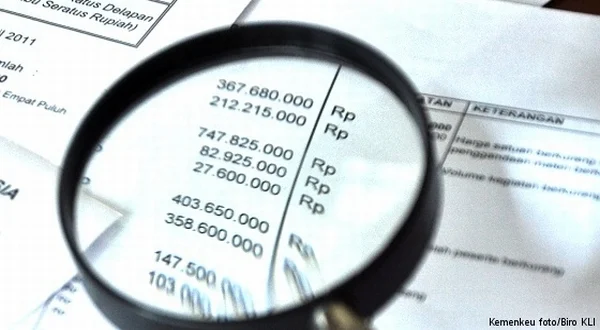
JAKARTA — The Indonesian government officially presented the Draft Law on the Accountability for the Execution of the 2013 State Budget (RUU APBN) to the plenary session of the House of Representatives (DPR RI) in Jakarta. The high-stakes legislative proceeding brought fiscal transparency and accountability to the forefront of national discourse, as financial authorities addressed the complexities of managing public funds during a tumultuous economic period.
During the session held at Nusantara II Building, Senayan, then-Minister of Finance Muhammad Chatib Basri delivered the government’s official fiscal report. The presentation shed light on the performance of public finances, the external and internal shocks that tested the nation’s economic resilience, and the underlying reasons behind the qualified audit opinion issued by the country’s supreme audit institution.
The submission of the accountability bill marks a critical constitutional requirement, allowing parliamentarians to evaluate how public revenues were collected and how state expenditures were allocated throughout the 2013 fiscal year. However, the scrutiny was immediately focused on the audit results delivered by the Audit Board of the Republic of Indonesia (BPK), which assigned a Qualified Opinion—locally known as Wajar Dengan Pengecualian (WDP)—to the Central Government Financial Report (LKPP) for that fiscal year.
Unpacking the BPK Audit Opinion: Understanding the WDP Status
The Wajar Dengan Pengecualian (WDP) designation indicates that while the financial statements are presented fairly in all material respects, certain specific items failed to comply fully with government accounting standards or lacked adequate documentation and resolution mechanisms. For the 2013 fiscal year, the BPK highlighted four major lingering accounting bottlenecks that prevented the government from securing an unqualified opinion, known as Wajar Tanpa Pengecualian (WTP).
Addressing the parliament, Minister Chatib Basri explicitly detailed these contentious areas. The exceptions cited by the BPK centered around complexities involving over-lifting receivables, oil and gas sales receivables, legacy credit assets originating from the Indonesian Bank Restructuring Agency (BPPN), and the administration of pension expenditure funds.
Over-lifting receivables relate to discrepancies in oil and gas production sharing contracts where contractors extract more than their allocated quota, creating complex financial obligations that require meticulous reconciliation between state coffers and energy corporations. Similarly, outstanding oil and gas sales receivables have historically posed tracking challenges due to fluctuating commodity markets and delayed payment settlements.
Furthermore, the inclusion of legacy credit assets from the BPPN era—dating back to the profound 1997–1998 Asian financial crisis—demonstrates the long-tail nature of asset recovery in Indonesia’s public sector balance sheets. These assets, often tied up in protracted legal battles, restructuring processes, or uncollectible loans, continue to complicate modern fiscal reporting. Finally, accounting treatments and actuarial evaluations concerning employee pension benefit funds added another layer of complexity, prompting the BPK to apply professional reservations to the 2013 LKPP.
Despite these qualifications, financial experts note that a WDP status represents a standard tier of audit outcome that highlights specific administrative and structural bookkeeping hurdles rather than systemic financial corruption or misappropriation of state funds.
Macroeconomic Headwinds: Navigating External and Internal Pressures
The execution of the 2013 State Budget did not occur in a vacuum. Throughout the year, the Indonesian economy faced a confluence of severe external shocks and internal structural imbalances that profoundly altered macroeconomic assumptions and complicated fiscal management.
From an external perspective, the global economic landscape was characterized by a distinct slowdown. International commodity prices experienced downward corrections, directly impacting Indonesia’s resource-dependent export revenues. More critically, the global financial markets were rattled by the United States Federal Reserve’s signaling of a potential tapering of its quantitative easing program—widely known in financial circles as the "tapering off" issue. This announcement triggered massive capital outflows from emerging markets, including Indonesia, tightening domestic liquidity and driving up borrowing costs.
Internally, these global pressures manifested as significant strains on Indonesia’s macroeconomic fundamentals. The most pressing domestic vulnerability was the widening current account deficit. As export earnings contracted due to falling commodity prices while import demand remained robust—driven by domestic consumption and infrastructure development—the current account came under intense downward pressure.
Inevitably, these twin deficits and capital reversals exacted a heavy toll on the national currency. The Indonesian Rupiah suffered notable depreciation against the US Dollar throughout 2013, creating imported inflation pressures and increasing the cost of servicing foreign-denominated sovereign debt.
"The dynamics of both internal and external factors naturally exerted a direct impact on changes to our basic macroeconomic assumptions, which ultimately influenced the execution and achievement of the 2013 State Budget targets," Chatib Basri explained during his address to the legislature.
Government Policy Response and Stabilization Measures
Faced with mounting macroeconomic volatility, the government and Bank Indonesia implemented a series of rigorous stabilization policies designed to restore market confidence, defend the Rupiah, and rebalance the economy.
Among the primary fiscal interventions was the controversial yet necessary adjustment of subsidized fuel prices. In June 2013, the government raised the prices of subsidized gasoline and diesel—a policy move aimed at reining in the ballooning fiscal deficit caused by high global crude oil prices and heavily subsidized domestic consumption. This fiscal adjustment freed up critical fiscal space, reducing the burden on the state budget and signaling to international markets the government’s commitment to fiscal prudence.
Simultaneously, financial authorities rolled out monetary tightening measures. Bank Indonesia aggressively raised its benchmark interest rate to curb inflationary pressures and stabilize the foreign exchange market. Regulatory frameworks were also deployed to strengthen the current account balance by curbing non-essential imports and encouraging domestic value-addition in the mining sector through raw material export bans.
These sweeping policy adjustments, though painful in the short term and growth-moderating, successfully prevented a broader macroeconomic crisis. They ensured that despite missed targets in specific revenue and expenditure lines, the overall structural integrity of the state budget remained intact.
The Parliamentary Debate and Legislative Oversight
The presentation of the RUU APBN 2013 kicked off a rigorous series of debates within the halls of the DPR RI. Lawmakers from various political factions scrutinized the executive branch’s execution of the budget, focusing heavily on budget absorption rates, regional fund transfers, and the recurring accounting notes flagged by the BPK.
Opposition and ruling coalition members alike used the plenary session to demand greater transparency and structural reforms in state-owned enterprises (SOEs) and ministries responsible for managing natural resource revenues. The debate underscored the vital constitutional role of the legislature as a check on executive power, ensuring that public funds are accounted for down to the last rupiah.
While acknowledging the external hardships cited by the Ministry of Finance, parliamentarians pressed the government for actionable timelines to resolve the long-standing bookkeeping exceptions—particularly regarding BPPN asset recoveries and oil and gas receivables. Representatives emphasized that repeated qualification issues in the national financial reports could undermine investor confidence in Indonesia’s public financial management systems.
Broader Implications for Indonesia’s Fiscal Governance
The 2013 budget accountability process serves as a historical case study in the evolution of Indonesia’s public financial management. It highlights the delicate balance developing economies must strike between ambitious growth agendas and prudent fiscal buffers in the face of global financial volatility.
The lessons learned from the 2013 fiscal year catalyzed subsequent administrative reforms. In the years following, the Ministry of Finance intensified its efforts to clean up legacy assets, improve inter-agency data reconciliation for natural resource revenues, and upgrade government accounting software to comply fully with accrual-based accounting standards introduced later in the decade.
Furthermore, the management of the 2013 economic turbulence demonstrated the resilience of Indonesia’s policy framework. By taking politically difficult steps—such as fuel subsidy reform and monetary tightening—the government laid the groundwork for macroeconomic stabilization that would safeguard future fiscal years.
As the plenary session concluded, the RUU APBN 2013 advanced to subsequent stages of legislative committee review, bringing the executive branch one step closer to securing formal legal closure for its financial stewardship during a defining year in modern Indonesian economic history.