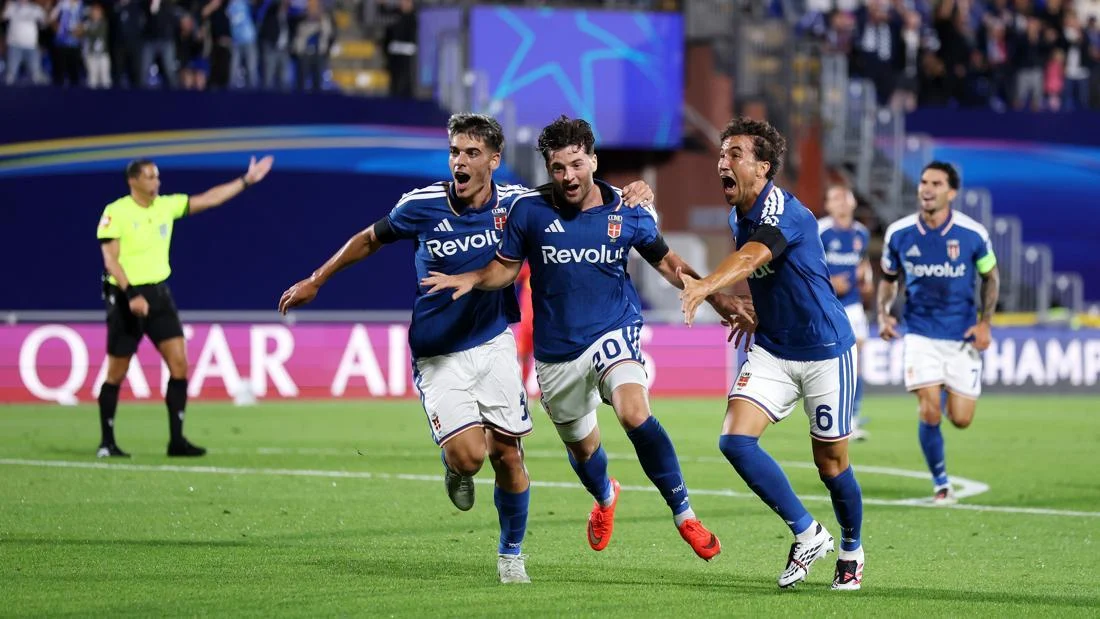
The landscape of European football has witnessed a remarkable shift this season, anchored by the unexpected but highly impressive ascent of Como 1907 on the continental stage. Following a resounding 4-1 victory over RB Leipzig in their UEFA Champions League debut, the Italian side has captured the attention of the continent’s elite, including Barcelona head coach Hansi Flick. The German tactician, currently steering a revamped Barcelona project, openly acknowledged the tactical sophistication displayed by Cesc Fabregas’s squad, signaling that the modest Serie A club has officially transitioned from a romantic project to a legitimate European contender.
A Tactical Masterclass in the Champions League
The 4-1 dismantling of RB Leipzig—a side consistently lauded for its high-pressing intensity and structural discipline—served as a coming-out party for Como 1907. Under the guidance of Cesc Fabregas, who transitioned from a legendary playing career to the dugout with seamless ambition, the team demonstrated a brand of football that balances traditional Italian defensive resilience with a modern, fluid possession-based approach.
For many observers, the result was not merely a matter of luck but the culmination of a clear tactical identity. Como dominated the midfield transitions, effectively neutralizing Leipzig’s primary creative outlets. The victory has sent ripples through the Champions League rankings, forcing established giants to re-evaluate their perception of the tournament’s newcomers.
Hansi Flick, whose own Barcelona side is currently navigating the complexities of the new Champions League league phase, did not hesitate to voice his professional admiration. Speaking to international media, Flick noted, "I am genuinely impressed by what Cesc Fabregas has built at Como. I watched their match against Leipzig, and the level of cohesion they displayed against such a high-caliber opponent was remarkable. They play with a level of maturity that is rare for a team at this stage of their development."
The Fabregas Connection: From La Masia to the Dugout
The narrative surrounding this encounter is heightened by the deep-seated history between the two clubs. Cesc Fabregas is not merely a peer to the coaching elite; he is a product of Barcelona’s fabled La Masia academy. His formative years in Catalonia and his subsequent return to the Camp Nou as a star midfielder provide a sentimental backdrop to what will be a highly anticipated clash between the two sides on January 28, 2027.
Fabregas’s transition into coaching has been widely scrutinized, but his rapid progression—moving from a player-coach role to taking the reins at Como—has proven successful. His philosophy, deeply rooted in the positional play (Juego de Posición) that defined the golden era of Barcelona, has clearly been instilled in his current squad. For Flick, who favors a high-intensity pressing game, the tactical chess match against a disciple of the "Barca way" presents a compelling narrative for the upcoming fixture.
Chronology of the Rise of Como 1907
The rise of Como is a story of strategic investment and patient development. The club’s trajectory can be traced through several pivotal moments:
- 2019-2021: The club begins its ascent from the lower tiers of Italian football, prioritizing infrastructure development and scouting networks under new ownership.
- 2022: Cesc Fabregas joins the club as a player, bringing a wealth of experience and attracting high-profile talent to the project.
- 2023: Fabregas assumes the head coaching role, focusing on technical development and tactical flexibility.
- 2024: The club secures promotion to Serie A, ending a long hiatus from the top flight of Italian football.
- Late 2024/Early 2025: Como successfully integrates international talent with local Italian prospects, solidifying their status in the top tier.
- 2026/2027 Season: The historic qualification for the UEFA Champions League, followed by the decisive 4-1 opening victory against RB Leipzig.
Analyzing the Impact: Why Como Matters
The significance of Como’s performance extends beyond the scoreline. In an era where the Champions League is increasingly dominated by clubs with massive commercial revenues, Como represents the "challenger" archetype. Their success challenges the prevailing notion that tactical sophistication is the sole preserve of established, wealthy organizations.
From a statistical standpoint, Como’s victory over Leipzig showcased an efficient conversion rate. While Leipzig held significant possession, Como’s ability to transition quickly and exploit the half-spaces behind the German side’s defense proved to be the difference-maker. This verticality, combined with a disciplined defensive shape, is a hallmark of Fabregas’s coaching style.
Industry experts have noted that Como’s model relies on a blend of high-potential youth and experienced veterans who understand Fabregas’s system implicitly. This has allowed the team to remain competitive despite a relatively smaller budget compared to the giants they face in Europe.
Official Responses and Future Preparations
Despite the mounting praise from figures like Hansi Flick, the atmosphere within the Barcelona camp remains one of professional focus. Flick has been careful to manage expectations and maintain the club’s institutional composure. When pressed on the specific tactical preparations for the January match, the German coach emphasized the importance of the present.
"We are currently focused on the immediate future," Flick stated. "In the Champions League, every match requires 100 percent of your attention. We do not look too far ahead because the calendar is grueling, and the competition is incredibly long. We will evaluate Como when the time comes, but for now, our priority is the next opponent on our schedule."
This measured approach is indicative of the pressure on Barcelona to reclaim their status as the kings of Europe. For Flick, the game against Como is not just a reunion with an old friend’s team; it is a vital step in a long campaign where every point earned is essential for seeding in the knockout stages.
The Broader Implications for European Football
The success of Como 1907 provides a case study for mid-sized European clubs looking to disrupt the status quo. By focusing on a clear, recognizable identity and investing in coaching talent that aligns with a long-term vision, clubs can punch above their weight.
Furthermore, the influence of the "Spanish school" of coaching continues to dominate the tactical discourse in Europe. With Pep Guardiola, Mikel Arteta, and now Cesc Fabregas shaping the tactical landscape, the evolution of the game remains firmly rooted in technical proficiency, spatial awareness, and high-frequency movement.
As the season progresses, all eyes will be on how Fabregas adapts his tactics against the heavy hitters of the continent. The match against Barcelona in January 2027 serves as a benchmark for both clubs. For Barcelona, it is a test of their dominance; for Como, it is an opportunity to prove that their victory against Leipzig was not a one-off anomaly, but a sign of a new, permanent force in European football.
Conclusion
The praise from Hansi Flick serves as a validation of the work being done at Como 1907. It highlights a mutual respect between the established elite and the rising challenger. While the footballing world waits for the January showdown, the current state of affairs serves as a reminder that the Champions League remains the ultimate stage for tactical innovation.
Whether or not Como can maintain this momentum throughout the grueling league phase remains to be seen. However, their early success has injected a fresh narrative into the tournament, providing a compelling subplot to an already dramatic season. As for Hansi Flick and Barcelona, the challenge is clear: respect the newcomer, but remain steadfast in the pursuit of their own European ambitions. The road to the final is long, and as Flick noted, every game must be treated with the gravity it deserves. The encounter in late January will undoubtedly be a defining moment for both the master and the rising pupil.