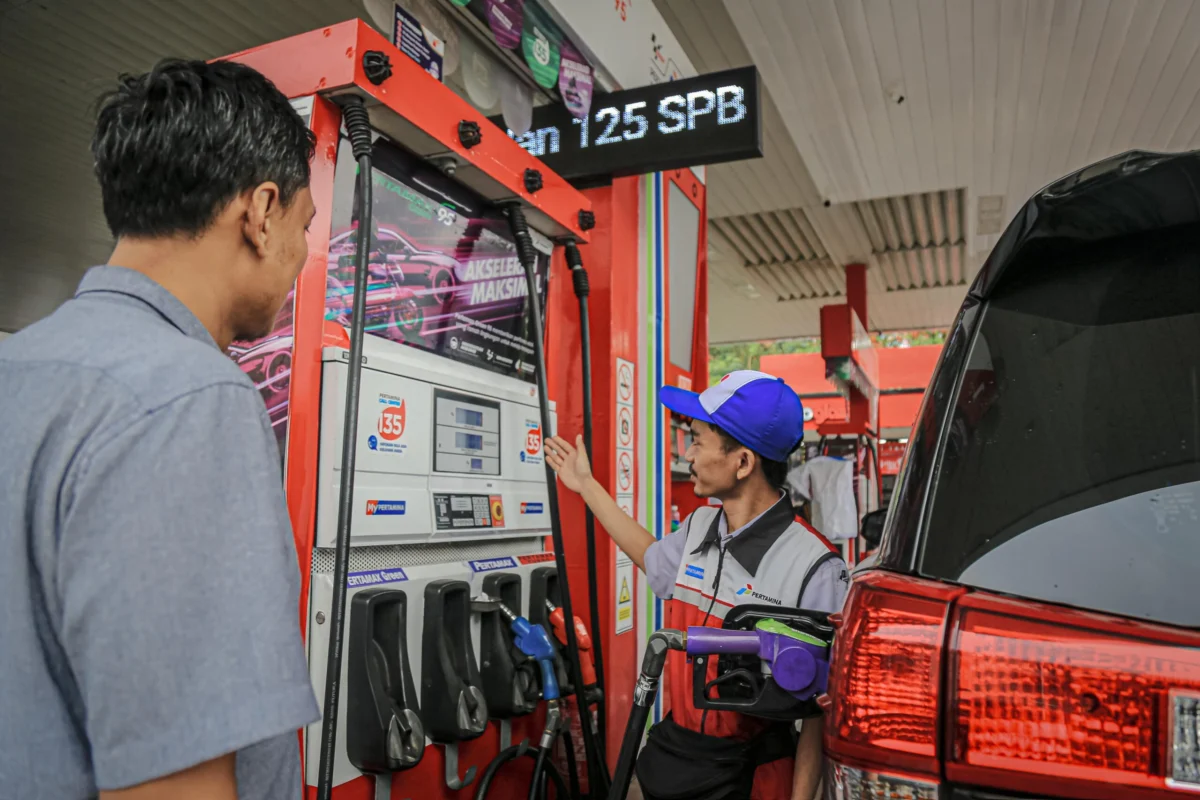
The landscape of fuel retail in Indonesia underwent a significant shift this September as major market players, including the state-owned enterprise Pertamina and private entities such as Shell, Vivo, and BP, implemented upward price adjustments for various non-subsidized fuel products. Effective September 15, 2026, motorists across the nation are navigating a revised pricing structure that reflects global crude oil volatility and the ongoing recalibration of domestic energy costs. While the government maintains price stability for subsidized fuel, the non-subsidized segment—which is more sensitive to international market fluctuations—has seen substantial price hikes across the board.
Chronology of the September Price Adjustments
The adjustments began in early September, signaling a trend of rising energy costs that caught many consumers and industry observers by surprise. On September 1, 2026, Pertamina Patra Niaga initiated the first wave of price revisions, targeting premium products such as Pertamax Turbo, Dexlite, and Pertamina Dex. The following day, on September 2, 2026, the company extended these revisions to include the bio-ethanol-blended product, Pertamax Green 95.
Parallel to the state-owned energy giant’s move, private sector retailers—namely Shell Indonesia, BP-AKR, and Vivo Energy Indonesia—executed their own price adjustments within the same timeframe. These private fuel retailers typically adjust their prices based on the Mean of Platts Singapore (MOPS) and other regional market indicators, which had shown signs of upward pressure throughout late August. By mid-September, these adjustments were fully integrated into the daily operations of thousands of filling stations across major urban centers, particularly in the Greater Jakarta area.
Detailed Breakdown of Pertamina’s Pricing Strategy
Pertamina, as the primary provider of fuel for the majority of the Indonesian populace, has adopted a nuanced approach to the current market environment. The company has distinguished between its high-octane non-subsidized products and those essential to the broader public economy.
For the high-performance segment, the price increases are notable. Pertamax Turbo saw its price climb from Rp18,300 to Rp19,600 per liter. The most significant percentage increases were observed in the diesel segment, with Dexlite surging from Rp19,700 to Rp23,700 per liter, and Pertamina Dex rising from Rp21,150 to Rp25,200 per liter. Furthermore, Pertamax Green 95, a product emphasizing cleaner combustion, experienced an increase of Rp2,550, settling at a new price point of Rp19,150 per liter.
Crucially, Pertamina has made a strategic decision to maintain the price of Pertamax (RON 92) at Rp15,950 per liter. This decision is widely interpreted by analysts as a move to prevent excessive inflationary pressure on the middle-class consumer base. Simultaneously, the government’s commitment to social welfare remains evident in the pricing of subsidized fuels: Pertalite (RON 90) remains fixed at Rp10,000 per liter, and Biosolar remains at Rp6,800 per liter. These subsidies act as a vital buffer, shielding lower-income demographics from the volatility of global oil markets.
The Response from Private Fuel Retailers
Private retailers have aligned their pricing closely with market trends, often mirroring or slightly exceeding the movements seen at state-run stations due to their reliance on imported refined products.
Shell Indonesia’s adjustment was particularly focused on its premium diesel offerings. The price of Shell V-Power Diesel rose sharply to Rp25,420 per liter, up from its previous level of Rp21,910. This adjustment mirrors the broader regional trend where diesel margins have tightened in response to increased industrial demand.
BP-AKR, a joint venture between BP and AKR Corporindo, mirrored the market movement. Their BP Ultimate offering, often viewed as a direct competitor to high-end products like Pertamax Turbo, rose to Rp19,330 per liter. Similarly, their diesel variant, BP Ultimate Diesel, saw its price hiked to match the market standard of Rp25,420 per liter. Notably, BP maintained its BP 92 gasoline at Rp16,130 per liter, showing a competitive stance compared to other market participants.
Vivo Energy Indonesia, known for its agile pricing, also adjusted its Revvo 95 to Rp19,330 per liter, while its Revvo 92 remained at Rp16,130. Their diesel product, Primus Plus, followed the sector trend, rising to Rp25,420 per liter.
Broader Economic Context and Market Drivers
The current fuel price hike is not an isolated event but a byproduct of a complex interplay of macroeconomic factors. The primary driver remains the global price of crude oil, which has been influenced by geopolitical tensions in energy-producing regions and production caps maintained by major global cartels.
When international crude prices rise, the cost of refining and importing fuel increases for Indonesian companies. Because the Indonesian Rupiah has faced pressure against the US Dollar in recent months, the import bill for fuel has effectively become more expensive. For private retailers, who operate on a purely commercial basis, passing these costs onto the consumer is a necessity to maintain operational viability. For Pertamina, the state-mandated role of ensuring national energy security means they must balance commercial sustainability with social responsibility, explaining why subsidized fuels remain untouched while premium variants absorb the cost hikes.
Implications for Consumers and Industries
The immediate impact of these price adjustments is felt most acutely by vehicle owners who rely on high-performance fuel for their daily commute or commercial logistics. The sharp increase in diesel prices (Dexlite, Pertamina Dex, and others) is particularly concerning for the logistics and trucking industries. While these sectors often use subsidized Biosolar, any shift toward higher-spec fuels for cleaner, more efficient engines will now come at a significantly higher cost, potentially impacting the supply chain and the final retail price of consumer goods.
Furthermore, the price gap between subsidized fuels and high-octane alternatives has widened. Economic analysts suggest that this may trigger a "fuel migration" phenomenon, where motorists who previously used higher-grade fuels might switch to subsidized alternatives like Pertalite to save on household expenses. This behavior, if widespread, could increase the fiscal burden on the state budget, as the government must compensate Pertamina for the gap between the subsidized price and the market price.
Future Outlook and Policy Responses
Looking ahead, market participants expect a period of stabilization, provided that global crude prices do not experience further shocks. The Indonesian government has signaled its intent to monitor the situation closely, particularly regarding the impact of these hikes on national inflation rates.
In official responses, spokespersons for the Ministry of Energy and Mineral Resources have reiterated that the adjustment of non-subsidized fuel prices is an ongoing business process determined by market mechanisms. They have also emphasized that the stability of subsidized fuel prices is a key priority for the current administration to ensure economic stability for the general public.
As the industry moves through the final quarter of 2026, the focus will shift toward efficiency. Consumers are increasingly turning to fuel-efficient vehicles and optimizing their travel patterns in response to these costs. Meanwhile, retailers are expected to continue evaluating their price structures on a monthly basis, depending on the performance of the Rupiah and the trajectory of global energy prices.
In conclusion, the events of September 15 serve as a reminder of Indonesia’s integration into the global energy market. The duality of the Indonesian fuel market—divided between protected, subsidized products and market-priced, premium offerings—continues to serve as a critical mechanism for managing the economic impact of global energy fluctuations on the nation’s citizens. As prices remain elevated, the collective attention of the market will remain fixed on the sustainability of these levels and the potential for future policy interventions to further stabilize the domestic fuel landscape.