
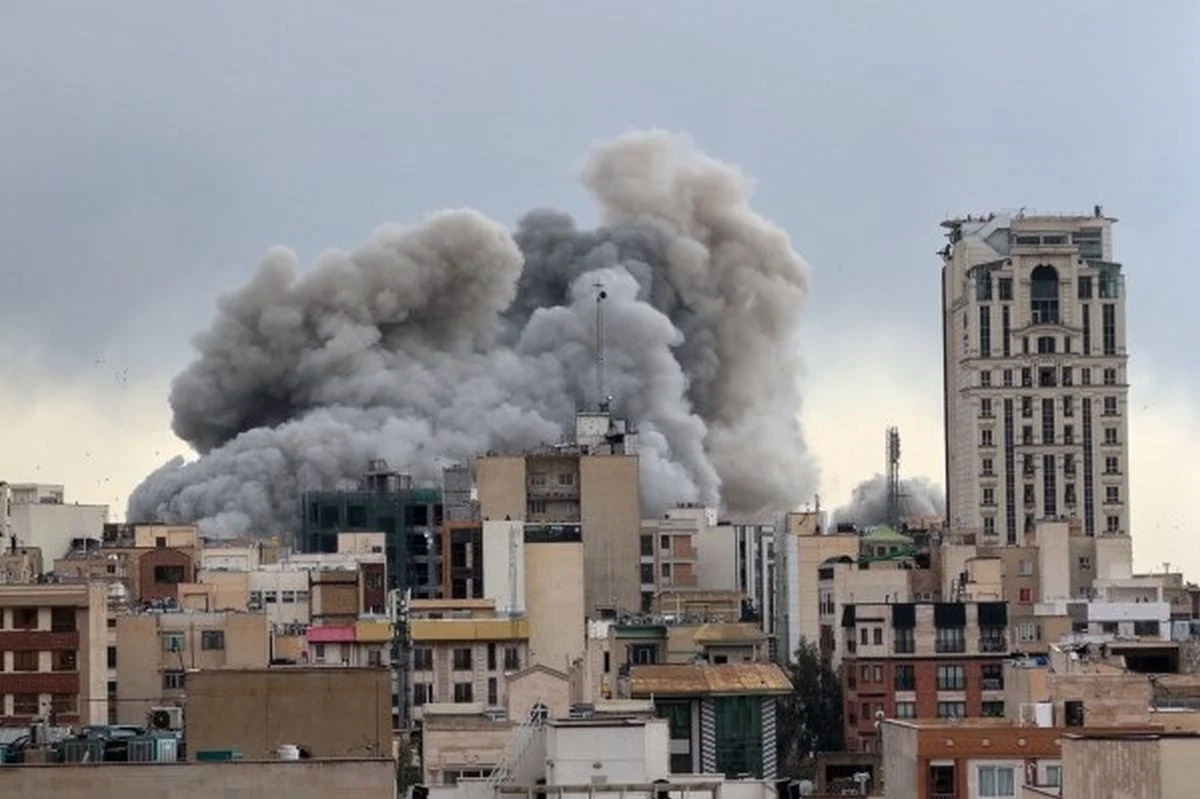
Tehran has formally demanded compensation from five Arab nations in the Persian Gulf region, accusing them of facilitating "illegal armed attacks" by the United States and Israel against Iranian civilian targets and infrastructure. The unprecedented claim, lodged through a letter to United Nations Secretary-General Antonio Guterres on Monday, April 13, 2026, marks a significant escalation in regional tensions and introduces a complex new dimension to international law concerning state responsibility and complicity in military actions.
The demand, articulated by Iran’s Permanent Representative to the UN, Amir Saeid Iravani, specifically targets Saudi Arabia, Bahrain, Qatar, the United Arab Emirates (UAE), and Jordan. While the exact monetary value of the compensation sought was not detailed in the official communication, Iravani asserted that these nations bear full responsibility for "all material and moral damages" resulting from actions deemed to violate international law. He explicitly accused them of allowing their sovereign territories to be utilized as launchpads for strikes against Iran and, in some instances, allegedly engaging directly in these operations. This accusation, reported by Anadolu on Wednesday, April 15, 2026, casts a harsh spotlight on the intricate web of alliances and rivalries that define the Middle East’s volatile geopolitical landscape.
The Genesis of a Grievance: A Region on Edge
Iran’s demand is rooted in decades of simmering animosity and a perceived campaign of destabilization orchestrated by its adversaries. The Islamic Republic has long accused the United States and Israel of engaging in covert operations, cyberattacks, and targeted assassinations on its soil, alongside military strikes aimed at disrupting its nuclear program, missile development, and regional influence. The notion that these operations have been facilitated by neighboring Arab states, particularly those hosting significant American military installations, has been a recurring theme in Iranian rhetoric.
The relationship between Iran and the United States has been fraught since the 1979 Islamic Revolution, characterized by periods of intense confrontation and proxy conflicts across the Middle East. The withdrawal of the U.S. from the Joint Comprehensive Plan of Action (JCPOA), or the Iran nuclear deal, in 2018, and the subsequent re-imposition of crippling sanctions by the Trump administration, significantly ratcheted up tensions. This "maximum pressure" campaign was met with Iranian defiance and, at times, retaliatory actions, including attacks on oil tankers in the Gulf and drone incidents.
Similarly, the shadow war between Iran and Israel has intensified dramatically over the past decade. Israel views Iran’s nuclear ambitions and its support for regional proxy groups like Hezbollah in Lebanon and various militias in Syria and Iraq as existential threats. Consequently, Israel has conducted numerous airstrikes in Syria, targeting Iranian-linked assets and weapon shipments, and has been widely suspected of carrying out cyberattacks and sabotage operations within Iran itself, including at sensitive nuclear facilities.
The Role of Gulf Arab States: A Strategic Nexus
The five Arab nations named in Iran’s complaint — Saudi Arabia, Bahrain, Qatar, the UAE, and Jordan — all maintain varying degrees of security cooperation with the United States. Many host significant U.S. military assets and personnel, which are crucial for projecting American power and maintaining regional stability, particularly concerning maritime security in the Persian Gulf and counter-terrorism operations.
- Bahrain is home to the U.S. Naval Forces Central Command (NAVCENT) and the U.S. Fifth Fleet, a critical maritime presence responsible for safeguarding waterways vital to global energy supplies.
- Qatar hosts Al Udeid Air Base, the largest U.S. military installation in the Middle East, serving as a key hub for air operations across the region.
- The UAE provides access to various facilities for U.S. air and naval forces, including Al Dhafra Air Base, which supports a wide range of aerial operations.
- Saudi Arabia has historically hosted U.S. forces, notably at Prince Sultan Air Base, and continues to engage in extensive security cooperation with Washington.
- Jordan, while not a Gulf state, is a crucial U.S. ally bordering Iraq and Syria, playing a vital role in regional security and hosting U.S. troops for training and counter-terrorism efforts.
From Iran’s perspective, the presence of these foreign military bases, especially those belonging to its primary adversary, the United States, inherently compromises the neutrality of these host nations. Tehran argues that by providing logistical support, intelligence sharing, and operational platforms, these countries become de facto participants in any aggression launched from their soil. The accusation of "direct involvement" in "illegal armed attacks" suggests Iran believes some of these nations went beyond merely hosting bases to actively aiding and abetting specific hostile actions.

The Legal Basis: State Responsibility and Complicity
Iran’s demand for compensation is predicated on principles of international law concerning state responsibility, particularly the concept of complicity or "aid and assistance" in the commission of an internationally wrongful act. Under customary international law, as codified in the International Law Commission’s Articles on Responsibility of States for Internationally Wrongful Acts, a state that aids or assists another state in the commission of an internationally wrongful act is internationally responsible for doing so if:
- That state does so with knowledge of the circumstances of the internationally wrongful act.
- The act would be internationally wrongful if committed by that state.
Proving such complicity in an international court, such as the International Court of Justice (ICJ), would be immensely challenging. Iran would need to present compelling evidence demonstrating:
- Knowledge: That the five Arab states knew that the US and Israel were planning or executing attacks against Iran.
- Aid/Assistance: That they provided material or logistical support, or allowed their territory to be used in a way that significantly contributed to the alleged attacks.
- Wrongfulness: That the alleged US/Israeli actions constituted an internationally wrongful act (e.g., an act of aggression, a violation of sovereignty, or a breach of international humanitarian law).
The burden of proof would be substantial, requiring detailed intelligence and possibly classified information to be presented in a public forum, which is often a hurdle in international disputes of this nature. The absence of a clear, universally recognized definition of "aggression" in all contexts, or the legality of "self-defense" claims by the US and Israel, further complicates the matter.
A Hypothetical Chronology of Alleged Incidents (2018-2026)
While the specific incidents prompting Iran’s current demand are not detailed, a plausible chronology of escalatory events and alleged attacks, many of which Iran attributes to the US and Israel, could form the backdrop of its claim:
- May 2018: U.S. withdrawal from the JCPOA and re-imposition of sanctions. Iran views this as an economic war, a precursor to military aggression.
- 2019: Series of attacks on oil tankers in the Gulf of Oman and Saudi oil facilities (e.g., Abqaiq and Khurais). While the U.S. and its allies blamed Iran, Tehran denied involvement, often pointing to regional proxies or internal dissent. Iran, in turn, may allege these incidents were used as pretexts for increased military posturing from bases in the Gulf.
- January 2020: U.S. drone strike kills Iranian Quds Force Commander Qassem Soleimani in Baghdad. Iran retaliates with missile strikes on U.S. bases in Iraq. Iran might argue that intelligence gathering or command-and-control for such operations relied on Gulf state facilities.
- 2020-2025 (Ongoing):
- Cyberattacks: Multiple high-profile cyberattacks on Iranian infrastructure, including nuclear facilities (e.g., Natanz), port systems, and fuel distribution networks, often attributed to Israel and/or the U.S. Iran might claim these attacks were coordinated or launched through networks relying on regional infrastructure.
- Assassinations: Targeted killings of Iranian nuclear scientists and military commanders within Iran, widely attributed to Israel.
- Israeli Strikes in Syria: Frequent Israeli air and missile strikes targeting alleged Iranian weapons shipments, bases, and personnel in Syria. Iran could argue that these operations often involve intelligence or logistical support routed through neighboring airspace or facilities.
- Drone Incidents: Various drone incursions into Iranian airspace or attacks on Iranian targets, some of which Iran claims originate from or are supported by regional bases.
- Advanced Missile Defense Deployments: The deployment of advanced missile defense systems (e.g., THAAD, Patriot) in Gulf states, while ostensibly defensive, could be seen by Iran as enabling offensive operations by neutralizing potential Iranian retaliation.
- Early 2026: Leading up to the April 2026 demand, there could have been a specific, significant incident or a cumulative series of alleged "illegal armed attacks" that pushed Iran to formalize its compensation claim.
Anticipated Reactions and Denials
The international community, particularly the United Nations, will face a delicate diplomatic challenge.
- United Nations Secretariat: Secretary-General Guterres will likely acknowledge receipt of the letter, reiterate the UN’s commitment to international law and peaceful resolution of disputes, and call for de-escalation and dialogue among all parties. The UN may offer its good offices for mediation but is unlikely to take an immediate stance on the merits of the claim without extensive investigation.
- United States: Washington is expected to vehemently reject Iran’s claims, characterizing them as baseless propaganda designed to deflect attention from Iran’s own destabilizing activities in the region. U.S. officials would likely affirm the defensive nature of their military presence in allied countries and reiterate their commitment to regional security partnerships. They would likely argue that any actions taken are in self-defense or in response to Iranian threats, and that host nations merely exercise their sovereign right to invite foreign forces for security.
- Israel: Israel would almost certainly deny any specific allegations of complicity from Arab nations in its operations. It would likely reiterate its policy of acting to prevent Iran from acquiring nuclear weapons or entrenching itself militarily on Israel’s borders, emphasizing its right to self-defense against perceived threats.
- The Five Arab Nations (Saudi Arabia, Bahrain, Qatar, UAE, Jordan): These nations are expected to issue strong, coordinated denials of any complicity in "illegal armed attacks" against Iran. They would likely:
- Assert their sovereign right to host foreign military forces for defensive purposes and mutual security interests.
- Emphasize that their security cooperation with the U.S. is aimed at regional stability and deterring aggression, including from Iran.
- Counter-accuse Iran of being the primary source of instability in the region through its support for proxy groups, missile programs, and interference in internal affairs of other states.
- Reject any notion of being "launchpads" for offensive operations, maintaining that their territories are used for defensive posture and legitimate security cooperation.
Geopolitical Implications and Future Outlook
Iran’s demand for compensation introduces a potent new element into the already combustible dynamics of the Middle East.
- Heightened Regional Tensions: The formal accusation will undoubtedly exacerbate mistrust and animosity between Iran and the named Arab states, potentially undermining recent, fragile attempts at de-escalation and dialogue, such as the Saudi-Iran rapprochement initiated in 2023. It could lead to further diplomatic isolation of Iran or, conversely, compel these Arab nations to reassess the implications of their security alliances.
- Challenge to U.S. Regional Posture: The claim implicitly challenges the legality and implications of the extensive U.S. military footprint in the Gulf. While unlikely to force immediate changes, it could fuel domestic debate within host nations about the perceived risks and benefits of such alliances, especially if international legal scrutiny intensifies.
- Precedent in International Law: Should Iran pursue this claim through international legal avenues, it could set a significant precedent regarding state responsibility for actions taken by allies from their territory. The complexities of proving "knowledge" and "aid or assistance" will be thoroughly tested, potentially shaping future interpretations of international law in an era of complex military alliances and hybrid warfare.
- Economic Impact: Prolonged geopolitical instability could affect global energy markets, shipping lanes, and investment in the region, particularly if the dispute escalates beyond diplomatic channels.
- Diplomatic Tool: Regardless of the immediate legal outcome, Iran’s formal demand serves as a powerful diplomatic tool. It allows Tehran to frame itself as a victim of aggression, rally support domestically and among like-minded nations, and put its adversaries on the defensive on the international stage. It forces a discussion on the legality and ethics of actions taken from sovereign territories in a highly interconnected and volatile region.
The coming months will reveal whether Iran intends to pursue this claim rigorously through international legal mechanisms or if it primarily serves as a strategic diplomatic maneuver. Regardless, the move underscores the deep-seated grievances and the complex, often volatile, interplay of alliances and rivalries that continue to define the geopolitical landscape of the Middle East. The international community watches closely as this unprecedented demand unfolds, with potentially far-reaching consequences for regional stability and the interpretation of international law.
