
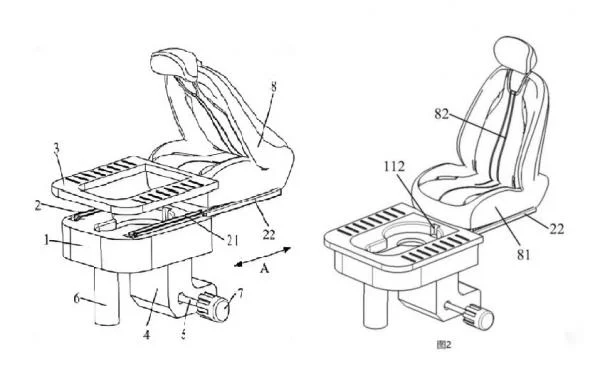
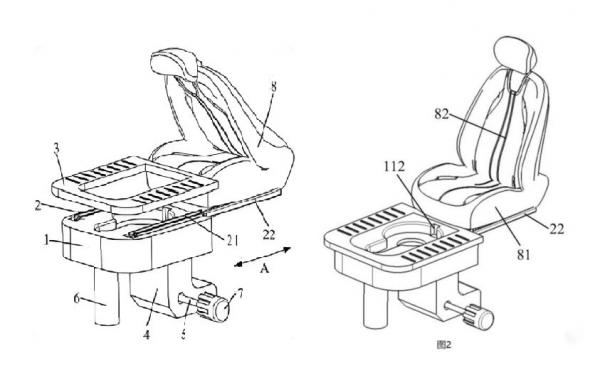
JAKARTA – Chinese automaker Aito, a brand operating under the Seres umbrella, has officially patented a groundbreaking design featuring a hidden toilet system integrated within vehicles. This innovative development, revealed through patent application number CN224104011U, submitted on April 22, 2025, and authorized on April 10, 2026, has ignited a wide spectrum of reactions, ranging from admiration for its ingenuity to lighthearted commentary from netizens worldwide.
The patent details a unique toilet mechanism comprised of a toilet body mounted on a sliding rail system. This clever engineering allows the fixture to be seamlessly integrated with the vehicle’s seating, enabling it to be stored discreetly when not in use. According to reports from Sanyan Tech, when the need arises, the toilet can be smoothly extended from beneath the seat. Post-use, it can be retracted back into its original position, ensuring it does not encroach upon the cabin’s valuable interior space. This innovative approach to vehicle sanitation falls under the International Patent Classification (IPC) category B60R15/04, which pertains to the arrangement of sanitary equipment within vehicles, signaling a serious consideration for enhanced onboard hygiene facilities.
The Genesis of a Bold Automotive Innovation
The concept of integrating a fully functional toilet within a personal vehicle is a significant departure from conventional automotive design. While the immediate reaction from many has been one of surprise and amusement, the underlying motivation behind such an innovation can be traced to evolving consumer needs and the increasing demand for comfort and convenience, particularly for long-distance travel and in regions where public restroom facilities might be scarce or unreliable.
Aito, a relatively new entrant in the highly competitive automotive market, has positioned itself as a brand that explores cutting-edge technologies and user-centric features. Their collaboration with Seres, a company that has also been involved in electric vehicle (EV) development, suggests a forward-thinking strategy aimed at differentiating their products in a rapidly changing landscape. The automotive industry, particularly in recent years, has witnessed a surge in the development of advanced interior functionalities, driven by the growing influence of smart technology and a desire to transform vehicles into more than just modes of transportation.
Chronology of the Patent and its Unveiling
The timeline surrounding the patent application and its subsequent authorization provides insight into the development process:
- April 22, 2025: Aito, through its parent company Seres, formally submits the patent application for the hidden toilet design. This date marks the official beginning of the intellectual property protection process for this novel feature.
- April 10, 2026: The patent application is officially authorized, signifying that the patent office has reviewed and approved the design as novel and inventive. This authorization grants Aito exclusive rights to this specific toilet integration technology for a defined period.
- Subsequent to April 10, 2026: News of the patent’s authorization begins to circulate, initially within industry circles and then reaching the broader public through automotive news outlets. This dissemination of information triggers the widespread discussion and debate observed.
The timing of the patent authorization, falling in early 2026, places it within a period of significant transformation in the automotive sector. The first quarter of 2026, for instance, saw discussions around the growing dominance of Electric Vehicles (EVs) in emerging markets, as indicated by reports on the top-selling cars in Indonesia for March 2026, where EVs were beginning to challenge traditional internal combustion engine vehicles. This broader trend towards innovation and adaptation in the automotive world likely provides a fertile ground for such unconventional ideas.
Technical Aspects and Practical Implications
The technical description of the patent highlights a sophisticated integration system. The toilet unit, described as being connected to a "sliding rail system," implies a robust and user-friendly mechanism. This system likely involves tracks and guides that allow for smooth extension and retraction, potentially powered by electric motors or a manual, assisted operation. The key challenge in such an integration is not only the functionality of the toilet itself but also its seamless stowage without compromising passenger comfort or cargo space.

Furthermore, the inclusion of a toilet in a vehicle raises several practical considerations:
- Waste Management: The design must incorporate a system for managing waste, whether through a self-contained holding tank, a connection to the vehicle’s waste disposal system (if applicable), or a specialized filtration and containment unit. The patent, while focusing on the mechanical integration, would implicitly require a functional sanitation solution.
- Plumbing and Water Supply: A functional toilet requires a water source for flushing and potentially for cleaning. This would necessitate a small, integrated water tank and a distribution system, adding complexity to the vehicle’s plumbing.
- Odor Control: Effective odor control is paramount for any onboard sanitary facility. Advanced ventilation and filtration systems would be essential to maintain a pleasant cabin environment.
- Safety and Durability: The toilet unit must be securely mounted and designed to withstand the vibrations and forces encountered during vehicle operation, ensuring passenger safety in all driving conditions.
- Maintenance and Cleaning: Ease of access for cleaning and maintenance would be a crucial design consideration to ensure the long-term usability and hygiene of the feature.
Reactions and the Digital Discourse
The announcement of Aito’s hidden toilet patent has predictably sparked a wave of reactions across social media and online forums. The novelty of the concept has led to a mix of awe, skepticism, and humor.
Many users have expressed a sense of wonder at the audacity of the innovation, with some calling it a "game-changer" for road trips and long commutes. Comments often revolve around the potential convenience for families with young children, individuals with specific medical needs, or those undertaking extensive journeys through remote areas.
However, the idea has also been met with humorous skepticism. Memes and witty remarks about the practicality, potential for malfunctions, and the general "awkwardness" of having a toilet in a car have proliferated online. Some users have jokingly questioned the necessity of such a feature in a typical urban setting, while others have pondered the logistics of its implementation and the associated costs.

From an industry perspective, the patent signifies Aito’s commitment to pushing boundaries and exploring niche market demands. While it may not become a standard feature in all vehicles, it could cater to specific segments of the market, such as luxury RVs, specialized commercial vehicles, or even ultra-long-distance passenger transport.
Broader Implications for the Automotive Industry
The Aito patent, while seemingly niche, touches upon broader trends in automotive innovation:
- Enhanced In-Cabin Experience: The automotive industry is increasingly focusing on transforming the car interior into a more comfortable and functional living space. Features that extend beyond basic transportation, such as advanced entertainment systems, mobile workstations, and now, even sanitary facilities, are part of this evolution.
- Niche Market Development: Automakers are constantly seeking ways to differentiate themselves and capture specific market segments. Innovations like the hidden toilet could appeal to a particular demographic willing to pay a premium for unparalleled convenience and unique functionalities.
- Technological Integration: The successful implementation of such a feature would require advanced integration of various technologies, including plumbing, waste management, ventilation, and potentially automation. This pushes the boundaries of what is considered achievable within a vehicle’s architecture.
- Regulatory and Design Challenges: Beyond the technical aspects, Aito will likely face regulatory hurdles and design challenges related to safety, hygiene, and passenger comfort. The success of this innovation will depend on how effectively these challenges are addressed.
While the immediate future of Aito’s hidden toilet remains to be seen, the patent itself represents a bold step into uncharted territory for automotive design. It underscores a growing willingness within the industry to challenge conventional norms and explore solutions that cater to the evolving and sometimes unexpected needs of consumers. Whether this particular innovation becomes a widespread reality or remains a testament to creative engineering, it has undoubtedly sparked a conversation about the future possibilities of personal mobility and the very definition of in-car comfort. The automotive world, it seems, is ready for anything, including a mobile restroom.