
In an era defined by digital saturation and the relentless pace of urban life, the Kingdom of Bhutan has positioned itself as the definitive destination for "slow travel," offering a rare environment where visitors are encouraged to pause, breathe, and reconnect with nature. Known as the Land of the Thunder Dragon, this landlocked Himalayan nation is increasingly recognized not merely as a vacation spot, but as a profound space for reflection and cultural immersion. As global travel trends shift toward wellness and intentionality, Bhutan’s unique approach to tourism provides a blueprint for how a nation can preserve its soul while welcoming the world.
The concept of slow travel—a movement that emphasizes connection to local people, cultures, food, and music—finds its natural home in Bhutan. Unlike neighboring regions that have succumbed to the pressures of mass tourism, Bhutan has long maintained a "High Value, Low Volume" policy. This strategy ensures that the impact of visitors on the environment and traditional society remains minimal, while the quality of the experience for the traveler remains unparalleled. The result is a landscape where time appears to move at a different cadence, dictated by the rhythm of monastic chants, the rustle of prayer flags, and the shifting shadows across the Himalayan peaks.
The Philosophy of Gross National Happiness and Tourism
At the core of Bhutan’s appeal is its foundational philosophy of Gross National Happiness (GNH). Unlike most nations that measure progress through Gross Domestic Product (GDP), Bhutan prioritizes the collective happiness and well-being of its population. This philosophy is built upon four pillars: sustainable and equitable socio-economic development, environmental conservation, preservation and promotion of culture, and good governance.
For the traveler, this translates into an experience that is inherently "wellness-oriented." The tourism sector is designed to be an extension of these values. Damcho Rinzin, the Director of the Department of Tourism, recently emphasized this distinction, stating that Bhutan is not a conventional destination but a "journey through time, culture, and nature." According to official statements released in mid-April 2026, the kingdom is doubling down on its identity as a sanctuary for those seeking "healing" from the noise of the modern world.
This commitment to GNH is visible in the very air of Bhutan. It remains the world’s first carbon-negative country, meaning it absorbs more carbon dioxide than it emits. With over 70% of its land covered by forest, the environmental purity of the kingdom is a primary draw for wellness tourists who are increasingly looking for "clean air destinations" as part of their travel criteria.
A Seasonal Chronology of the Bhutanese Experience
The allure of Bhutan is not static; it evolves through a distinct seasonal chronology, each offering a different facet of the slow travel experience.
Winter (December to February): The Season of Stillness
During the winter months, Bhutan experiences a profound quietude. The high-altitude air is crisp and clear, providing some of the best views of the snow-capped Himalayan range. While some higher passes may be blocked by snow, the valleys of Thimphu and Punakha remain accessible. This is the ideal time for travelers seeking solitude and meditative retreats. It is also the season when the rare black-necked cranes migrate to the Phobjikha Valley, a spectacle that draws nature enthusiasts and photographers who value quiet observation over hurried sightseeing.

Spring (March to May): The Awakening of the Flora
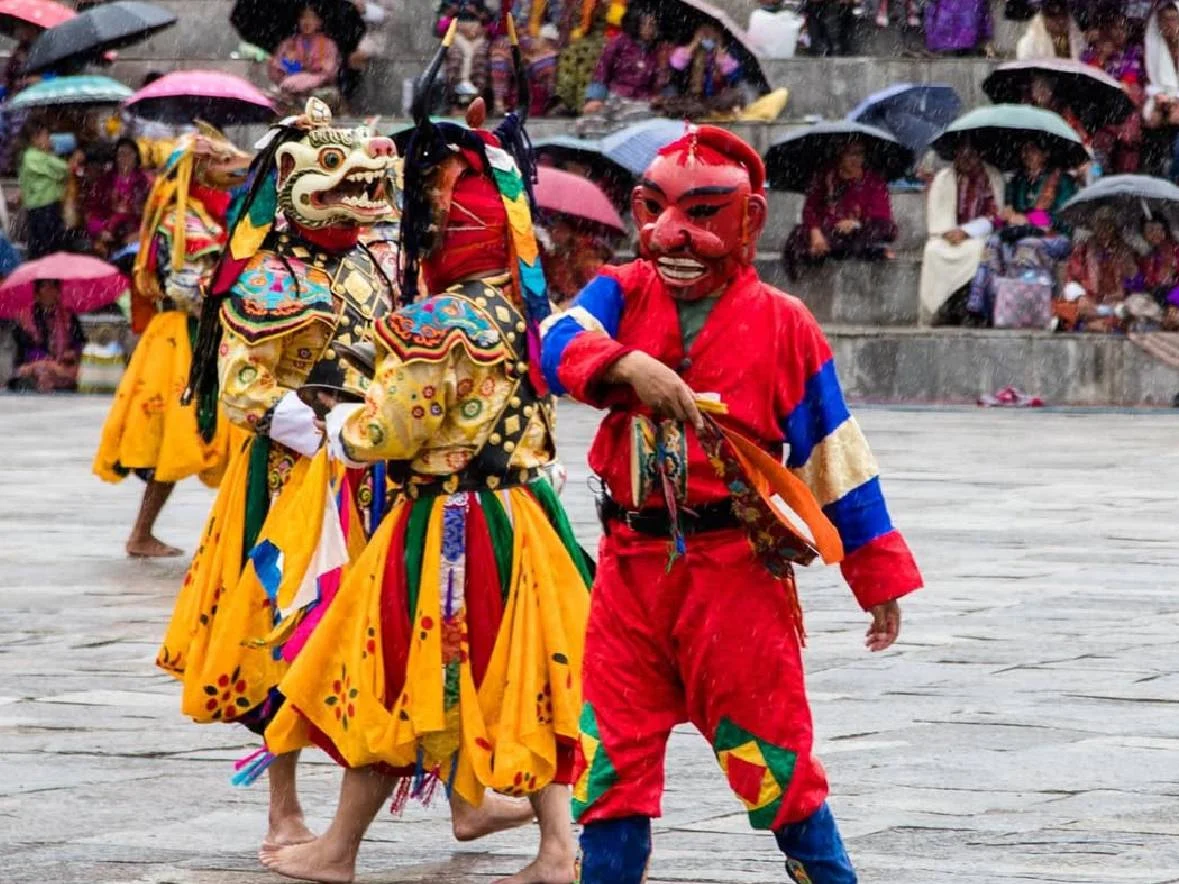
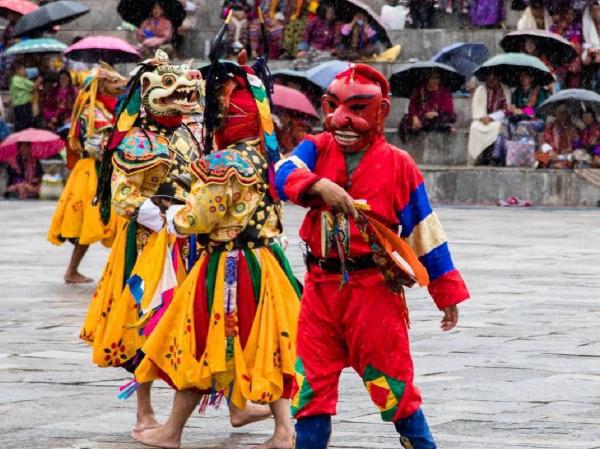
As the ice melts, Bhutan transforms into a botanical paradise. The hillsides are painted with the vibrant hues of blooming rhododendrons, magnolias, and wild orchids. This period marks the beginning of the trekking season, with routes like the Jhomolhari Trek offering immersive experiences in the wilderness. Culturally, spring is significant for the Paro Tshechu, one of the kingdom’s most famous festivals, where masked dances and religious allegories bring ancient traditions to life in the courtyards of majestic dzongs (fortresses).
Summer (June to August): The Emerald Verdure
The monsoon season brings life-giving rains that turn the valleys into deep shades of emerald. While trekking can be challenging due to the rain, the summer months are perfect for those interested in Bhutan’s agrarian life. The rivers are full, making it a prime time for white-water rafting in the Pho Chhu and Mo Chhu rivers. The mist-covered mountains during this season create a mystical atmosphere that many writers and artists find particularly inspiring for creative retreats.
Autumn (September to November): The Golden Harvest
Autumn is arguably the most popular time for visitors. The skies clear to a brilliant blue, and the rice paddies turn golden as harvest time approaches. This season hosts the Thimphu Tshechu, a grand display of Bhutanese spirituality and community. The weather is optimal for high-altitude trekking, including the world-renowned "Snowman Trek," often cited as one of the most difficult and rewarding treks on the planet.
The Economic Model: Sustainable Development Fee (SDF)
Bhutan’s ability to offer such a pristine experience is funded by its unique tourism economic model. In late 2022 and throughout 2023, the kingdom overhauled its tourism structure, introducing a revised Sustainable Development Fee (SDF). Currently, most international tourists are required to pay a daily fee that contributes directly to the country’s social welfare, including free healthcare and education for its citizens, as well as environmental conservation efforts and the maintenance of tourism infrastructure.

This fee acts as a natural filter, attracting travelers who are invested in the preservation of the destination. It discourages the "bucket-list" mentality of rapid-fire sightseeing and instead encourages longer, more meaningful stays. Analysts suggest that this model is being closely watched by other global destinations—such as Venice and Bali—which are currently struggling with the negative impacts of over-tourism.
Regional Context: The Rise of Wellness Tourism in Asia
The shift toward Bhutan as a wellness hub mirrors a broader trend across Asia. Recent reports from tourism boards in Indonesia and Thailand indicate a surge in demand for "wellness destinations." For instance, Indonesian authorities have recently identified Bali and Solo as primary nodes for wellness tourism to capture the growing market of travelers seeking health-oriented experiences.
However, Bhutan maintains a competitive edge through its exclusivity and its uncompromising stance on cultural preservation. While Bali offers a diverse range of wellness retreats, the sheer volume of tourists can sometimes detract from the sense of peace. Bhutan, by contrast, offers a controlled environment where the "slow" in slow travel is a government-mandated reality. The comparison highlights a growing regional competition for the "conscious traveler" demographic—individuals who are willing to pay a premium for authenticity, privacy, and ecological integrity.
Infrastructure and Accessibility: The Gateway to the Clouds
Reaching Bhutan remains an adventure in itself. Paro International Airport, situated in a deep valley and surrounded by 18,000-foot peaks, is famously known as one of the most challenging airports for pilots. Only a select number of pilots are certified to land there, emphasizing the kingdom’s remote and protected status.
The national carriers, Druk Air and Bhutan Airlines, serve as the primary links to the outside world, with flights connecting through hubs like Bangkok, Delhi, Singapore, and Kathmandu. This limited accessibility is a deliberate part of the Bhutanese strategy to manage the flow of visitors and ensure that those who arrive are truly committed to the journey.
Once inside the country, the infrastructure supports the slow travel ethos. Luxury lodge chains like Aman, COMO, and Six Senses have established footprints in Bhutan, but they do so with a focus on low-impact architecture and integration with local communities. These establishments often offer traditional Bhutanese hot stone baths and meditation sessions led by local monks, bridging the gap between high-end hospitality and ancient spiritual practice.
Broader Implications: Tourism as a Tool for Preservation
The evolution of Bhutan’s tourism industry carries significant implications for the future of global travel. It demonstrates that tourism can be used as a tool for cultural and environmental preservation rather than destruction. By valuing "Gross National Happiness" over raw visitor numbers, Bhutan has managed to keep its traditions—such as the mandatory wearing of the national dress (Gho and Kira) in official spaces and the preservation of the Dzongkha language—vibrant and relevant.
For the international community, Bhutan serves as a living laboratory for sustainable living. As climate change threatens mountain ecosystems globally, Bhutan’s strict forest protection laws and carbon-negative status offer a glimmer of hope. The tourism revenue provides the financial capital necessary to maintain these protections, creating a virtuous cycle where travel supports the very environment it seeks to enjoy.

Conclusion: The Future of the Bhutanese Journey
Looking toward the remainder of 2026 and beyond, Bhutan is expected to remain at the pinnacle of the wellness and slow travel sectors. The official stance of the Department of Tourism remains clear: Bhutan is for the traveler who seeks depth over distance. As Damcho Rinzin noted, the kingdom offers a "journey melded with culture and nature," a sentiment that resonates deeply in a post-pandemic world where the value of health and mental peace has been starkly highlighted.
In the final analysis, Bhutan’s rise as a slow travel destination is not a result of a marketing gimmick, but the fruit of decades of consistent policy and philosophical conviction. For those willing to navigate the logistics and the cost, the Kingdom of Bhutan offers something increasingly rare in the 21st century: the opportunity to experience a world that is still whole, quiet, and profoundly connected to its roots. Whether it is through the silence of a winter morning in Thimphu or the vibrant energy of an autumn festival, Bhutan remains a testament to the idea that the best way to see the world is, quite literally, to slow down.
