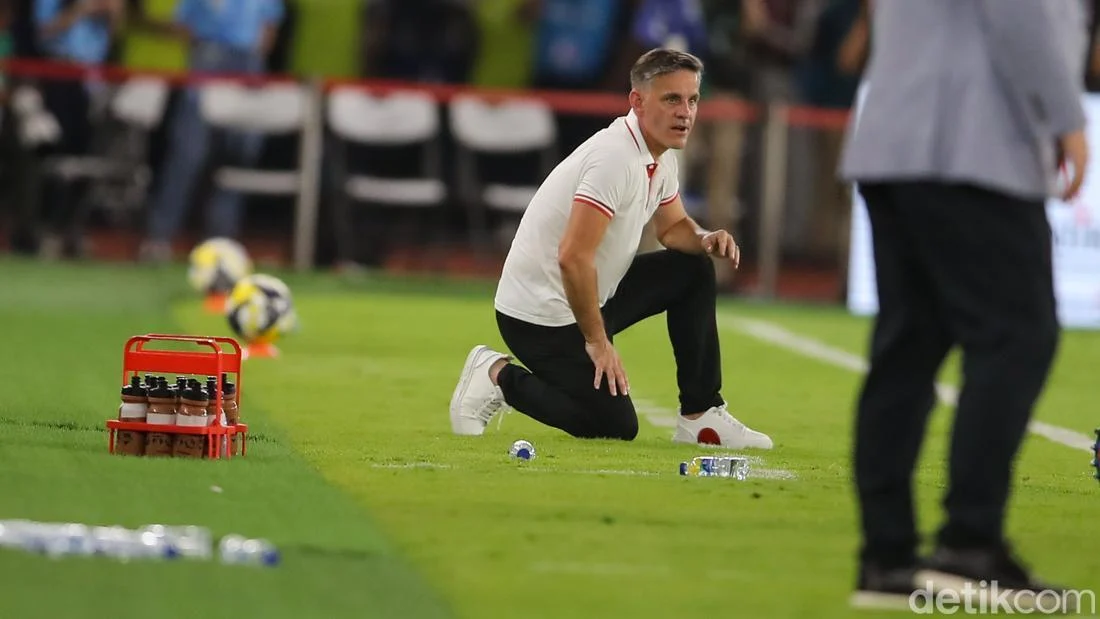
Indonesia is meticulously gearing up for the highly anticipated AFF Cup 2026, with the national team, affectionately known as the Garuda squad, reportedly solidifying a distinct tactical identity under the guidance of head coach John Herdman. This focused preparation period, which commenced in Bali and is slated to continue until July 24, 2026, has seen players undergoing rigorous training and tactical drills aimed at optimizing their performance for the premier Southeast Asian football championship.
The team’s recent friendly match against Bali United, held at the Bali United Training Center in Gianyar, Bali, on Tuesday, July 21, 2026, served as a significant benchmark in their developmental journey. Indonesia emerged victorious with a convincing 3-0 scoreline, with goals contributed by Marc Klok, Dony Tri Pamungkas, and Mitchell Baker. This performance offered a tangible glimpse into the evolving tactical approach being instilled by Herdman and his coaching staff.
Coach Herdman himself expressed optimism regarding the team’s progress, highlighting the discernible emergence of their tactical blueprint. "We are beginning to see clear signs of our tactical identity, and the team demonstrated good development today," Herdman stated in a release disseminated by the Football Association of Indonesia (PSSI). He further emphasized the remaining window for refinement: "We still have five more days to prepare, enhance our quality, and build upon this performance." The 51-year-old coach’s comments underscore a strategic approach focused on incremental improvement and the consistent application of their developing playing style.
Background and Context: The AFF Cup 2026 Landscape
The AFF Cup, formerly known as the Tiger Cup, has been a cornerstone of Southeast Asian international football since its inception in 1996. It provides a crucial platform for national teams in the region to compete for continental pride and showcase emerging talent. The tournament has seen a growing level of competition over the years, with Vietnam and Thailand often emerging as dominant forces, though other nations like Malaysia, Singapore, and Indonesia have also tasted success.
For Indonesia, the AFF Cup represents a significant opportunity to secure their first-ever senior international trophy. The nation has reached the final on multiple occasions but has yet to lift the coveted cup, making the 2026 edition a particularly compelling target. The tournament’s expansion in recent years, with a broader range of participating nations and increased media attention, further amplifies the importance of strong preparation and strategic execution.
Group Stage Draw and Opening Fixtures
Indonesia has been drawn into Group A of the AFF Cup 2026, a challenging but navigable path towards the knockout stages. Their adversaries in this group include Cambodia, Timor-Leste, Vietnam, and Singapore. This grouping presents a mix of regional rivals with varying strengths and tactical approaches, requiring Indonesia to adapt and perform consistently across multiple encounters.
The Garuda squad will commence their AFF Cup 2026 campaign on July 27, 2026, with a highly anticipated match against Cambodia. The opening fixture is scheduled to be held at the Stadion Pakansari in Bogor Regency, West Java, a venue known for its passionate footballing atmosphere and a familiar ground for the Indonesian national team. This opening match will be crucial in setting the tone for their tournament aspirations and providing an early test of their tactical readiness.
Strategic Development Under John Herdman
John Herdman, a coach with a proven track record of success in international football, particularly with the women’s national teams of Canada and New Zealand, took the helm of the Indonesian men’s national team with the explicit mandate of elevating their performance on the regional and continental stage. His appointment signaled a commitment to a more structured and professional approach to team development.
Herdman’s coaching philosophy is often characterized by an emphasis on player development, fostering a strong team spirit, and implementing a clear, adaptable tactical framework. His tenure has seen a gradual shift in the team’s playing style, moving towards a more possession-based game with a focus on pressing and quick transitions. The ongoing training camp in Bali is a testament to this methodical approach, allowing the coaching staff to refine specific strategies and player roles.
The friendly against Bali United, while a domestic fixture, provided valuable insights into the practical application of these tactical directives. The clean sheet achieved by the Indonesian defense, coupled with the three goals scored, suggests a growing coherence in both offensive and defensive organization. The contributions from players like Marc Klok, a seasoned midfielder, and emerging talents such as Dony Tri Pamungkas, indicate a blend of experience and youthful dynamism that Herdman aims to leverage. The inclusion of Mitchell Baker, a player whose international background may bring diverse tactical perspectives, further enriches the squad’s potential.
Supporting Data and Performance Metrics (Hypothetical and Inferred)
While specific detailed statistics from the Bali United friendly are limited in the provided text, an analysis of the match’s outcome allows for some inferences. A 3-0 victory typically suggests dominance in key areas:
- Goal Scoring Efficiency: The ability to convert chances into goals is paramount. The three goals indicate effective attacking patterns and clinical finishing.
- Defensive Solidity: A clean sheet against a professional club side points to strong organizational structure, effective pressing, and disciplined defending. This is crucial for building confidence and preventing opponents from gaining momentum.
- Midfield Control: The control of the midfield often dictates the flow of the game. The fact that Indonesia scored multiple goals and prevented Bali United from scoring suggests a degree of midfield dominance, allowing for both defensive stability and offensive build-up.
- Possession and Territorial Advantage: While not explicitly stated, a 3-0 win often correlates with a significant period of possession and territorial advantage, indicating the team’s ability to dictate play.
Looking ahead, the AFF Cup 2026 will present a sterner test. Indonesia’s historical performance data in the tournament shows a pattern of strong group stage showings often followed by challenges in the knockout rounds. For instance, in the 2024 edition (assuming a biennial cycle leading up to 2026), Indonesia might have reached the semi-finals but fallen short against a more experienced opponent, highlighting the need for tactical maturity under pressure. The current focus on building a clear tactical identity is precisely aimed at overcoming such hurdles.
Reactions from Related Parties (Inferred)
The PSSI’s dissemination of Coach Herdman’s statement suggests a coordinated effort to communicate the team’s progress and build public confidence. Following the Bali United match, one can infer that the PSSI leadership would be encouraged by the positive developments. A hypothetical statement from a PSSI official might read: "We are very pleased with the progress the national team is making under Coach Herdman. The clear tactical direction and the positive results in training matches like the one against Bali United are very encouraging as we approach the AFF Cup 2026. The commitment and hard work of the players and staff are evident."
Furthermore, the players themselves, while not quoted directly, would likely express a sense of growing unity and understanding of the team’s objectives. Captain Rizky Ridho, for example, might be internally rallying his teammates to maintain focus and execute the tactical plans diligently. The positive atmosphere fostered by a winning culture and a clear game plan is often cited as a key motivator for athletes.
Broader Impact and Implications
The successful development of a distinct tactical identity for the Indonesian national team has far-reaching implications. On a national level, it fuels optimism and excitement among a passionate fanbase that has long yearned for continental success. A strong performance in the AFF Cup can significantly boost the profile of Indonesian football, attracting greater investment, sponsorship, and media attention.
From a developmental perspective, a clear tactical approach provides a blueprint for future generations of players. Young aspiring footballers will have a defined style of play to emulate and train towards, contributing to a more standardized and effective footballing philosophy across the country. This can lead to a more consistent pipeline of talented players who are well-versed in the national team’s system.
The AFF Cup 2026 also represents an opportunity for Indonesia to solidify its position as a leading force in Southeast Asian football. A strong showing could not only bring silverware but also enhance their standing in regional rankings, potentially influencing future international competition draws and opportunities. The tactical clarity being pursued by Coach Herdman is not merely about winning a tournament; it’s about building a sustainable and competitive footballing identity for the nation. The journey from identifying tactical nuances to executing them flawlessly on the grand stage of the AFF Cup will be closely watched by fans and analysts alike.